









Tula
Archeological site
Tula
A key city in the history of the Altiplano (Central Highlands), the great Toltec capital from the year 1000 left vast remains full of monuments and artistic treasures. It influenced the peninsular and Central American Maya, and the cultures of the Gulf coast, Anahuac and the western regions.
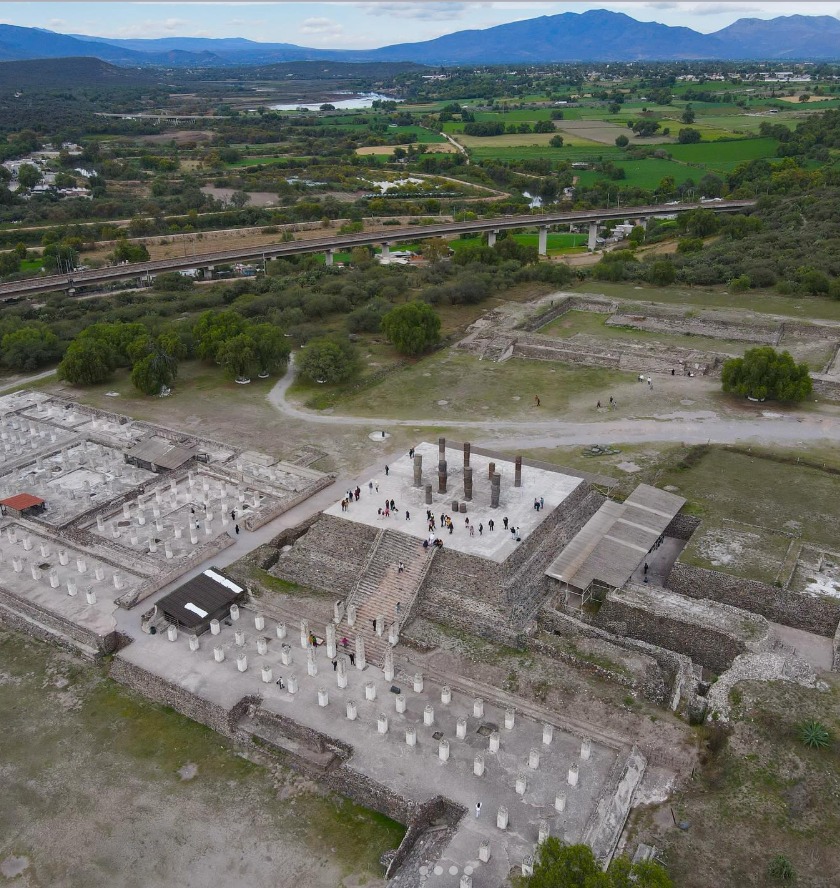
From numerous studies on the internal structure and extent of this imposing city, we know that the original settlement dates back to the seventh century AD in the site known as Tula Chico, an area encompassing approximately 1.2 square miles lying along the route of the Tula River. The site now known as Tula Grande emerged subsequently, in the tenth century; the layout and orientation of the main buildings in the city were defined as the result of observation of the movements of the stars.
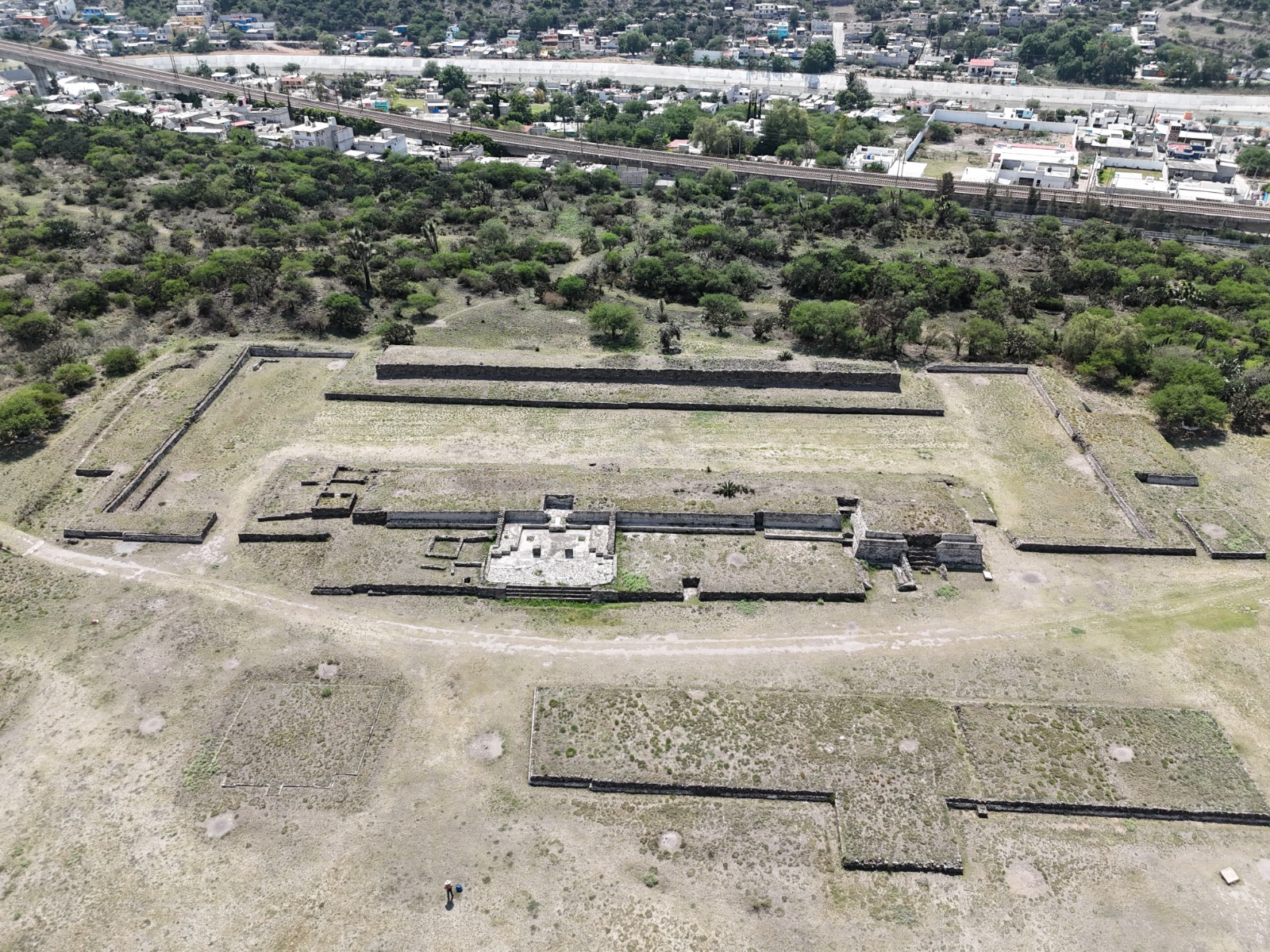
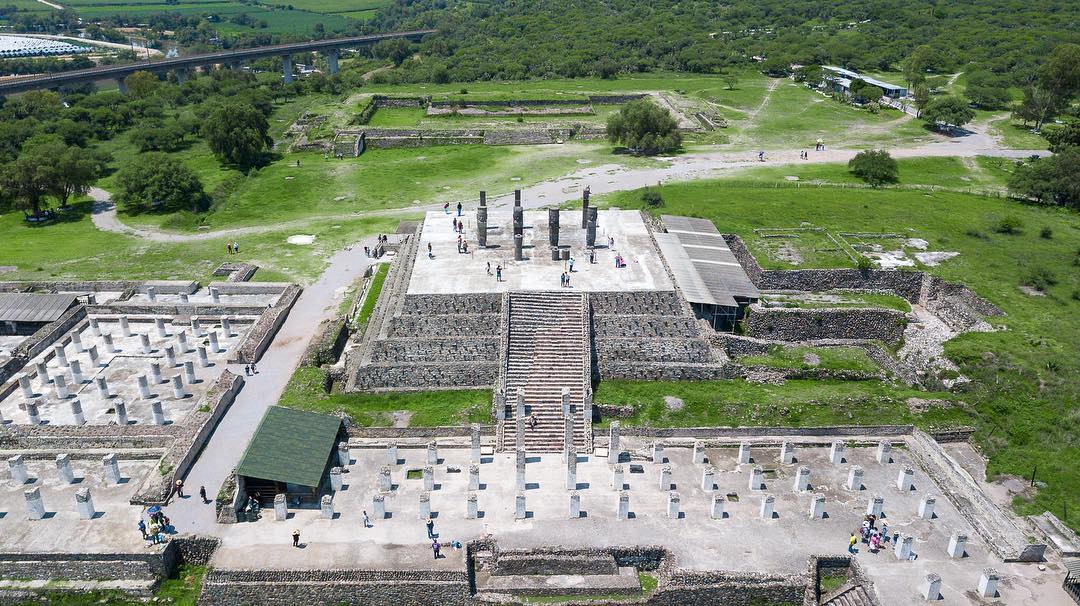
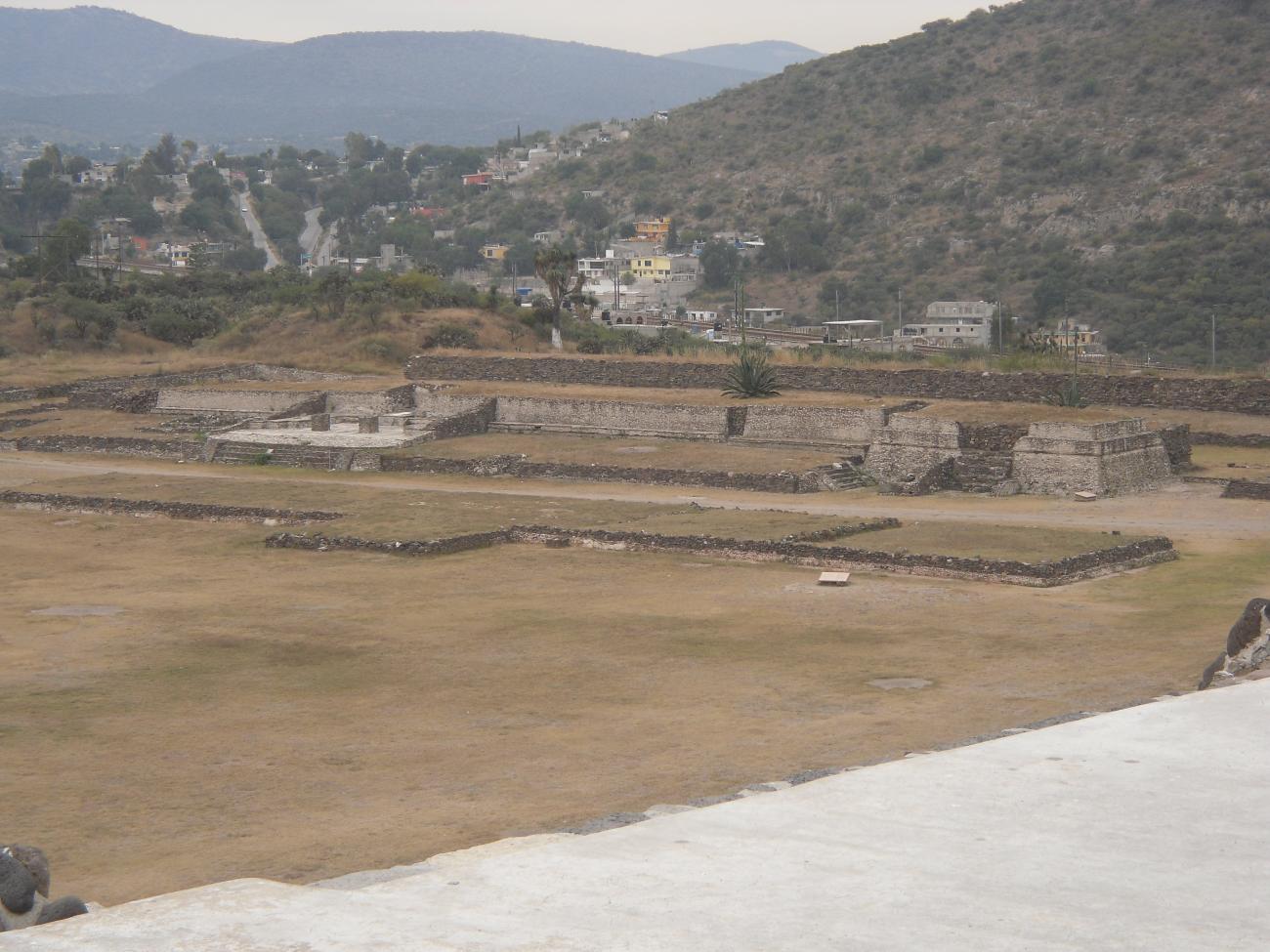
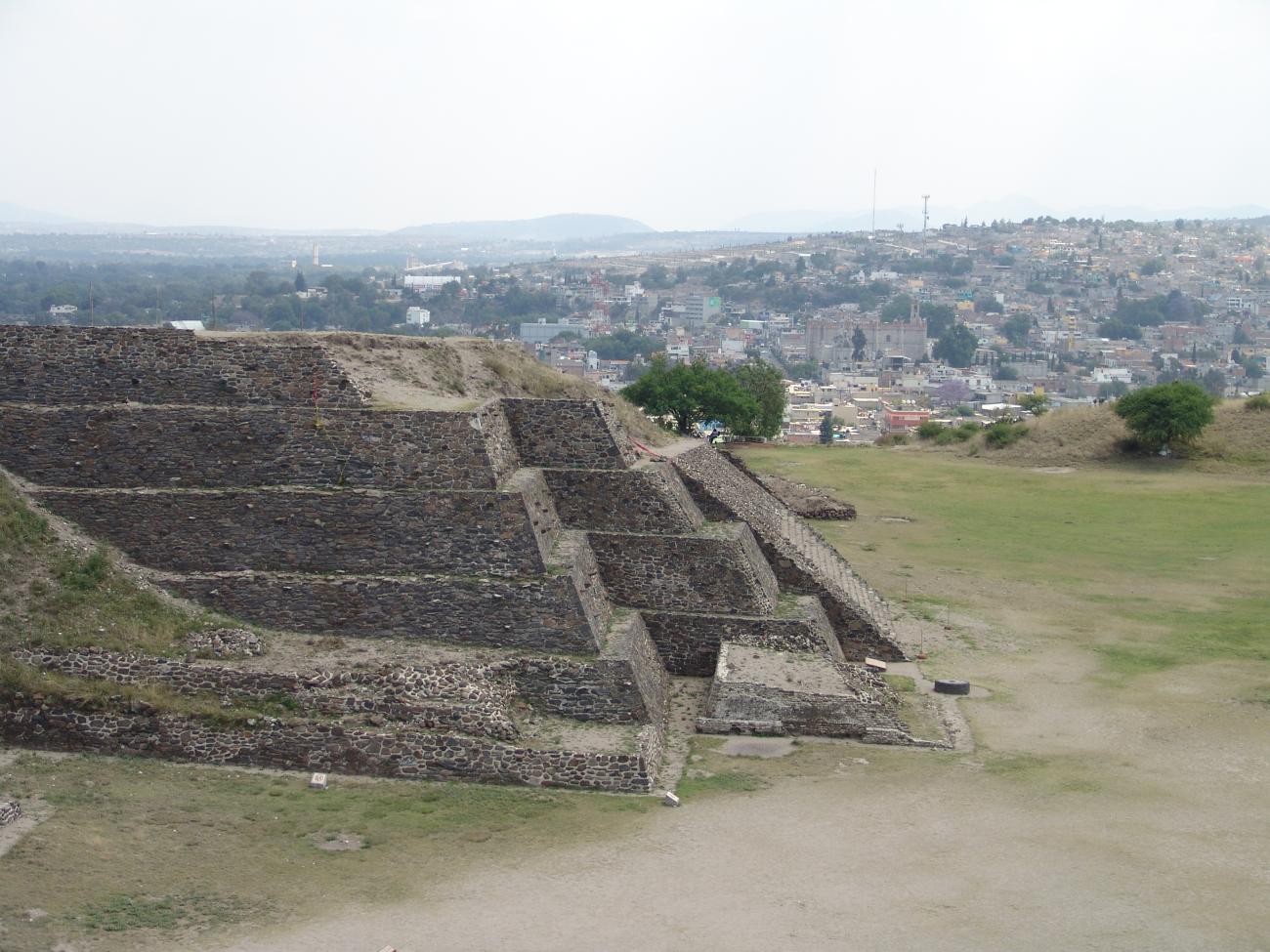
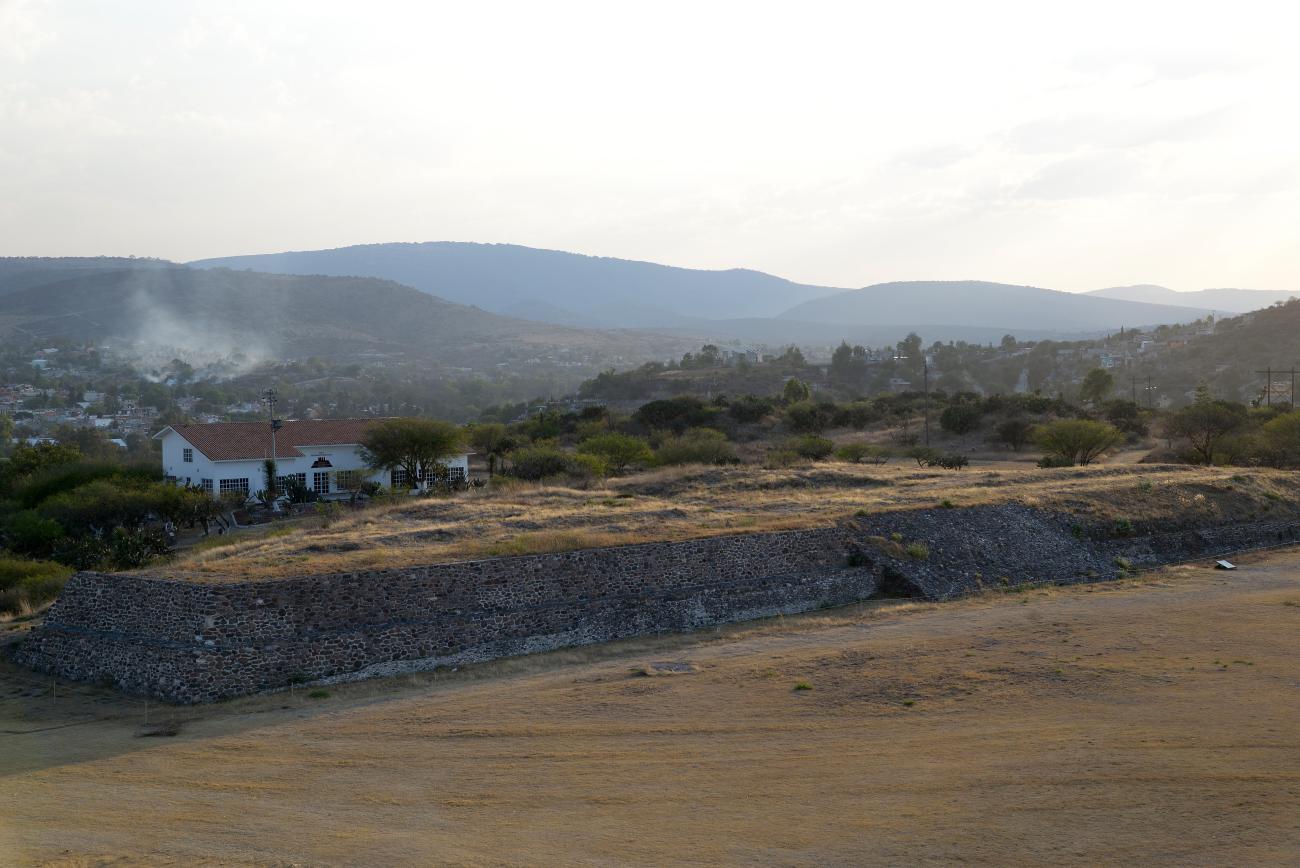
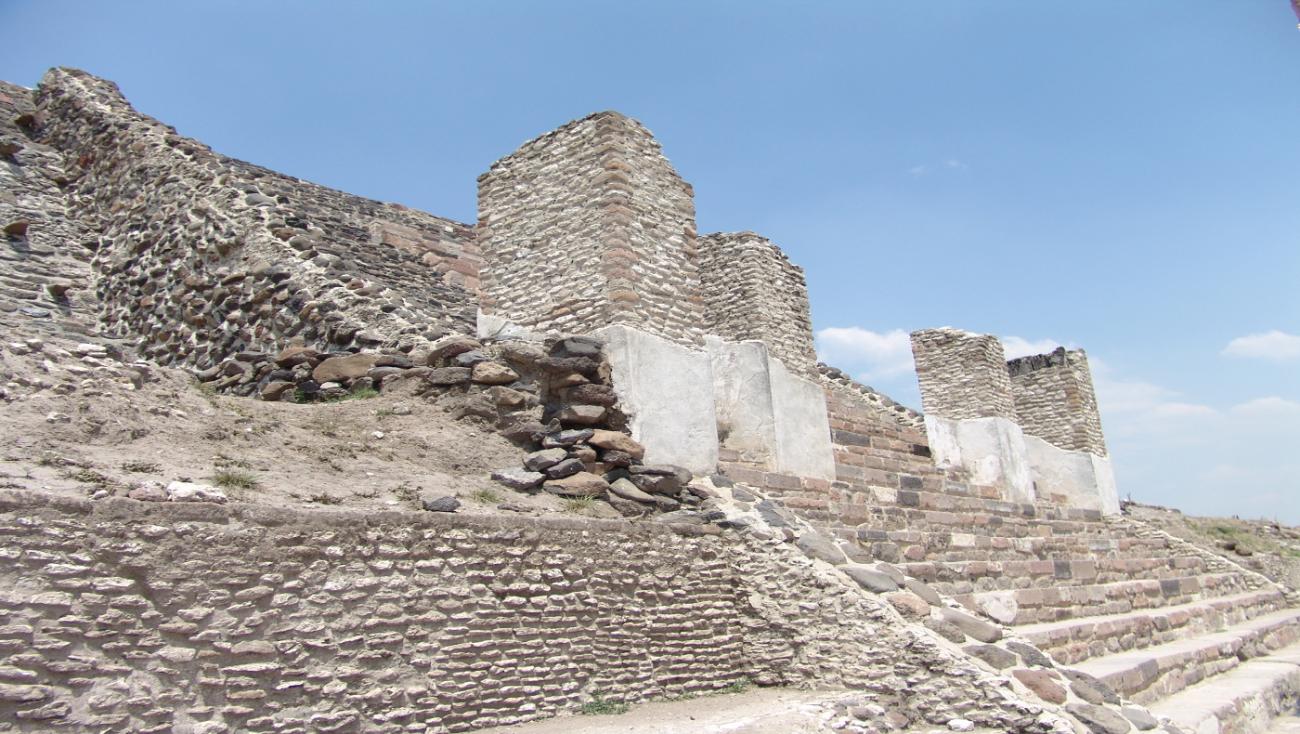
Tula’s inhabitants lived in neighborhoods where temples and palaces provided ideological, economic and political reference points. The housing, both for the ruling class and the common citizens, formed the central nucleus of the urban settlements’ layout. The building complexes were constructed on leveled terrain, cobblestone plazas and streets; terraced platforms provided the base for various structures including temples, ballcourts, palaces, “tzompantlis” (walls of skulls), and altars.
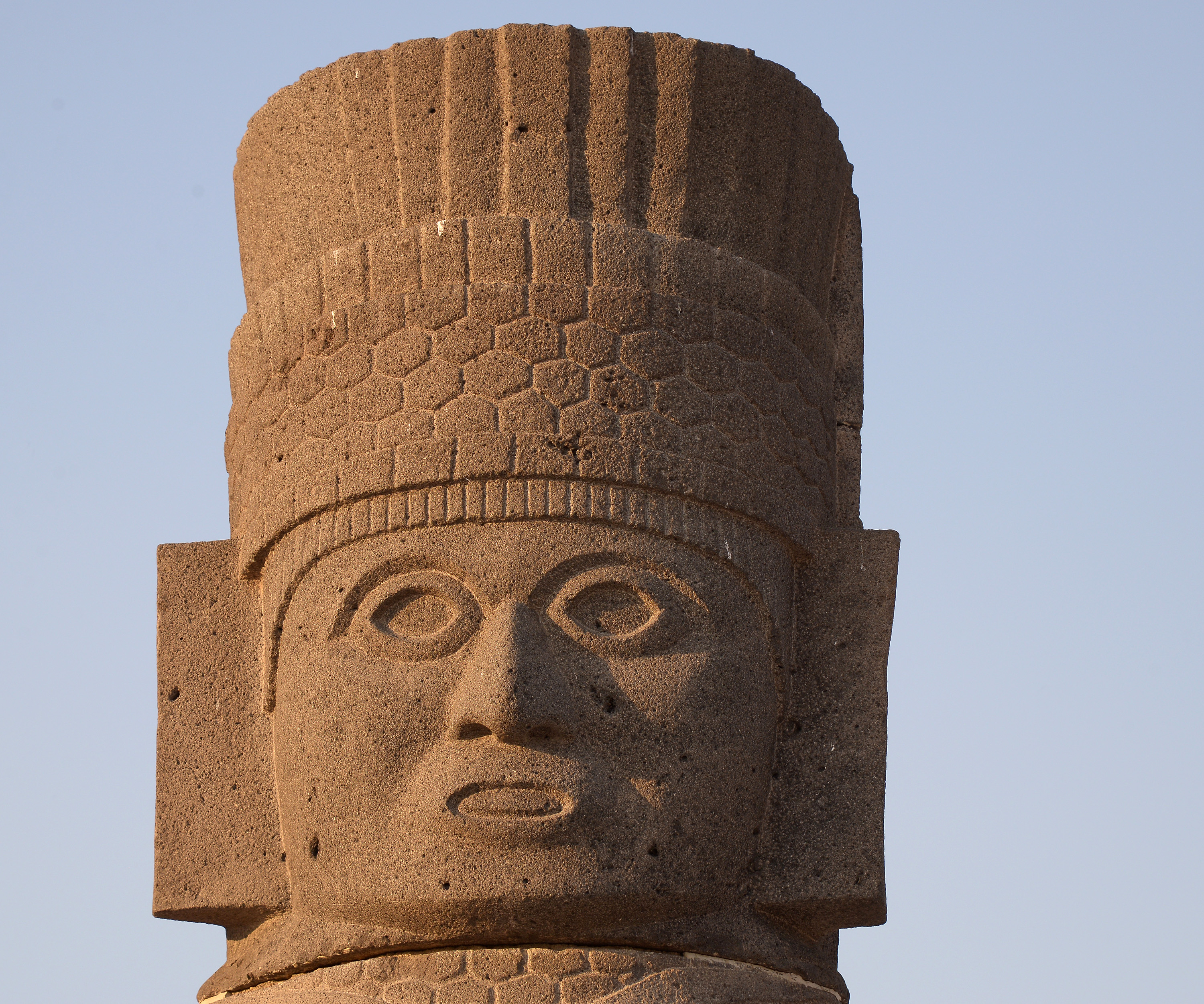
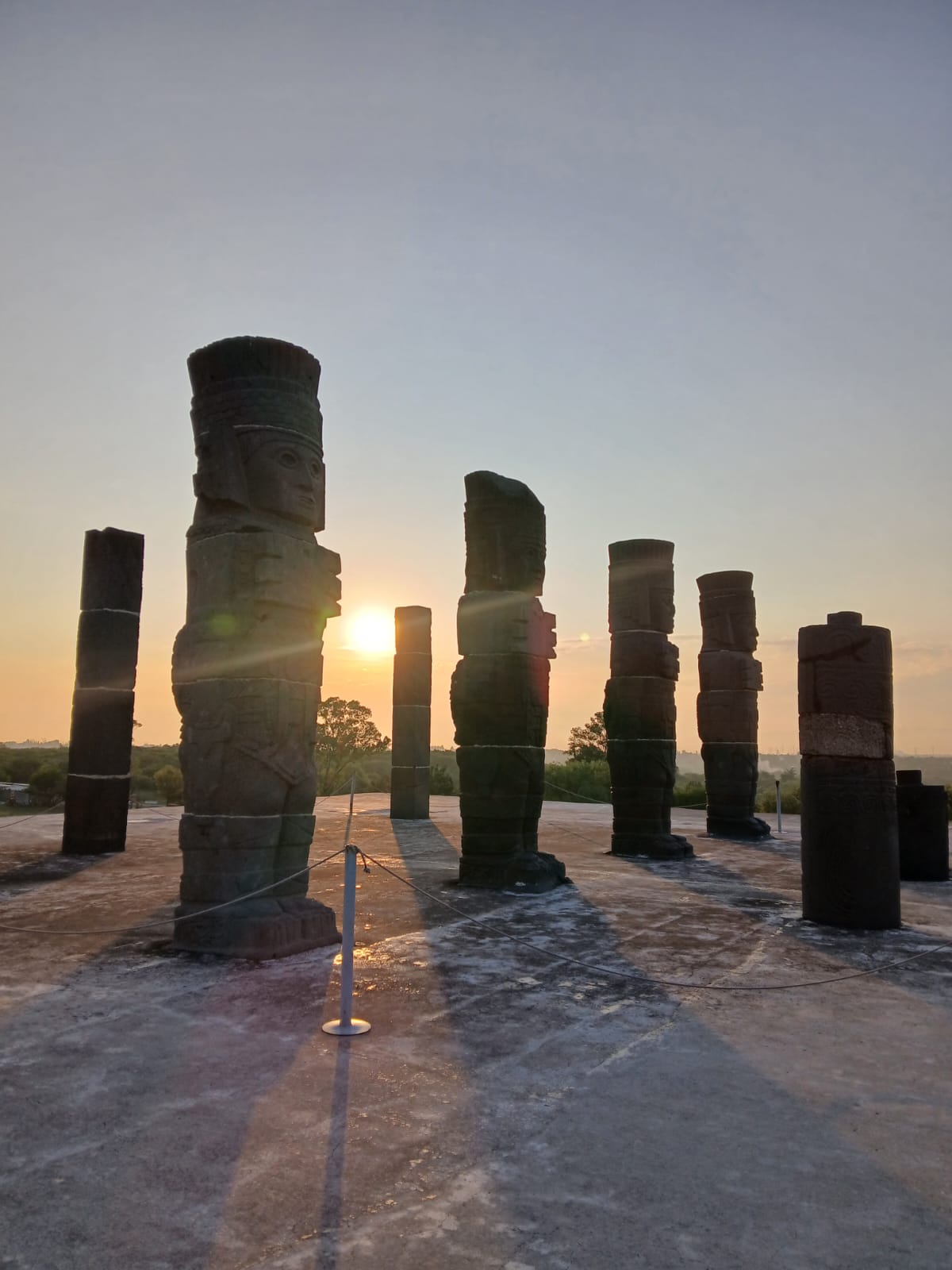
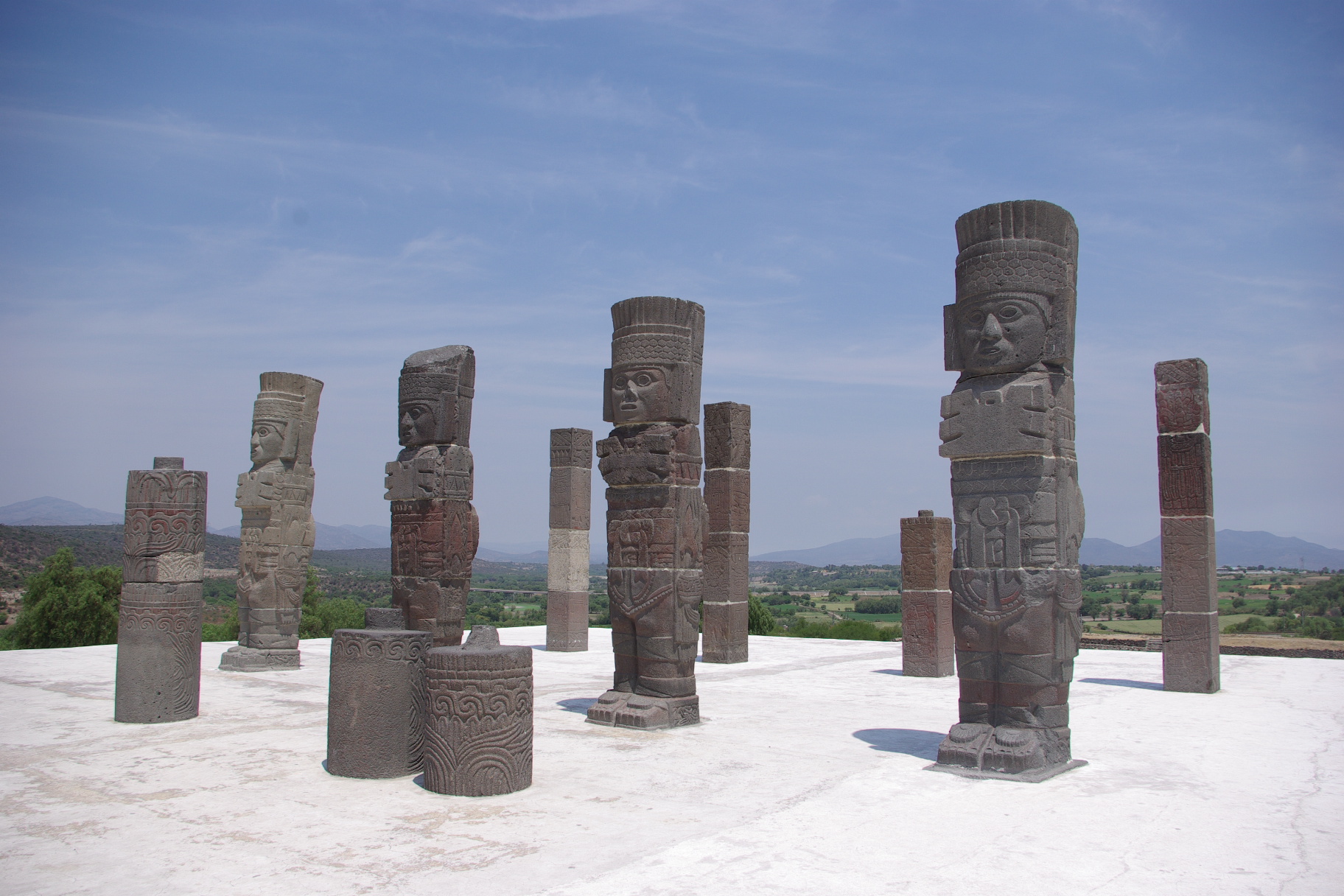
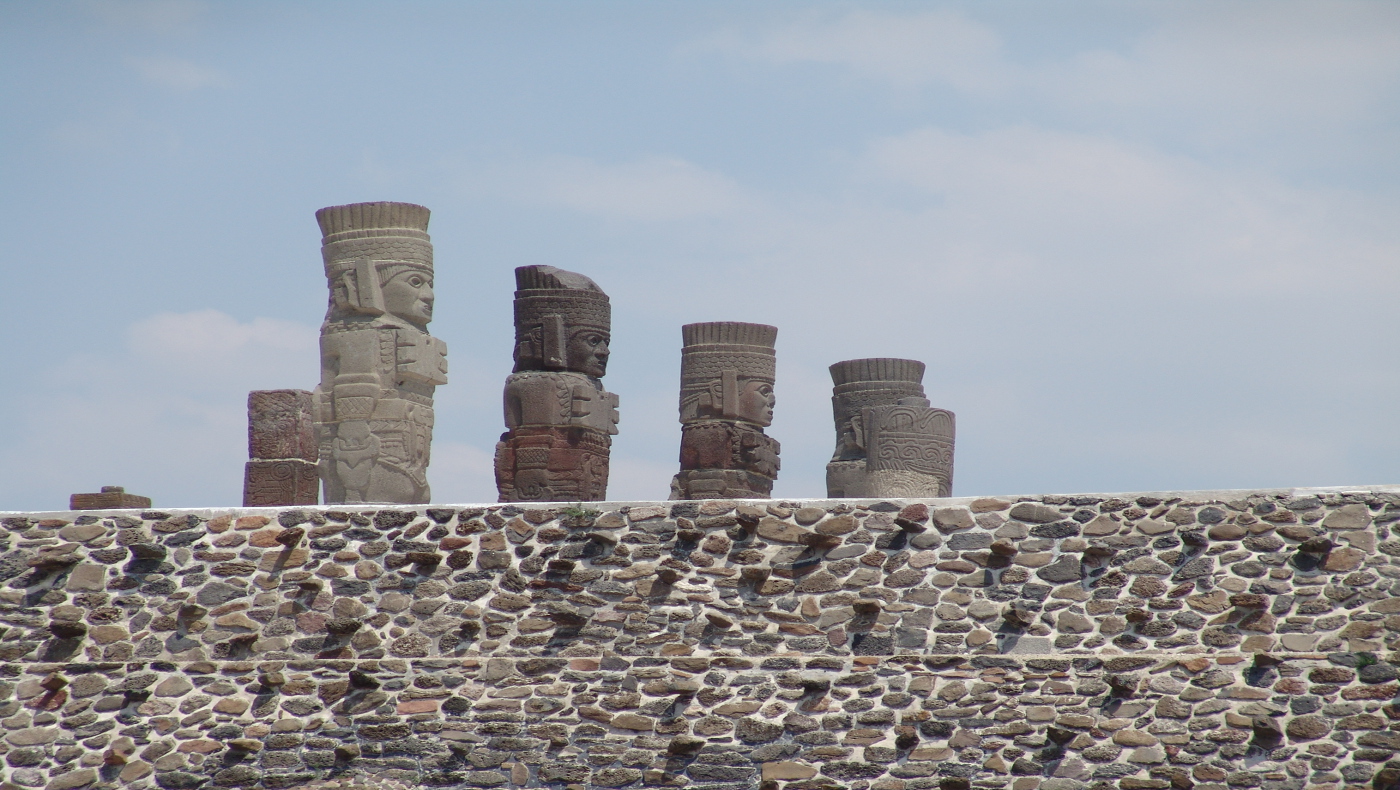
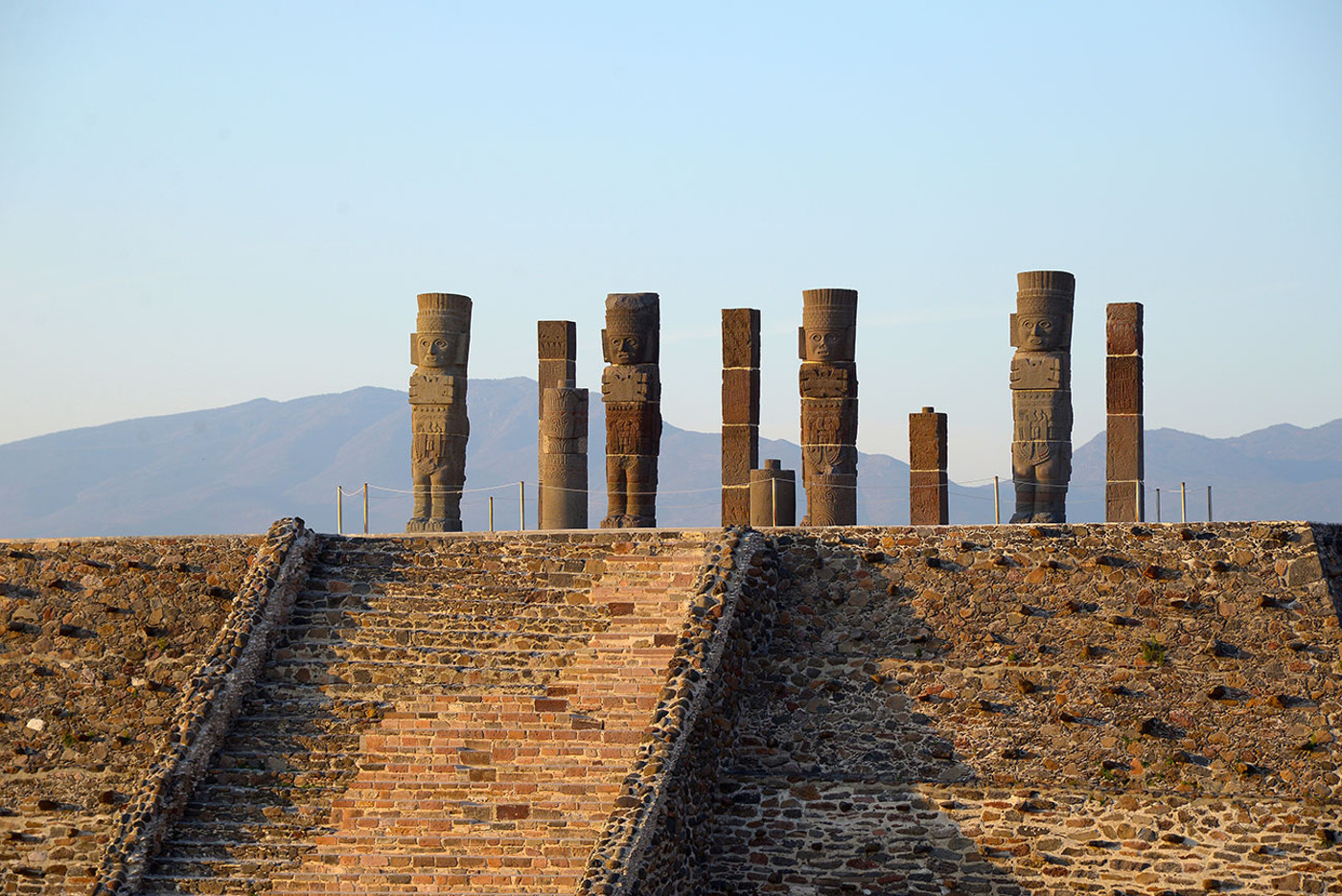
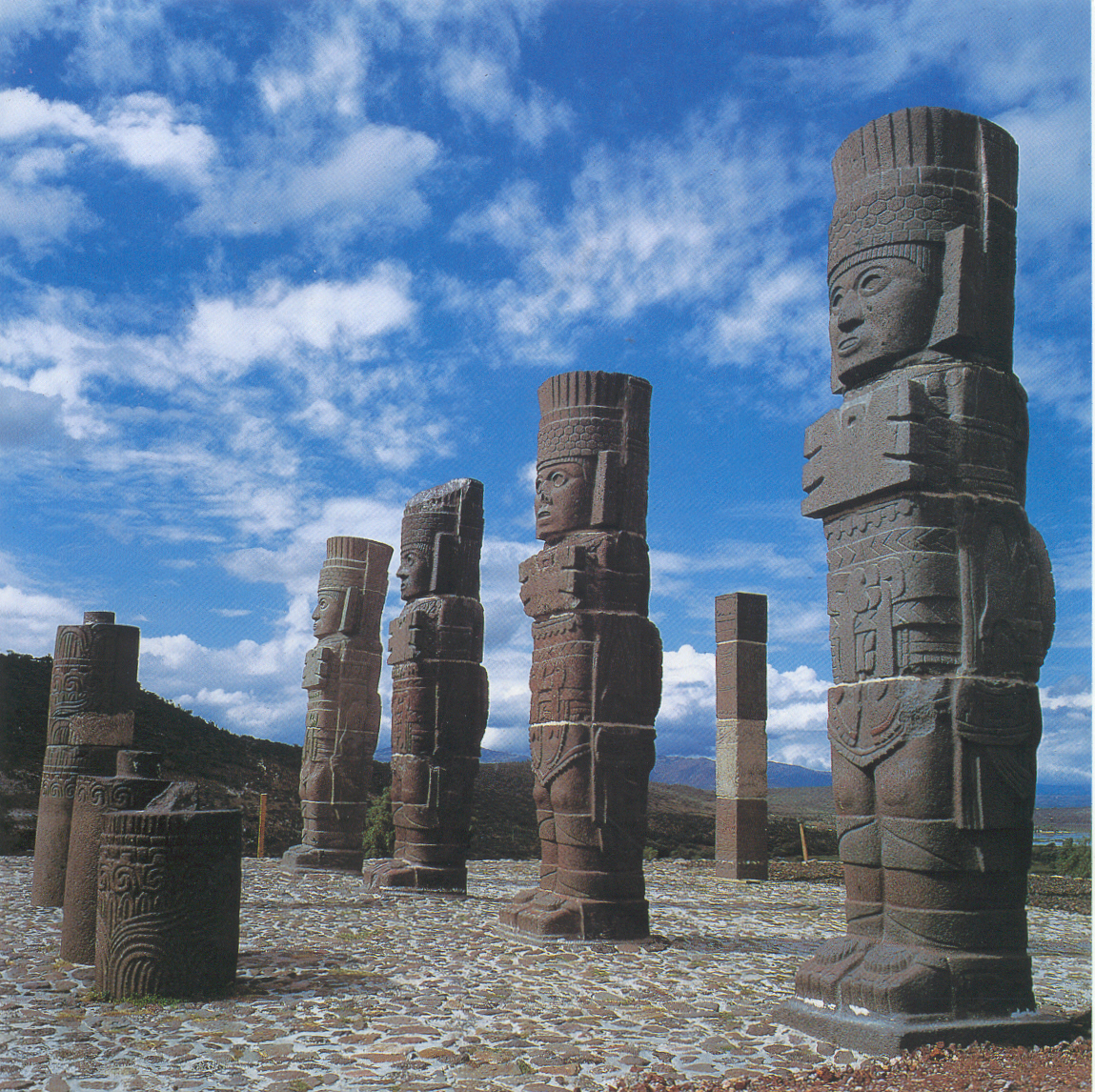
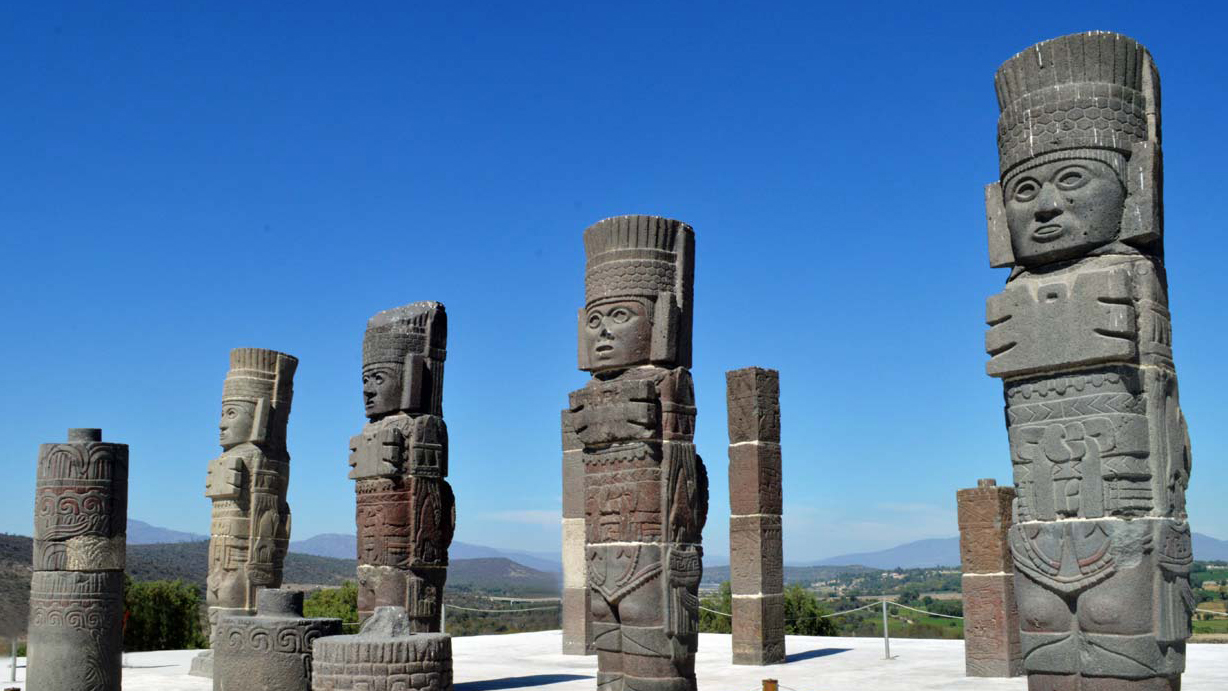
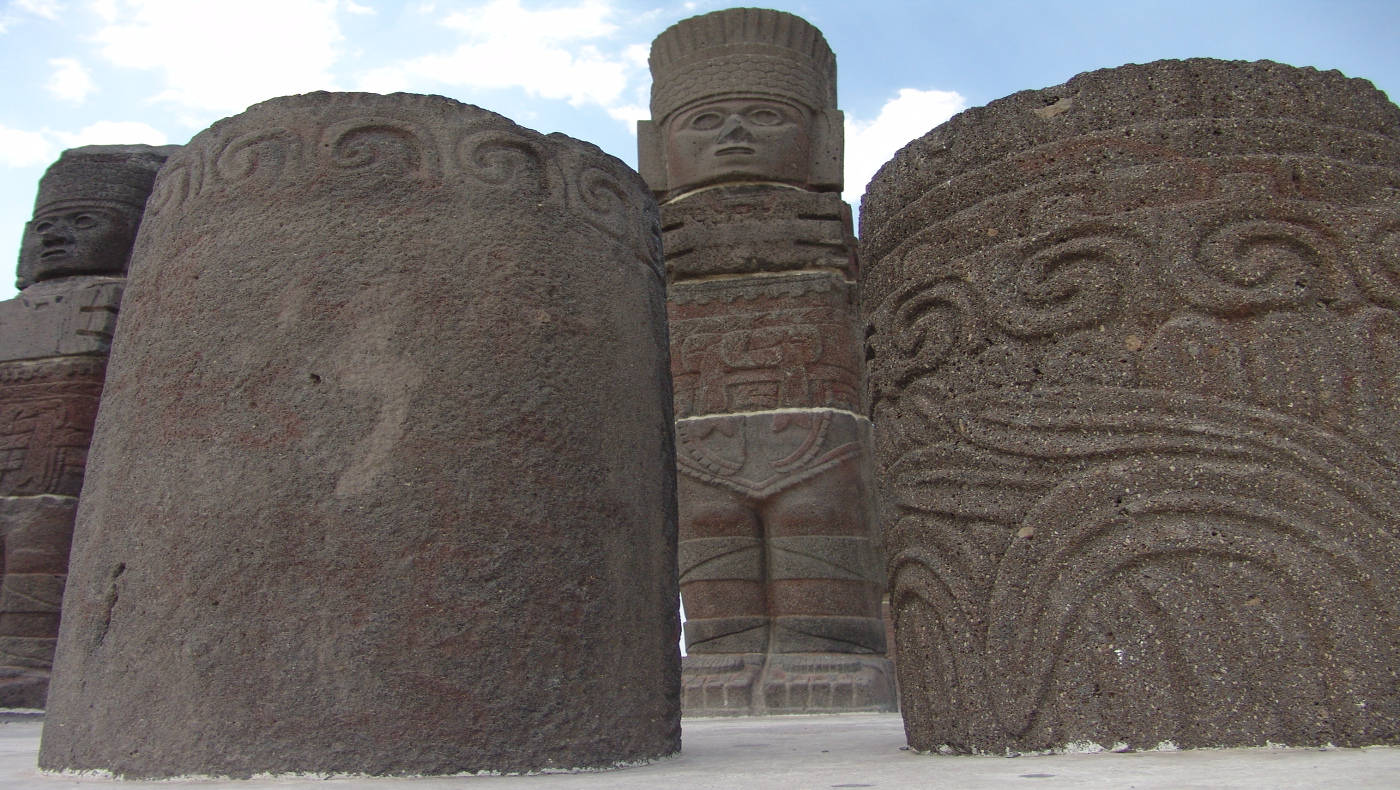
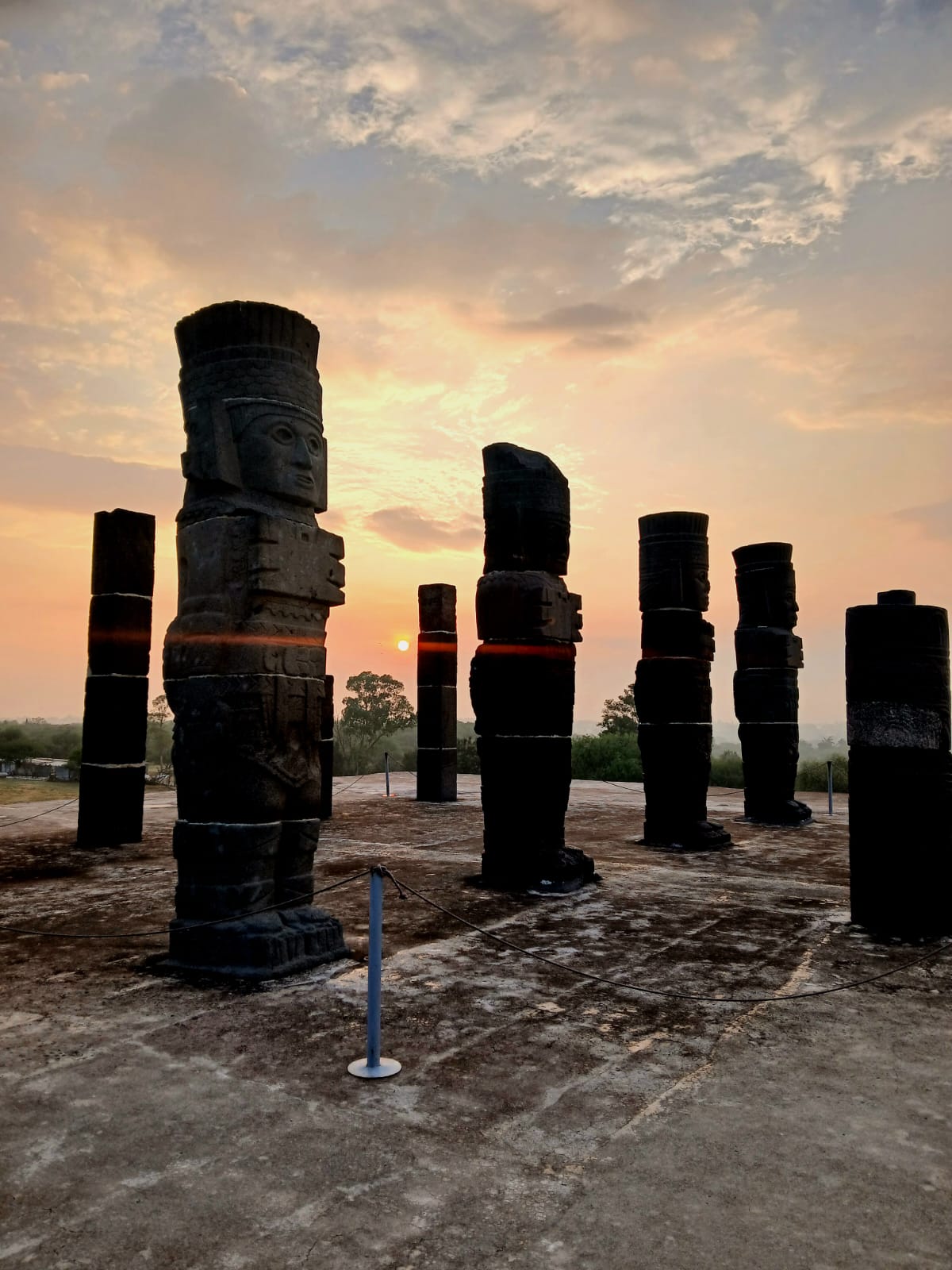
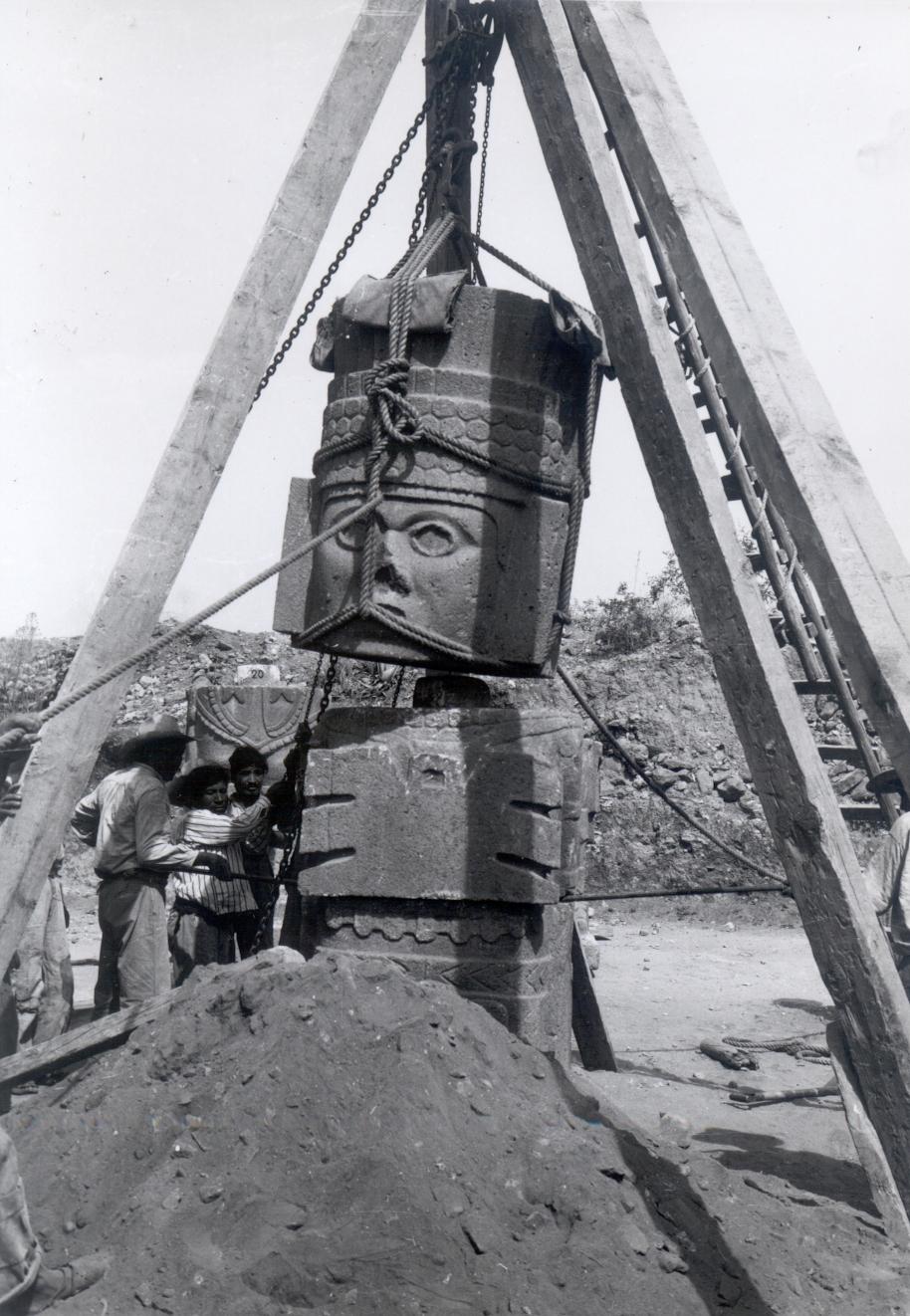
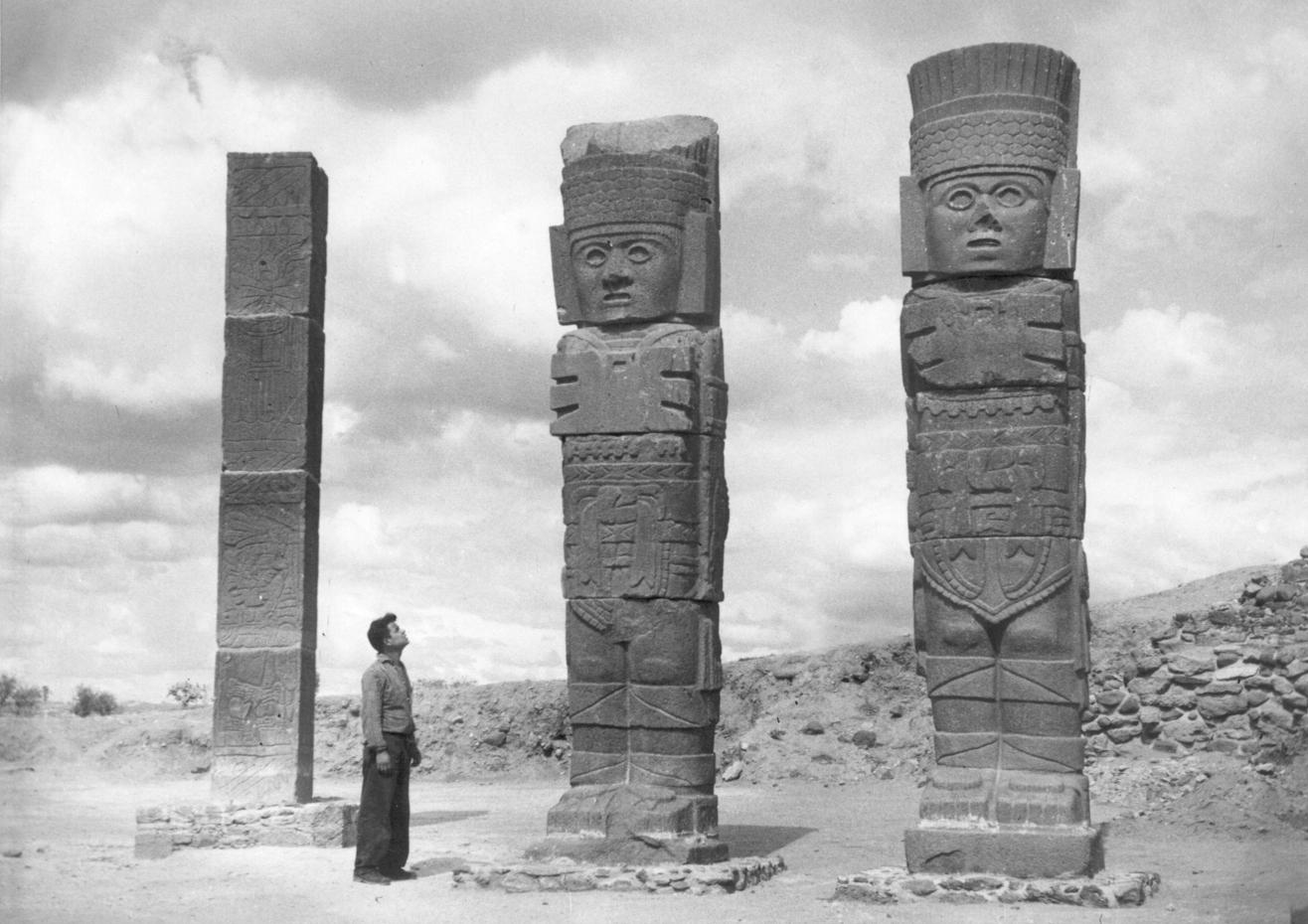
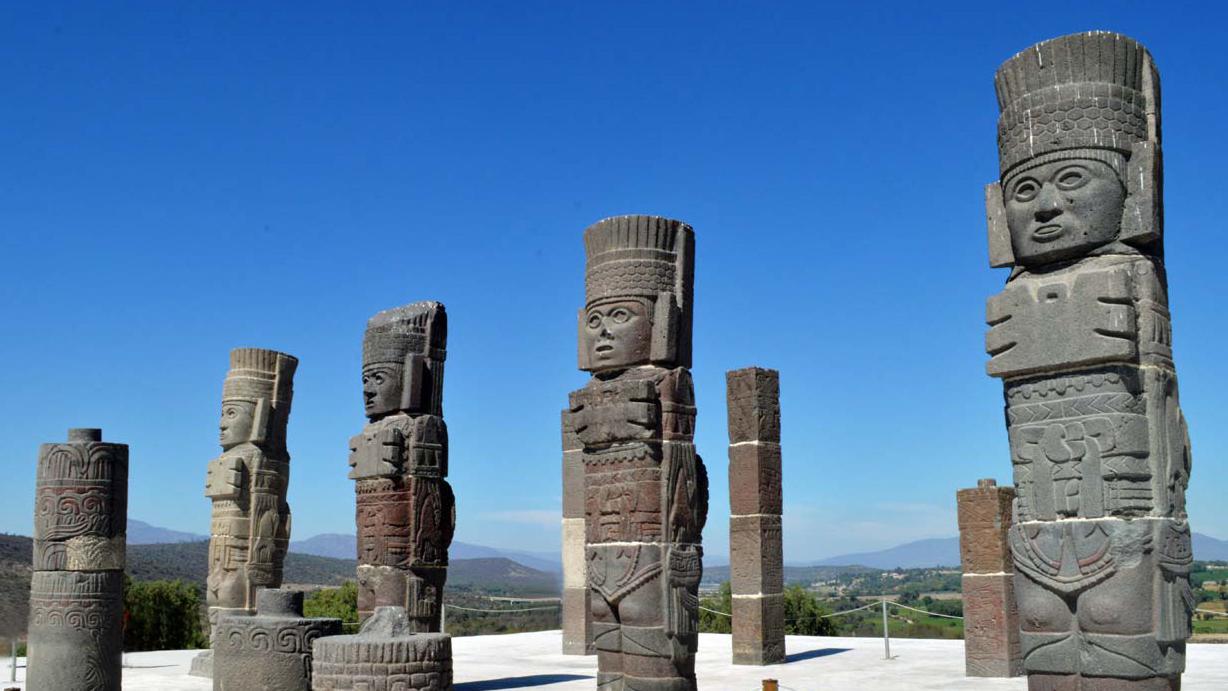
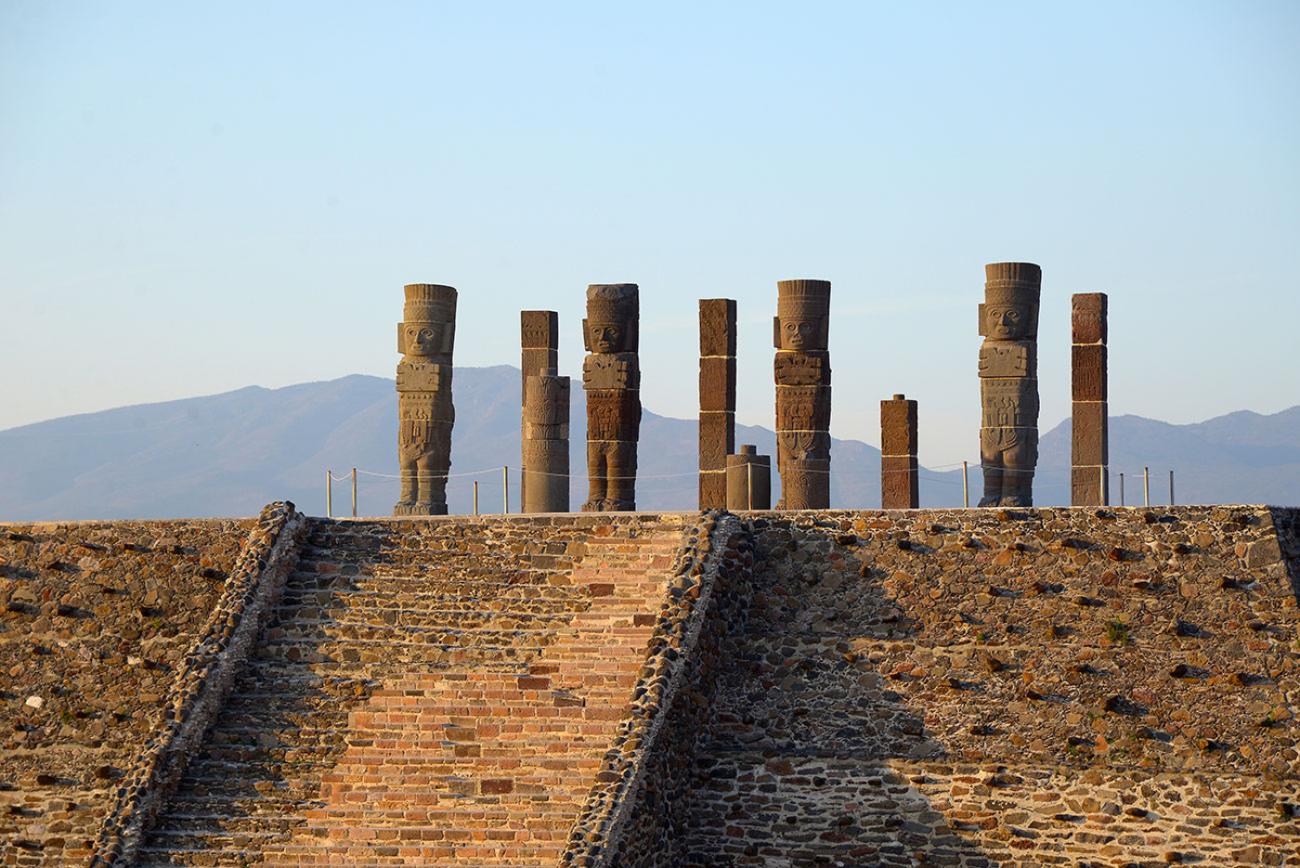
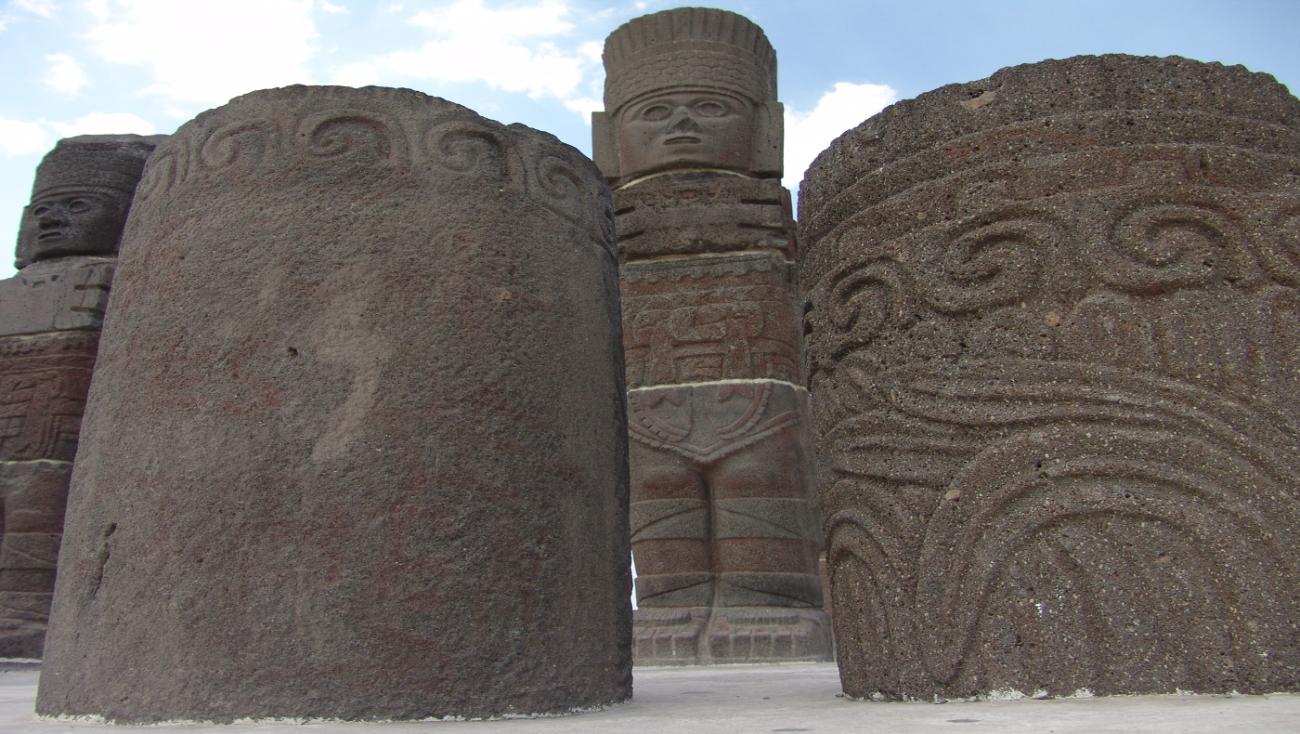
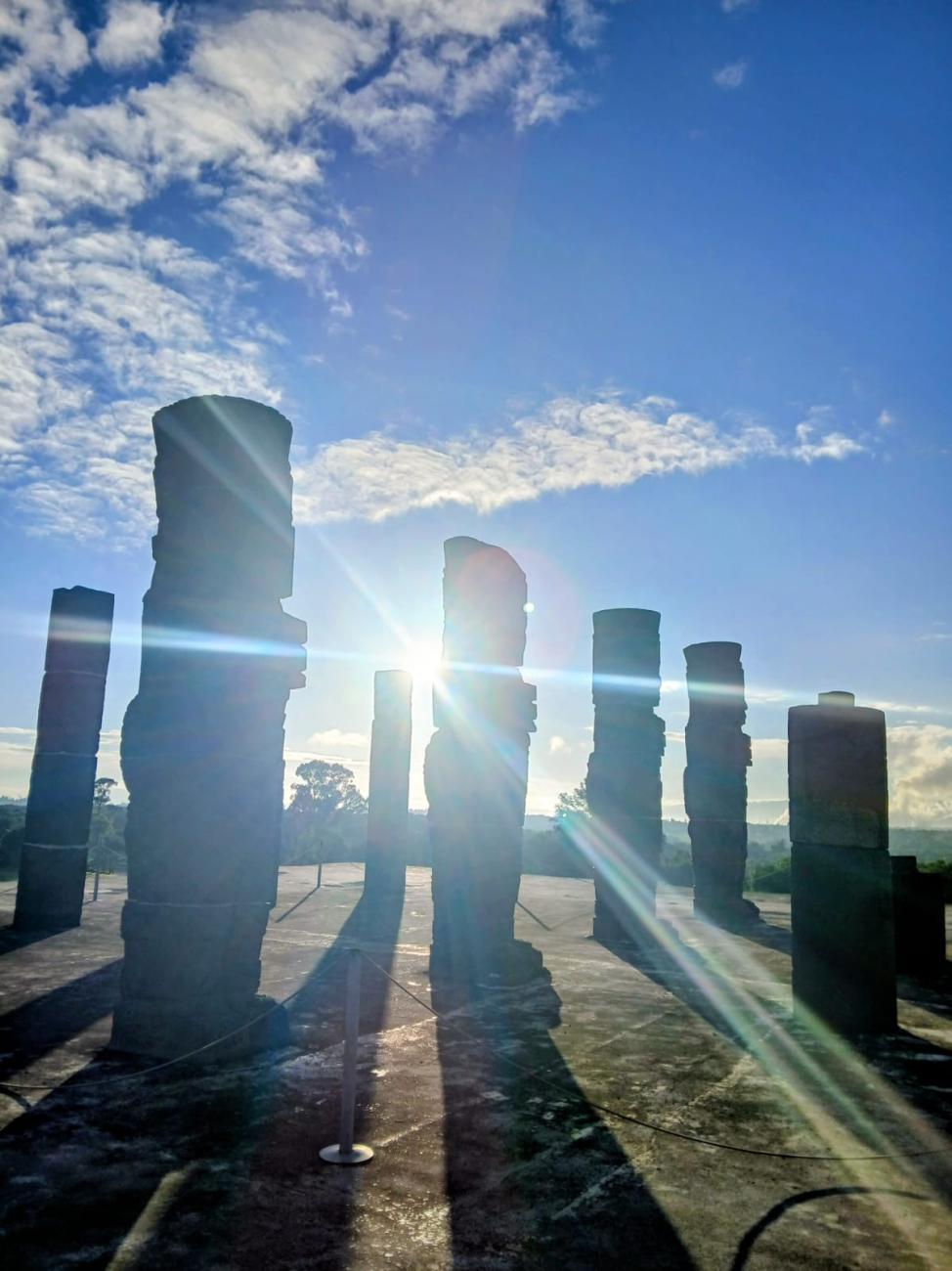
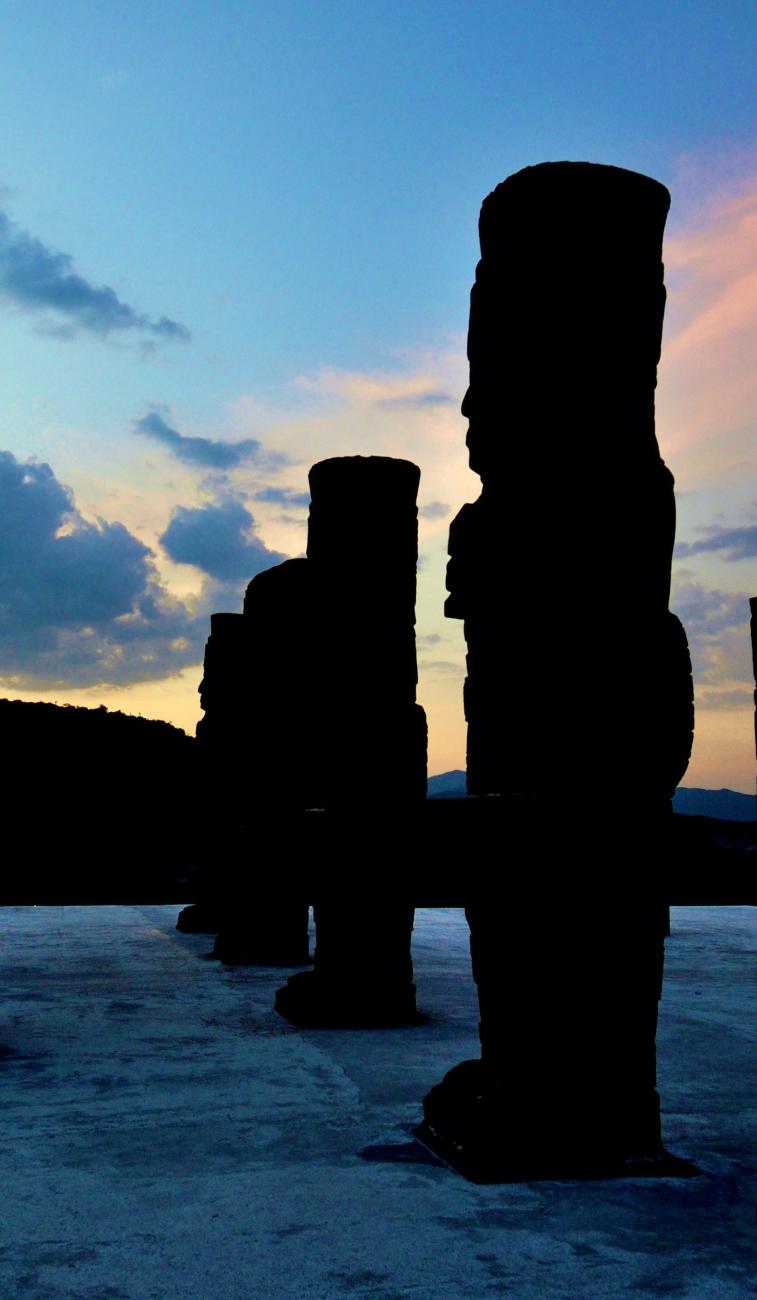
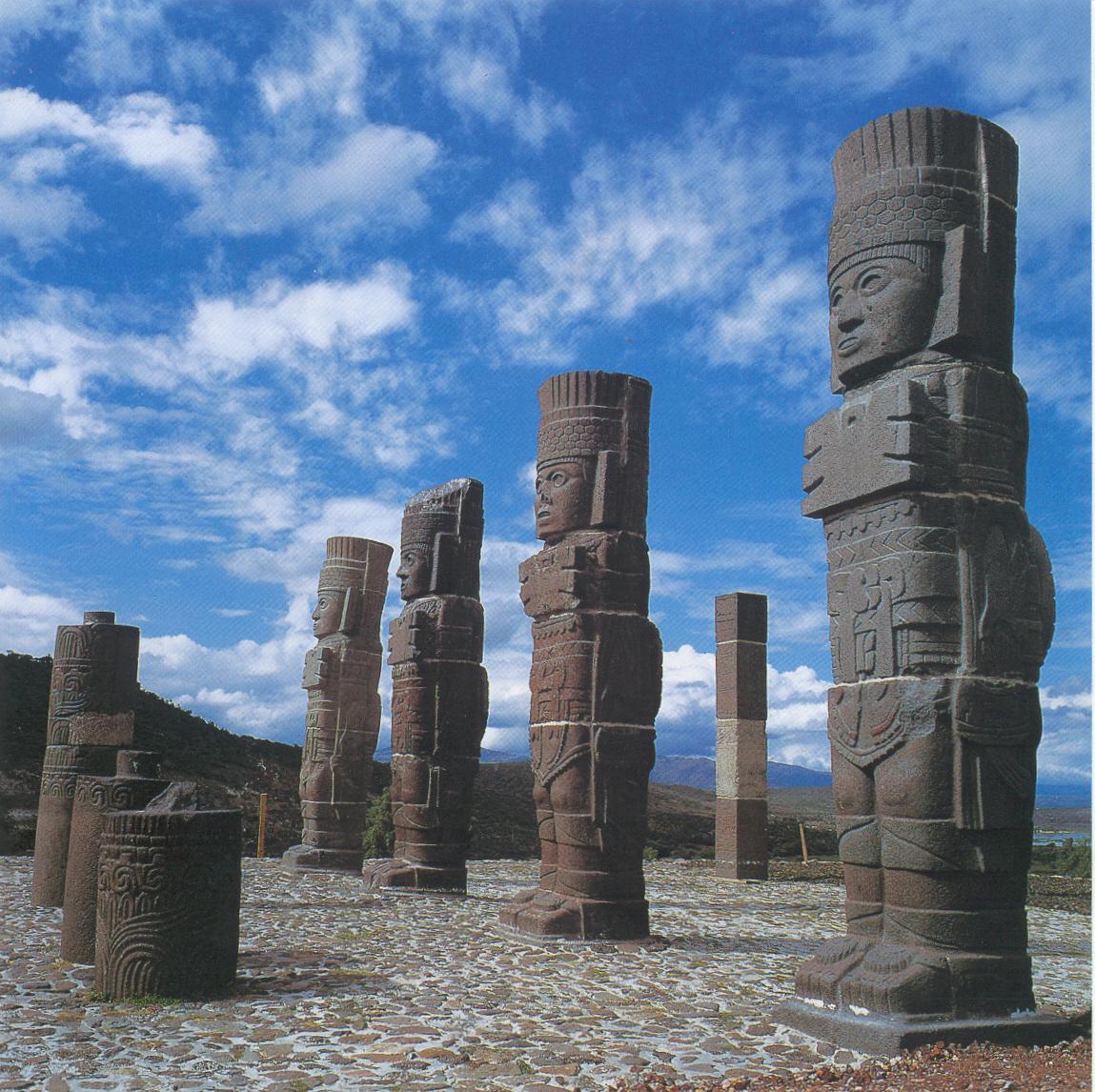
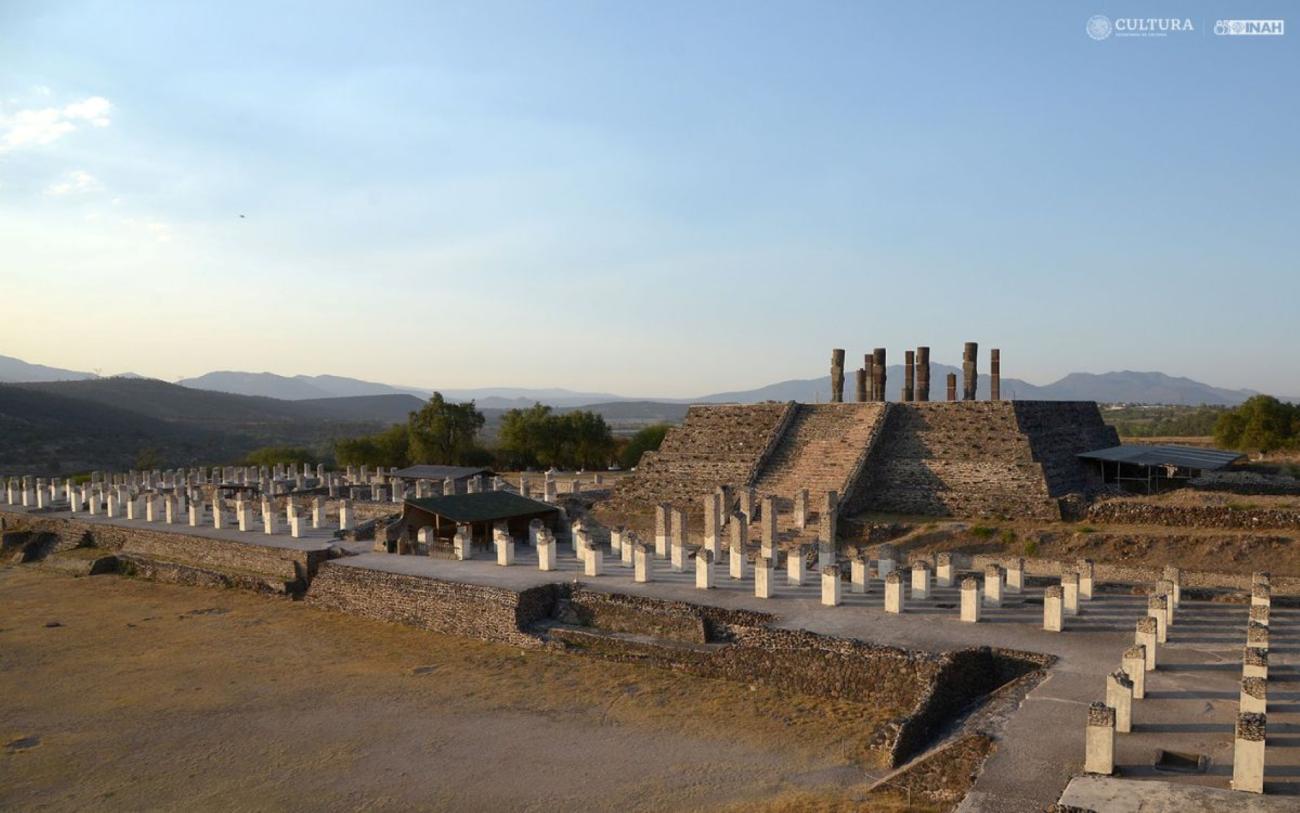
The sculptures of atlantes—likely to originally have been roof supports—are sculpted as warriors wearing butterfly-shaped chest plates, átlatl or dart throwers, obsidian knives, and headdresses. Pilasters are decorated with priests and important figures, as well as snake-shaped columns, which were used as entrances for the lodgings. Building B contains a decoration with reliefs on the wall known as the Coatepantli ("Wall of Snakes"), also found in the Palacio Quemado ("Burned Palace"), which together with the Vestibule structure constitute two of the spaces created by columns, pilasters, and benches.
Archeological explorations at the site began in 1940, led by archeologist Jorge Ruffiere Acosta, whose team worked for 13 seasons before they eventually completed their work in 1960. Later projects carried out by the universities of Tulane and Columbia were coordinated by the INAH’s regional office in Hidalgo, until Guadalupe Mastache and Robert Cobean took over this work in the 1990s.
This metropolis—which stretched over more than 6 square miles—was inhabited for over four centuries and, alongside Teotihuacan and Tenochtitlan, was one of central Mexico’s most important urban centers. Some believe that, by around the year 1000 AD, it had become the capital of Mesoamerica’s entire central highland region. Its sphere of influence expanded to include most of central Mexico, as well as the Bajío, Gulf Coast, and the Yucatán; it probably also had an effect on Western Mexico’s regions and the Soconusco on the Pacific coast of modern-day Chiapas, on the border with Guatemala.
The Toltecs are the first pre-Hispanic people in the center of ancient Mexico about whom we possess information in regard to their history and culture (names of kings, accounts of the origins of Tula, their conquests and decline). A number of different written sources state that Tula was the city of a priest-king called Ce Ácatl Topiltzin, one of Mesoamerica’s most fascinating and heroic characters whose life was a blend of history and legend.
Tula reached its peak between 900 and 1000 AD, when its urban center experienced a transformation and reached its maximum expansion. This indicates that it was a heterogeneous, diversified, and complex society with a class system. Land in the city was divided into public and private spaces, with open areas, administrative and religious buildings, as well as zones for people to gather, share information and trade merchandise; there were also palaces, various housing typologies, and neighborhoods of varying kinds with areas for the manufacture of goods. The reason for Tula’s decline and collapse in the twelfth century remain unclear, but one of the causes may have been over-population and, therefore, the migration of its inhabitants to other cities.
Conjunto Quetzalcóatl
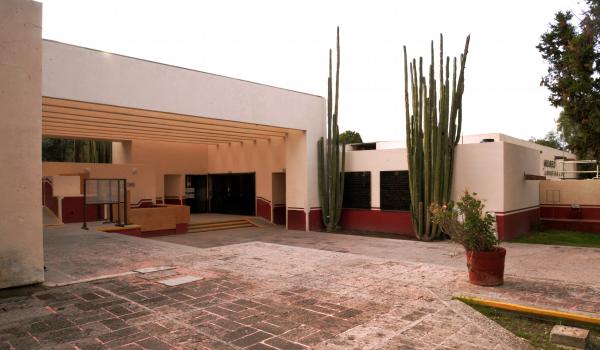
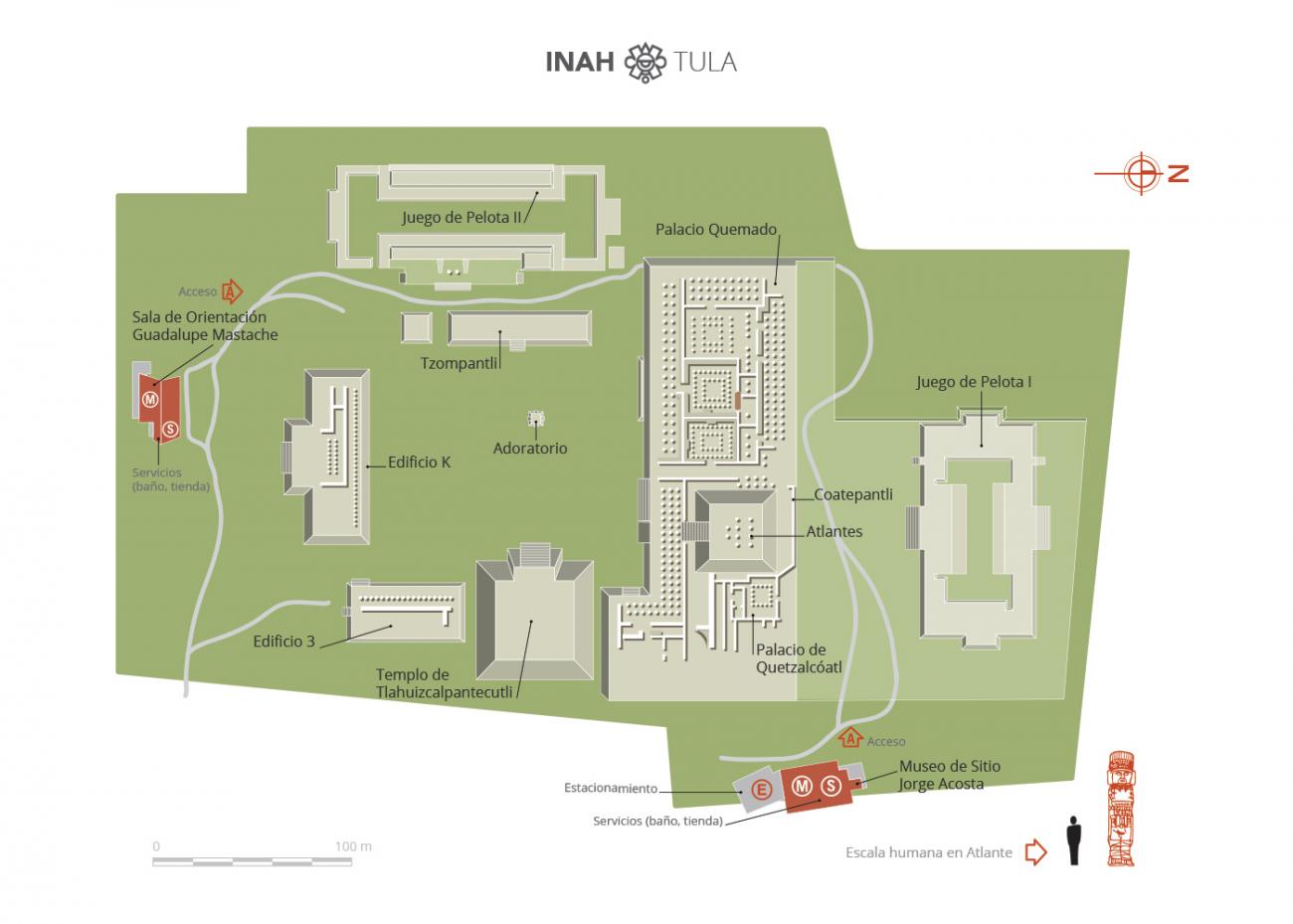
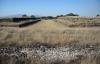
At the entrance of the site, one can see part of the extensive living areas that surrounded the ceremonial center. This type of houses, where most of the population lived, consisted of two or three rooms, usually quite small.Coatepantli, Snake Wall: It is so called because of its resemblance to the…
Conjunto Quetzalcóatl
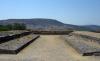
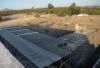
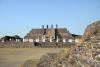
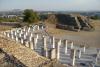
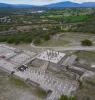
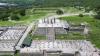
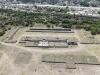

At the entrance of the site, one can see part of the extensive living areas that surrounded the ceremonial center. This type of houses, where most of the population lived, consisted of two or three rooms, usually quite small.
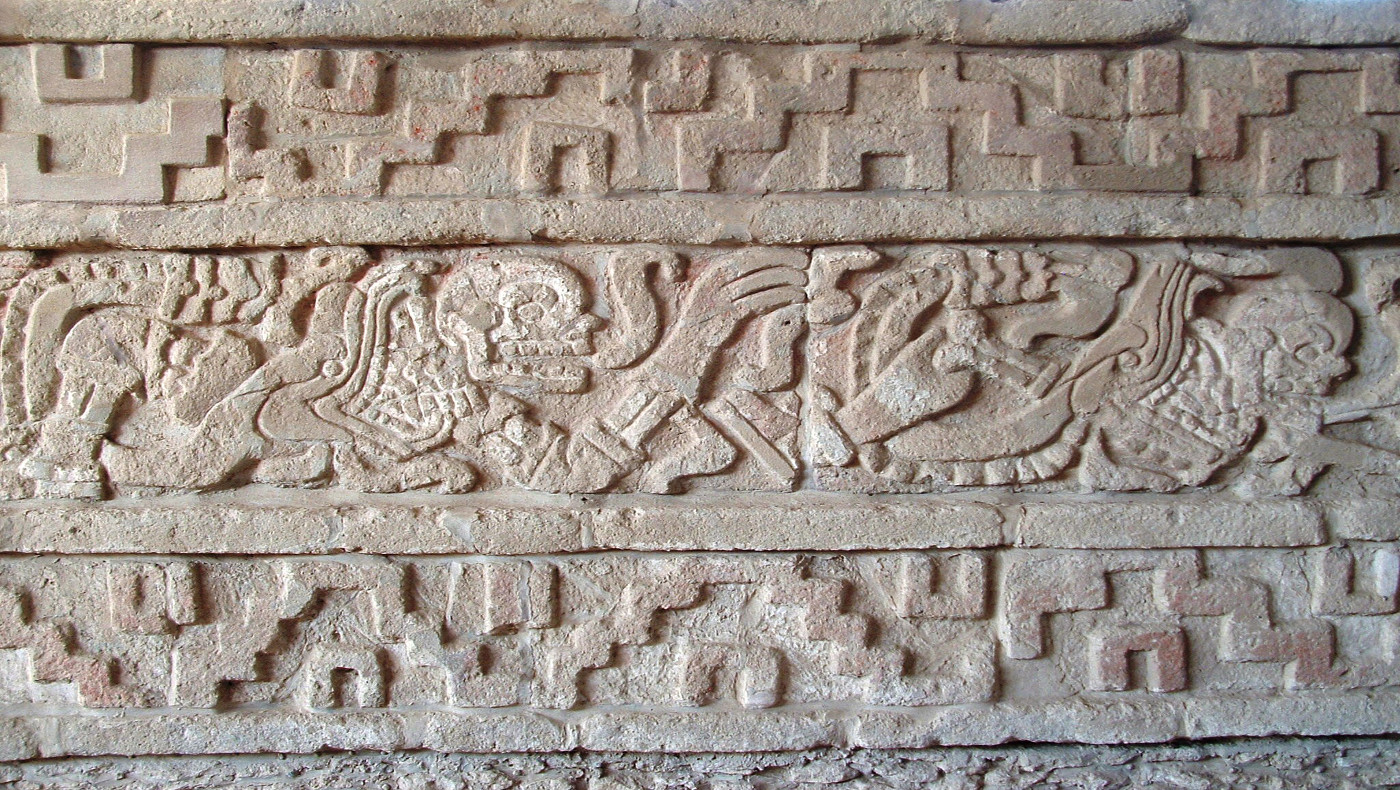
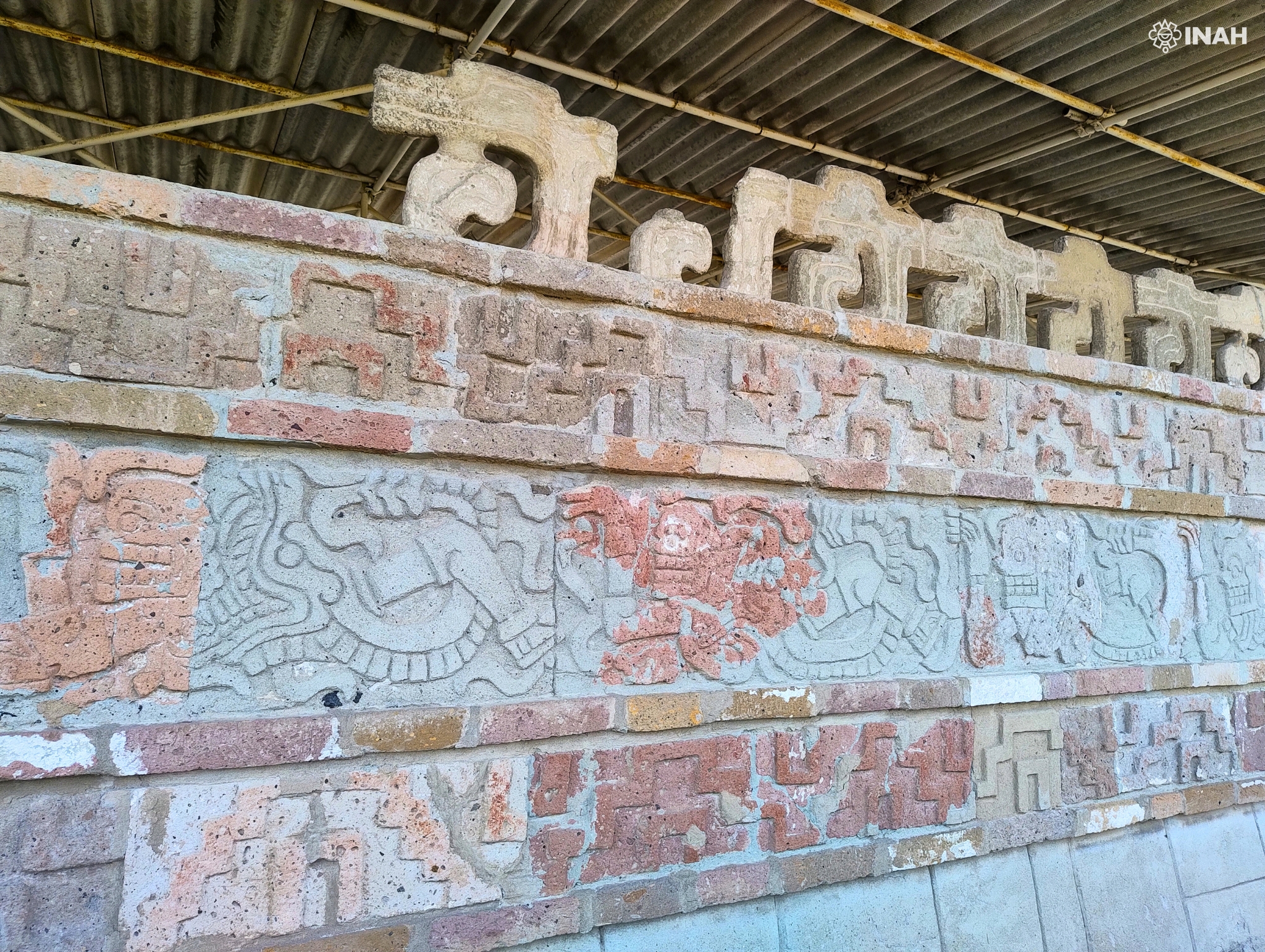
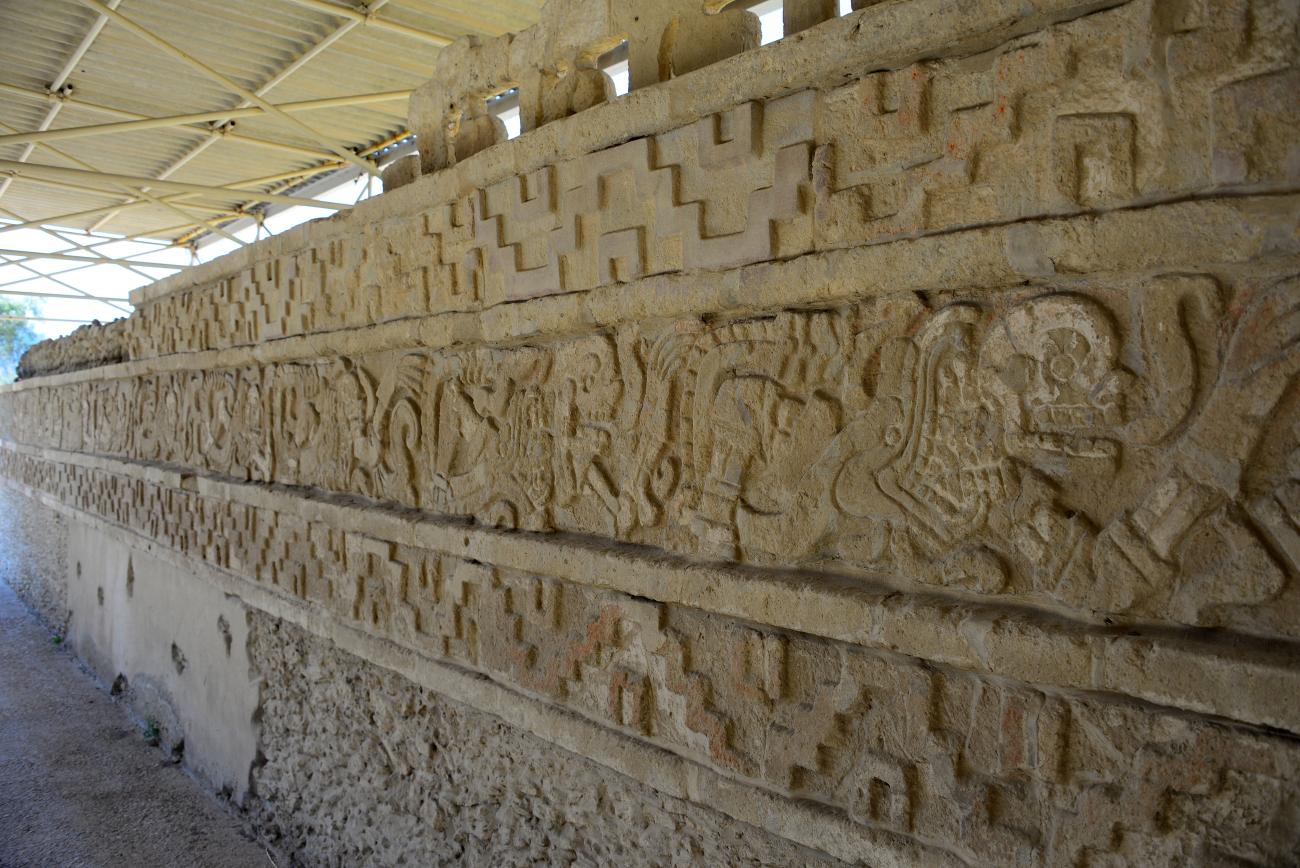
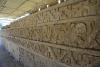
Coatepantli, Snake Wall: It is so called because of its resemblance to the walls or “murallas” with sculptures of snakes that surrounded many Aztec buildings. It is possible that it was dedicated to Tlahuizcalpantecuhtli, one of the invocations of Quetzalcoatl as “Morning Star”, by the battlements of its superior part, that represent snails cut transversely, symbol associated to Venus. It contains three rows of friezes, the central one shows serpents that devour semi-disembodied individuals, who would represent the soul of the warriors; the others have staggered fretwork.
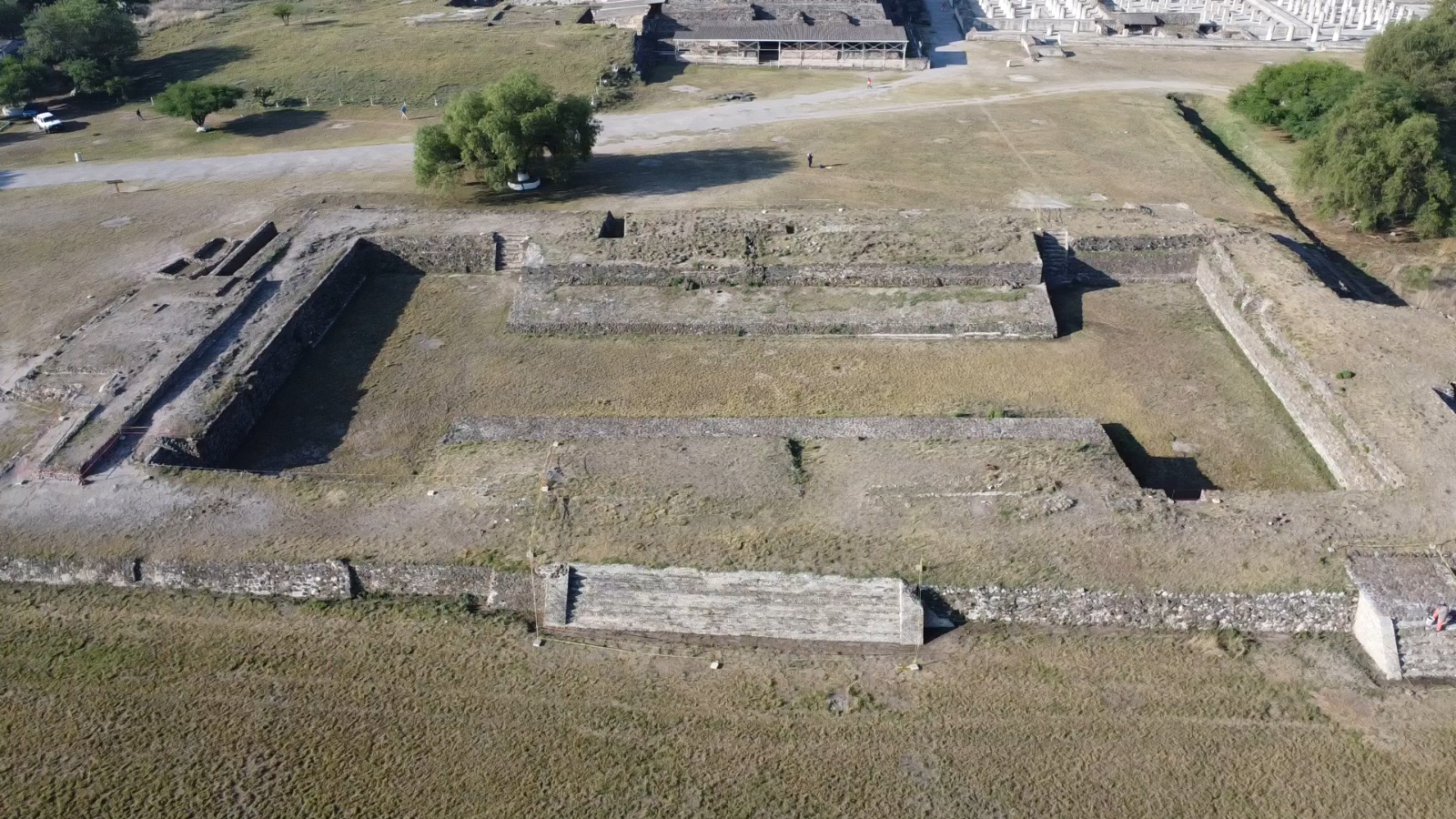
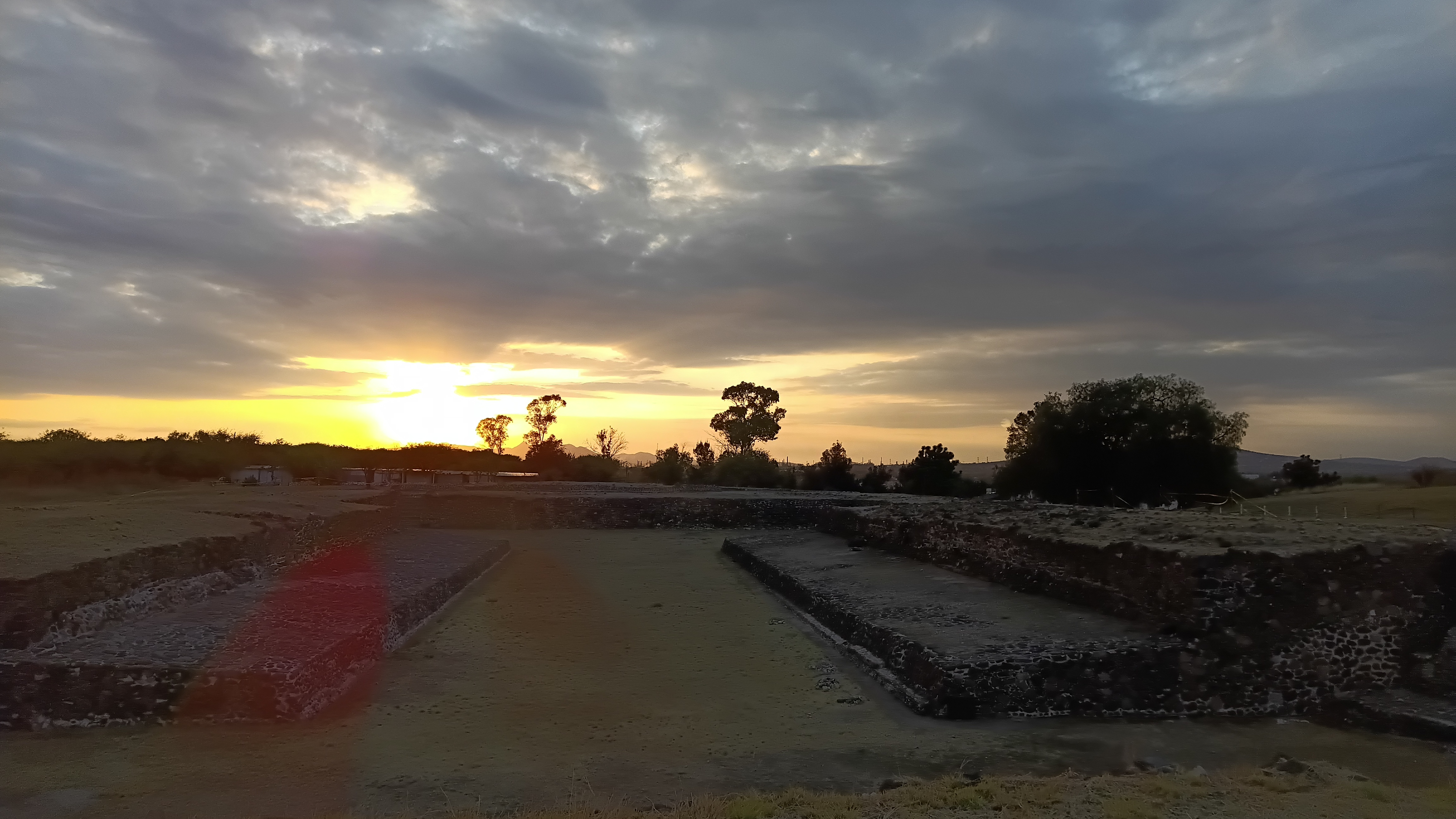
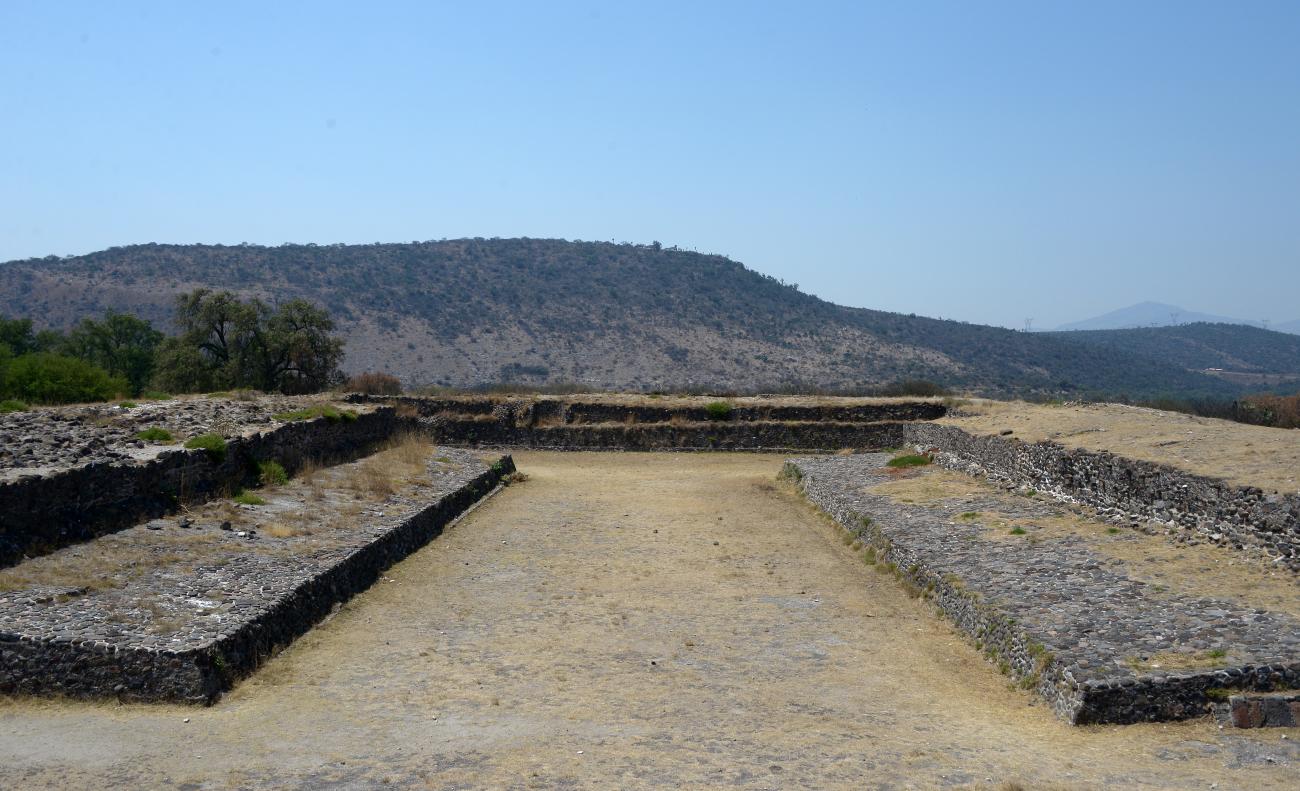
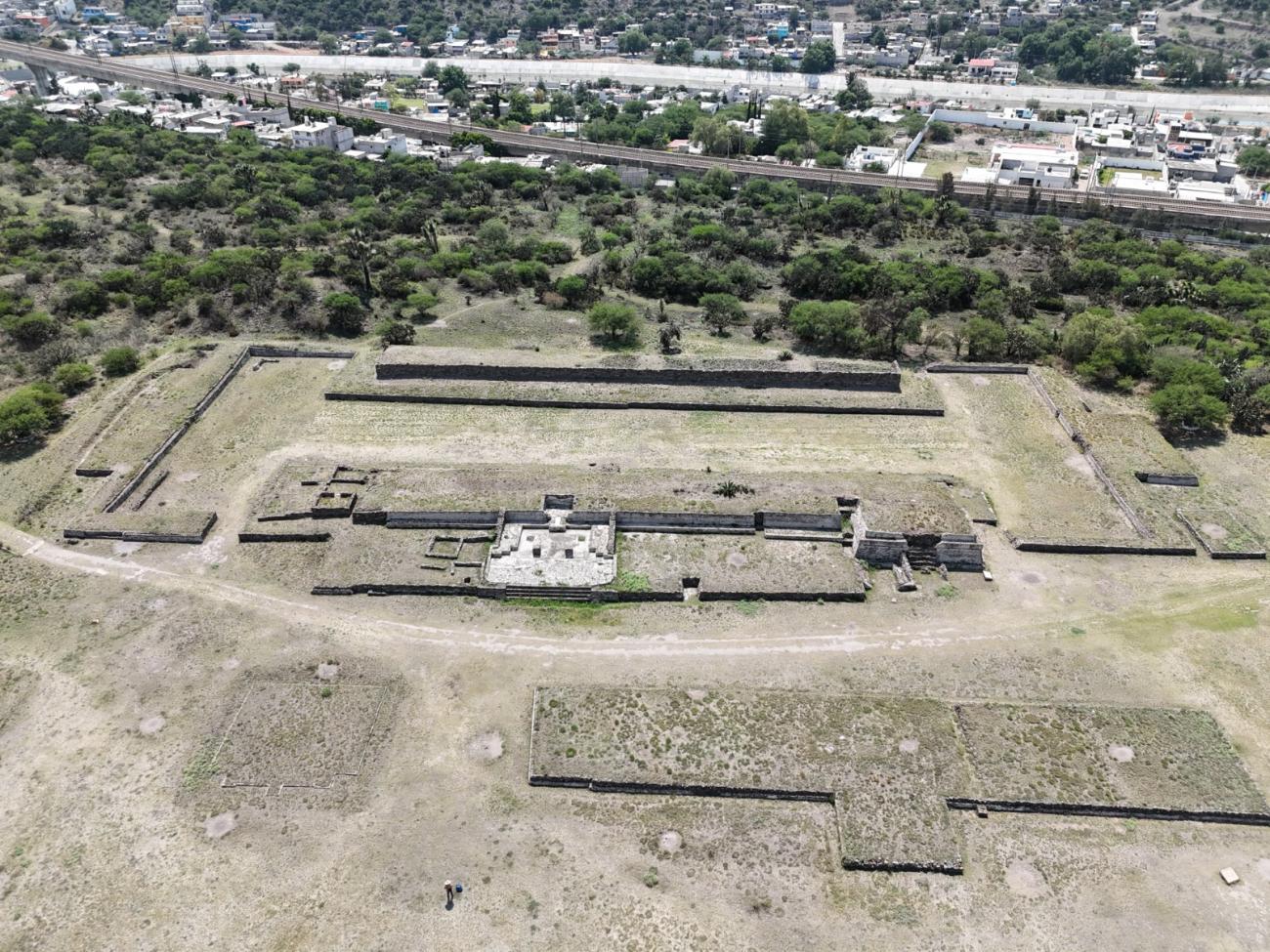
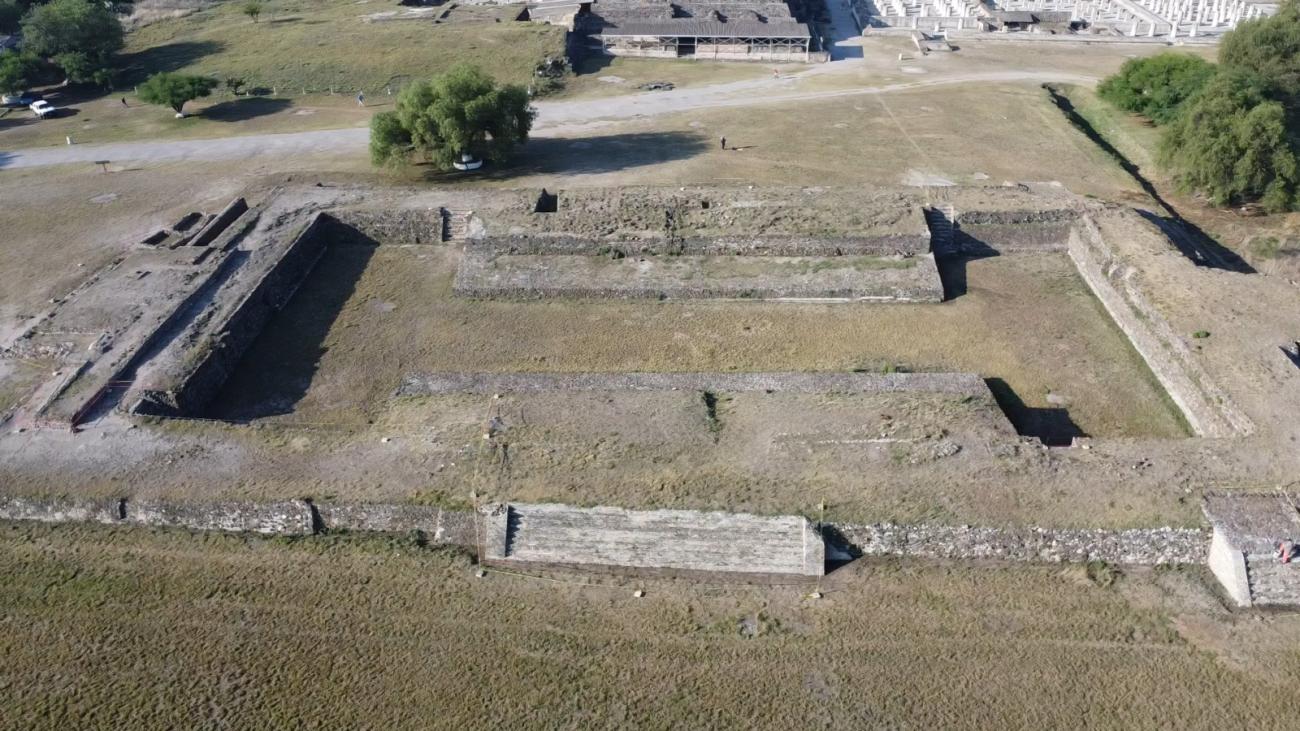
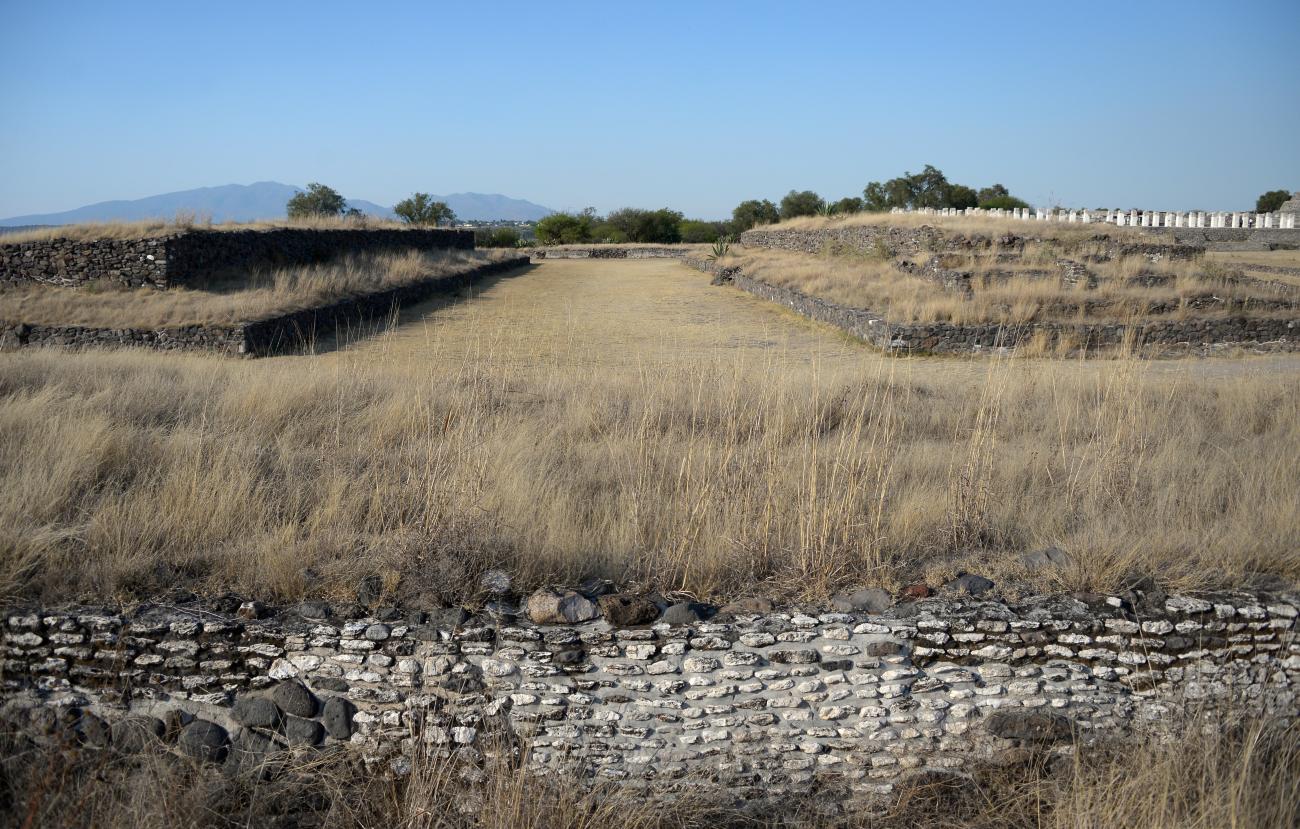
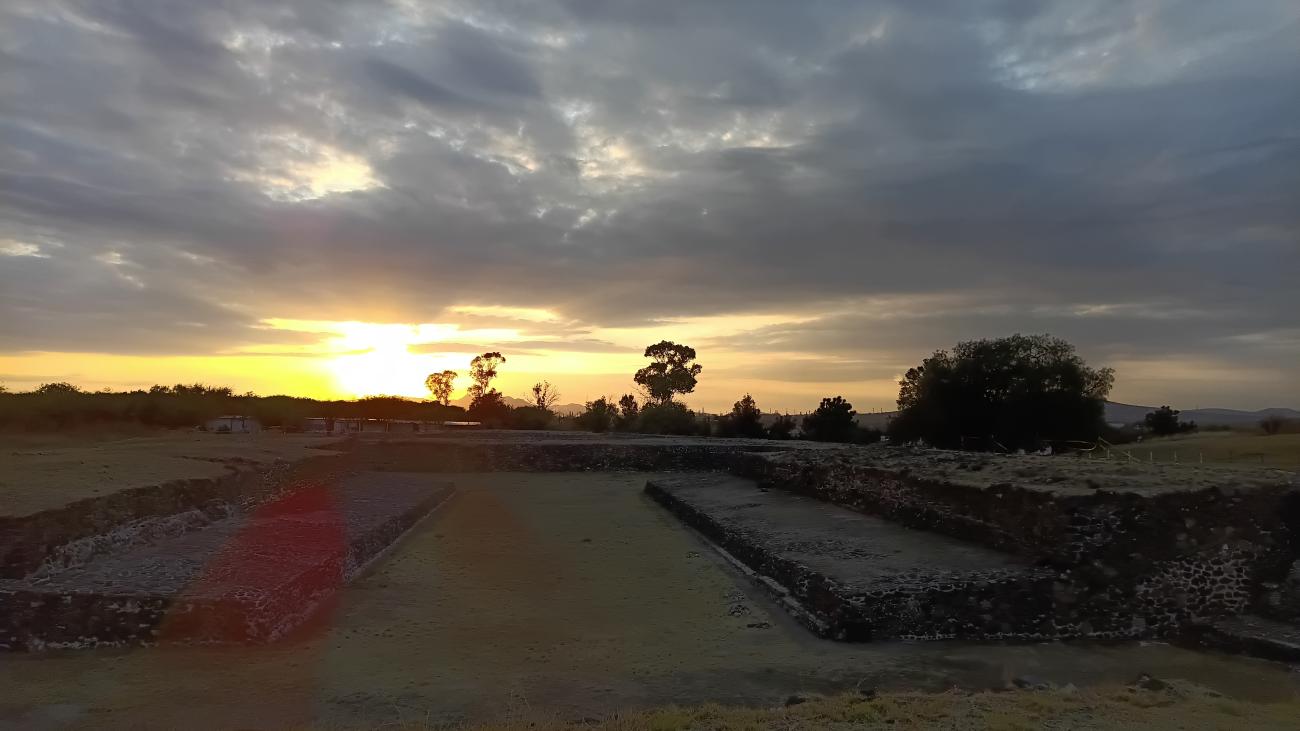
Ball Court 1: It is located outside the ceremonial zone of Tula Grande, but associated to it in the north end. It consists of a large courtyard in the shape of an “I” delimited by walls that rise on benches. This building would have been decorated with carved stones alluding to the players with their attire.
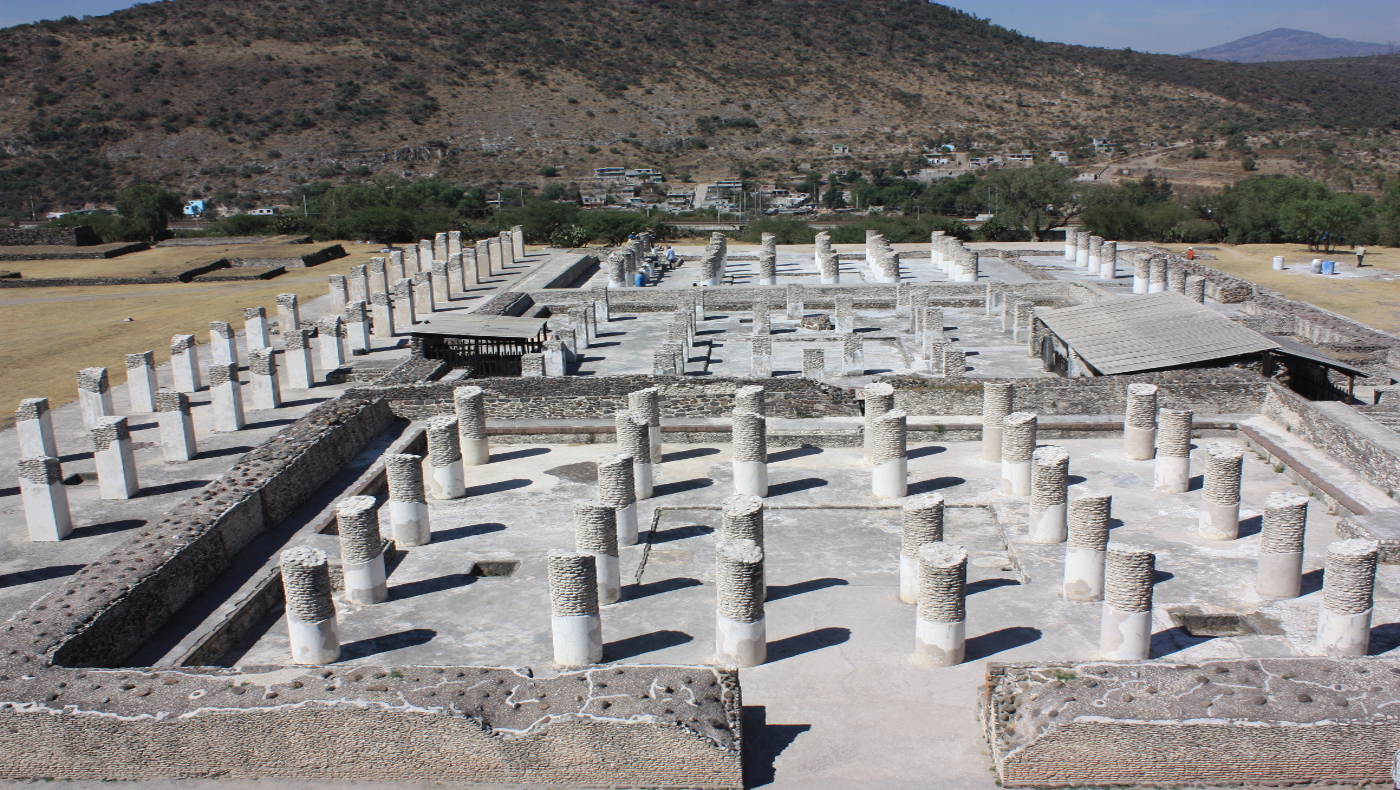
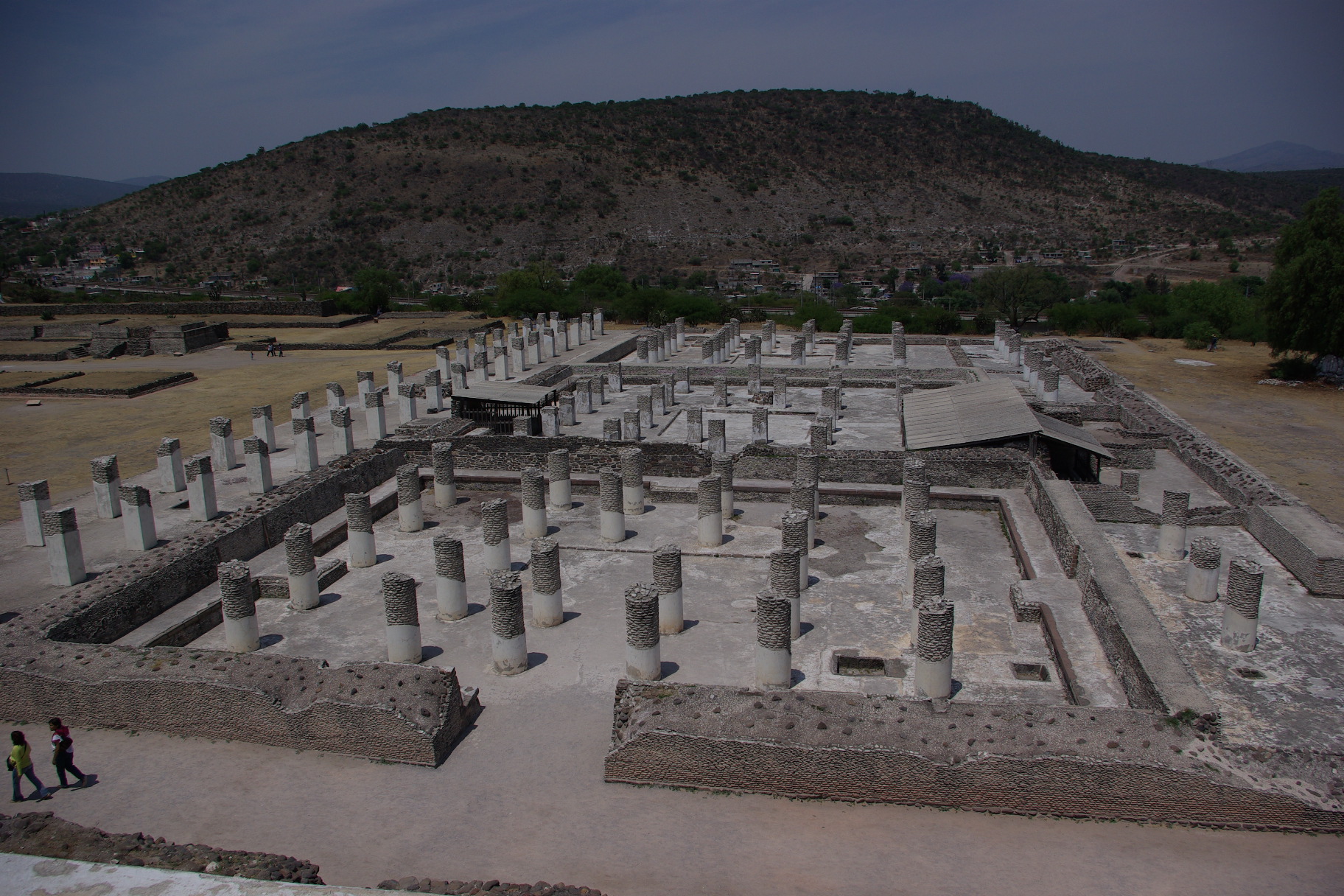
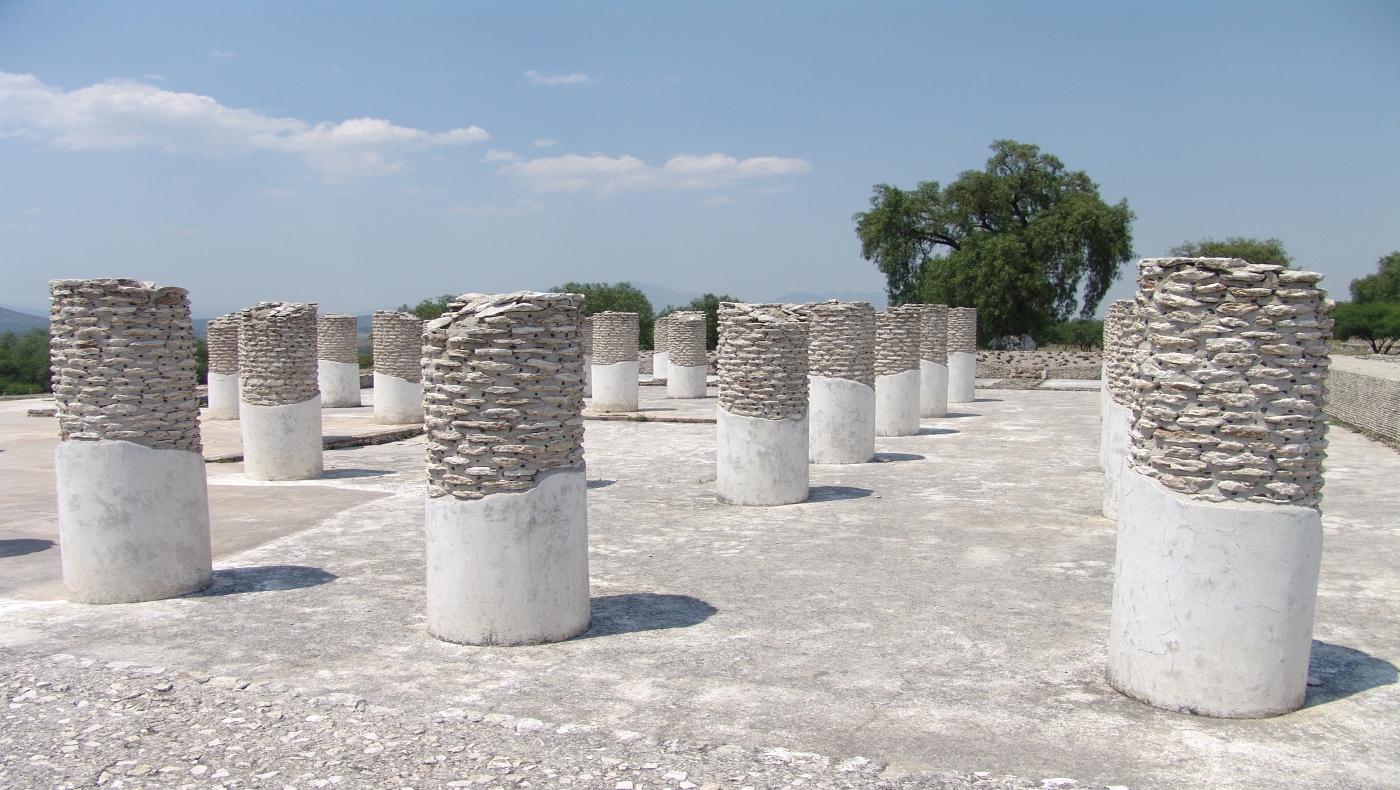
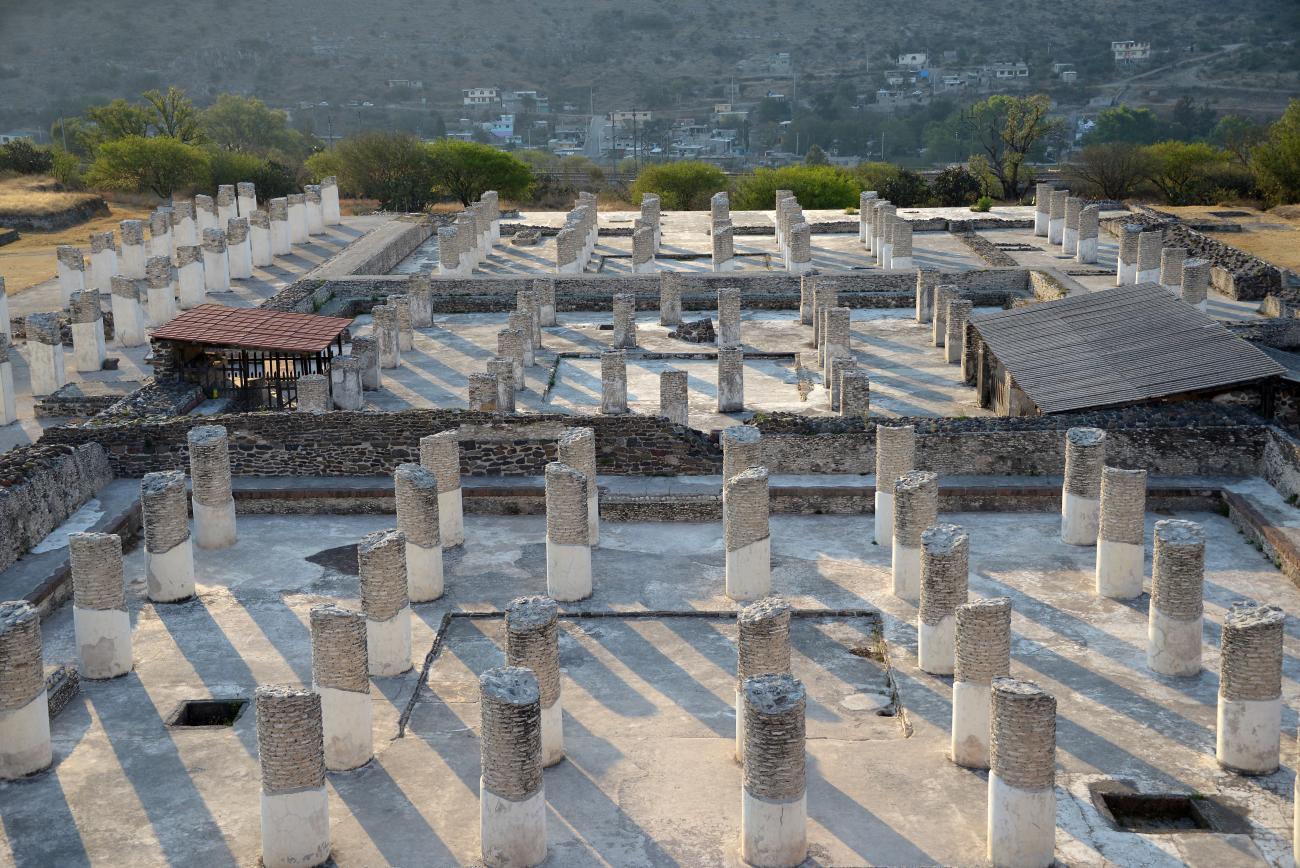
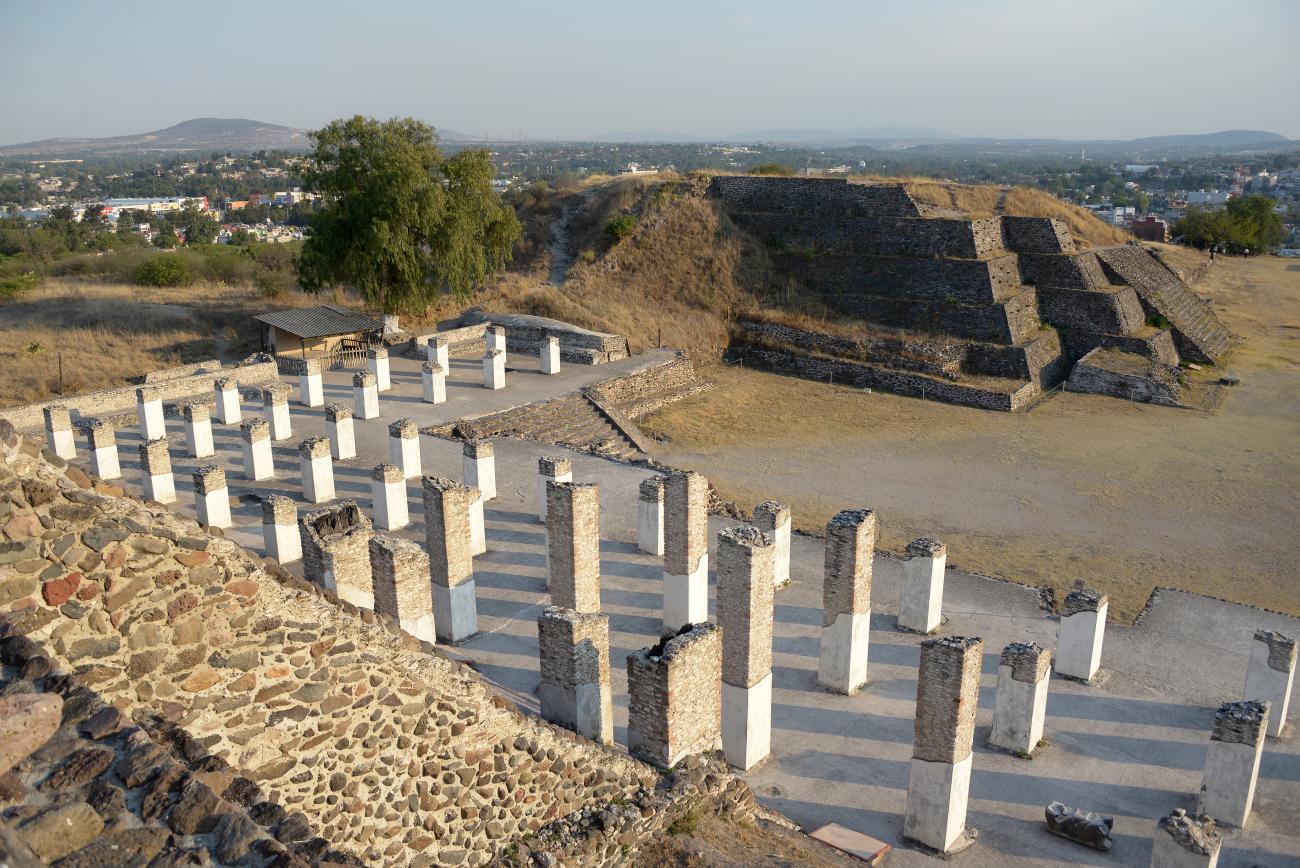
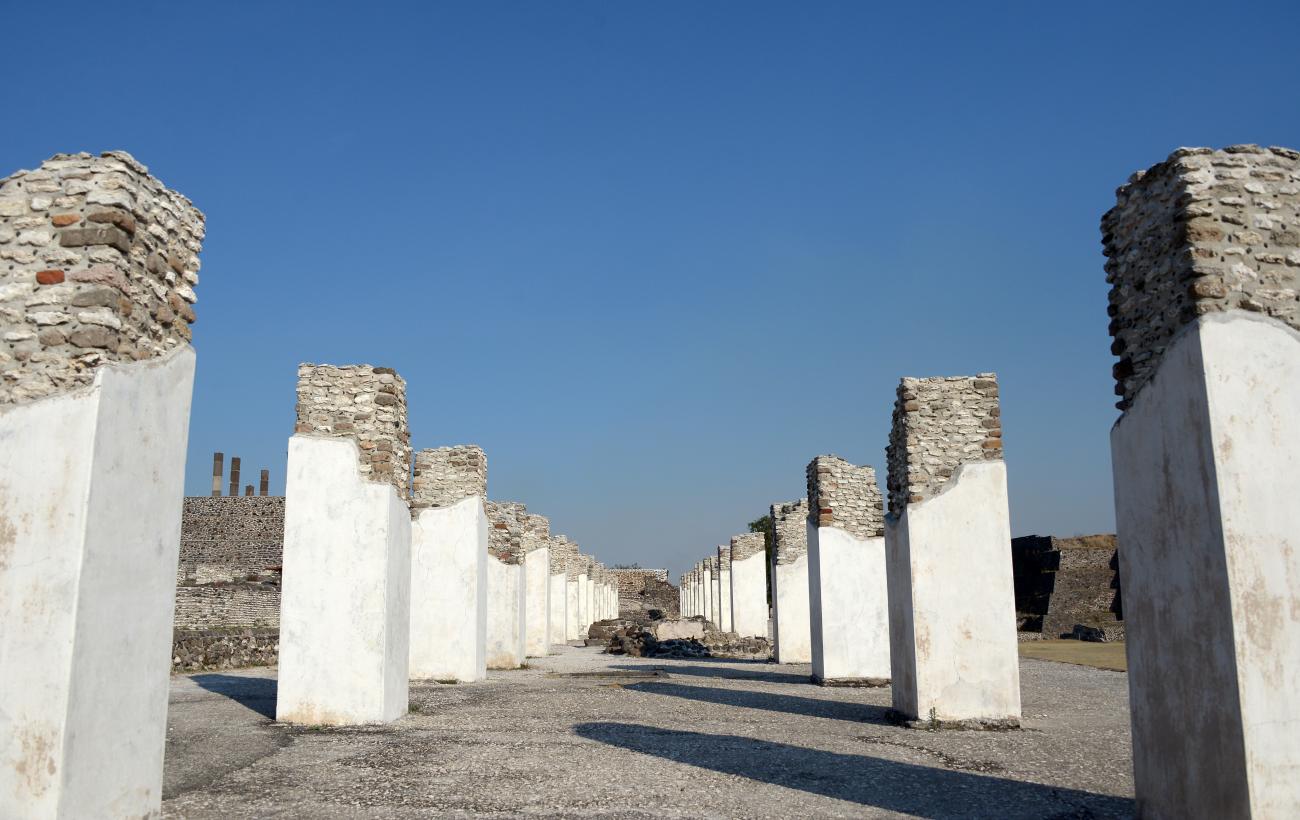
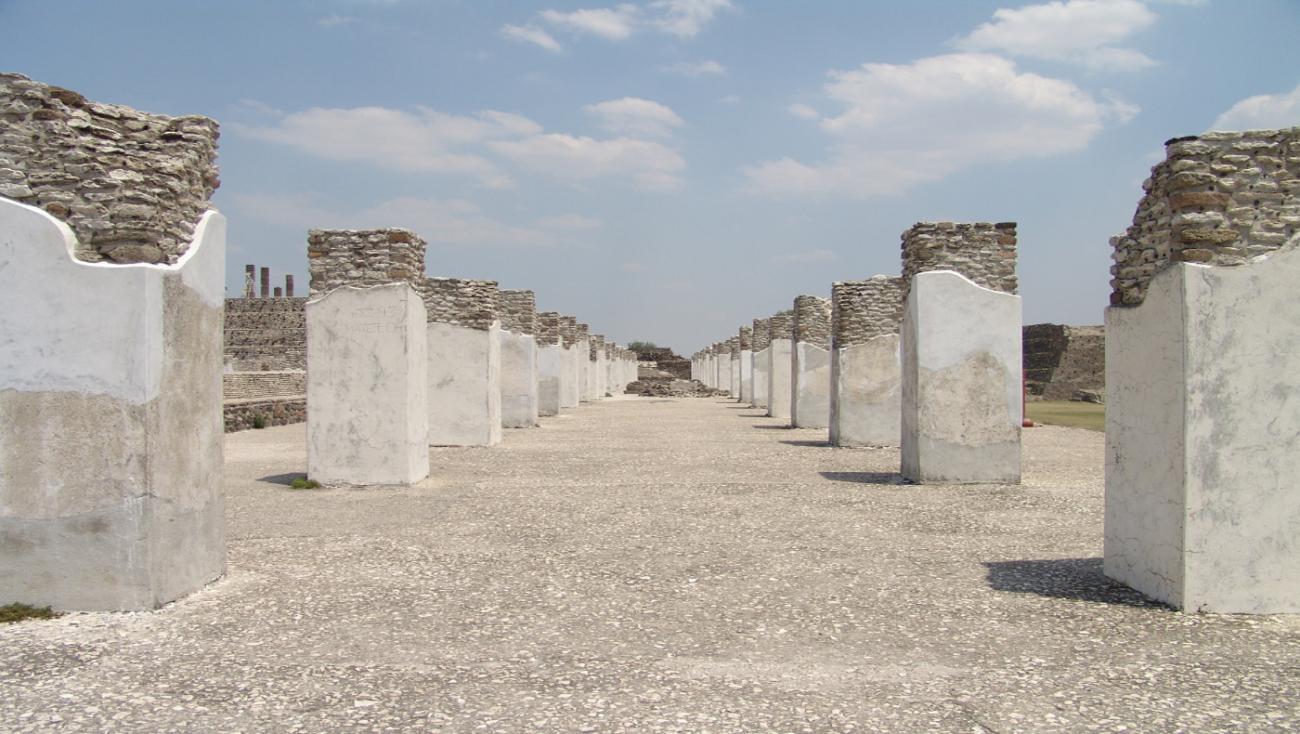
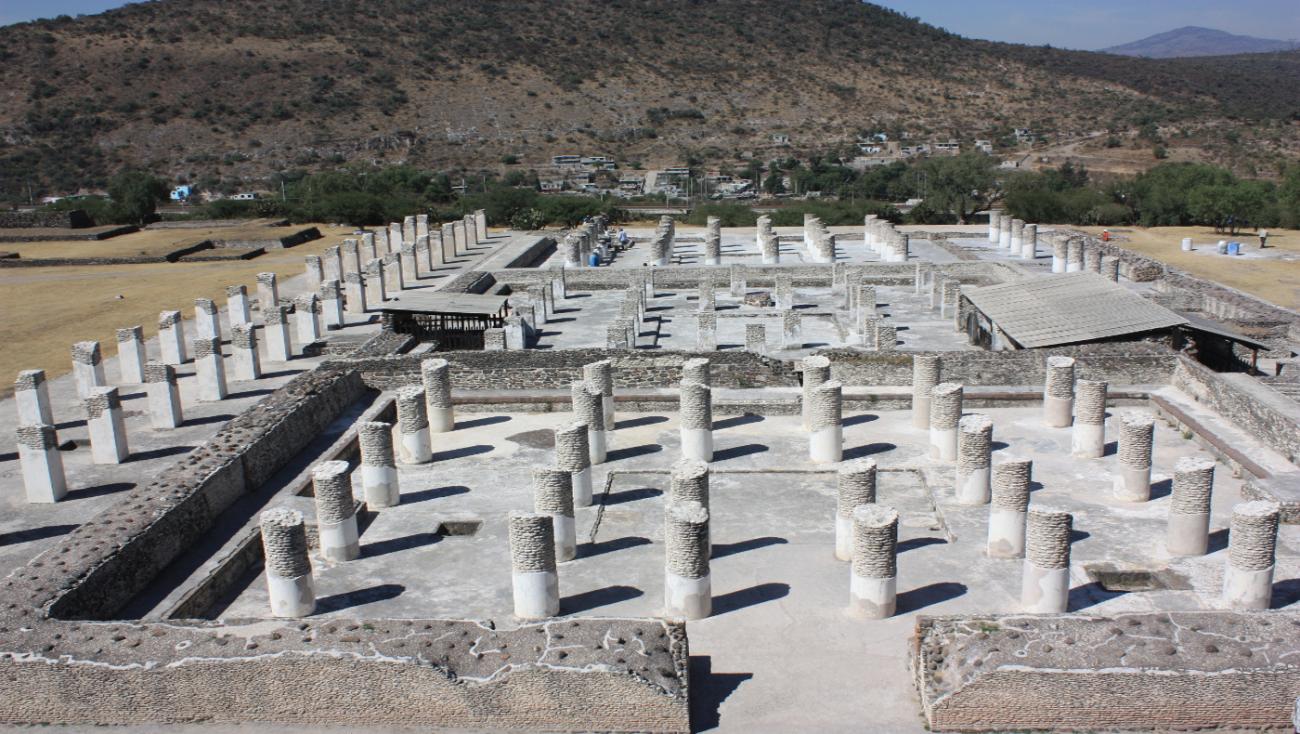
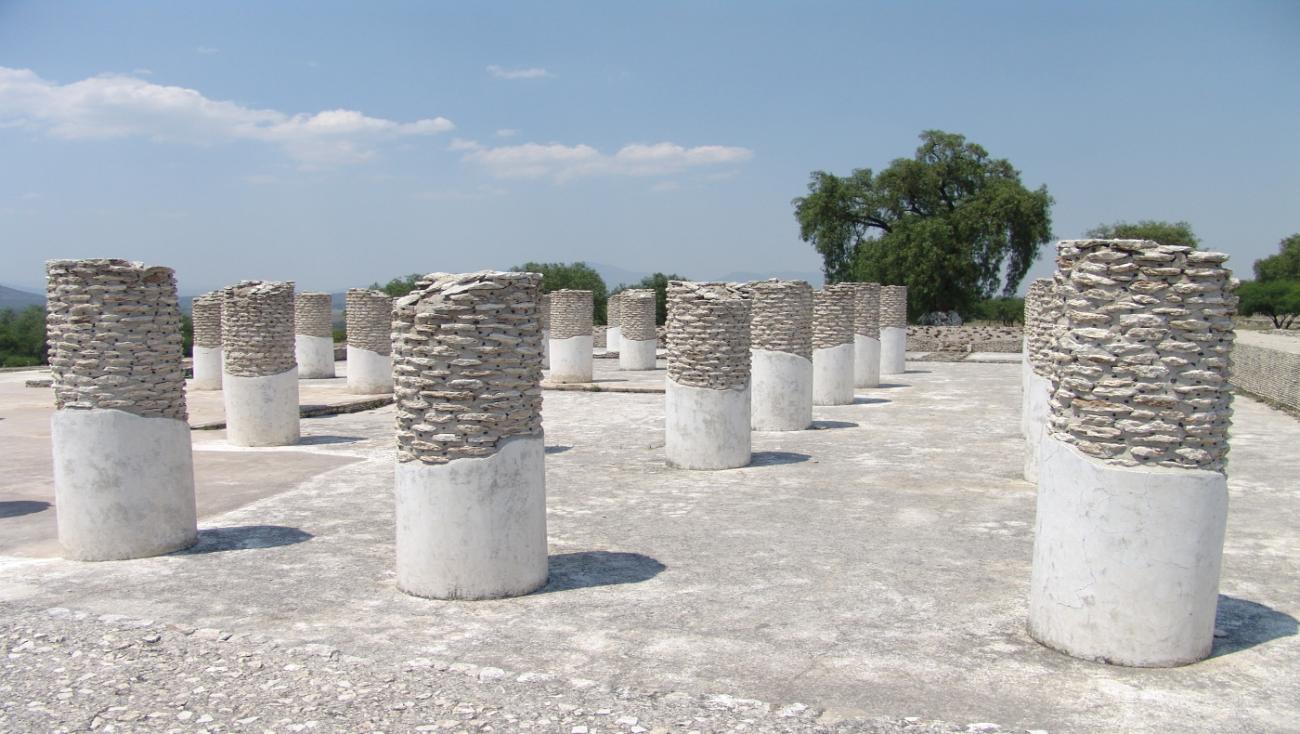
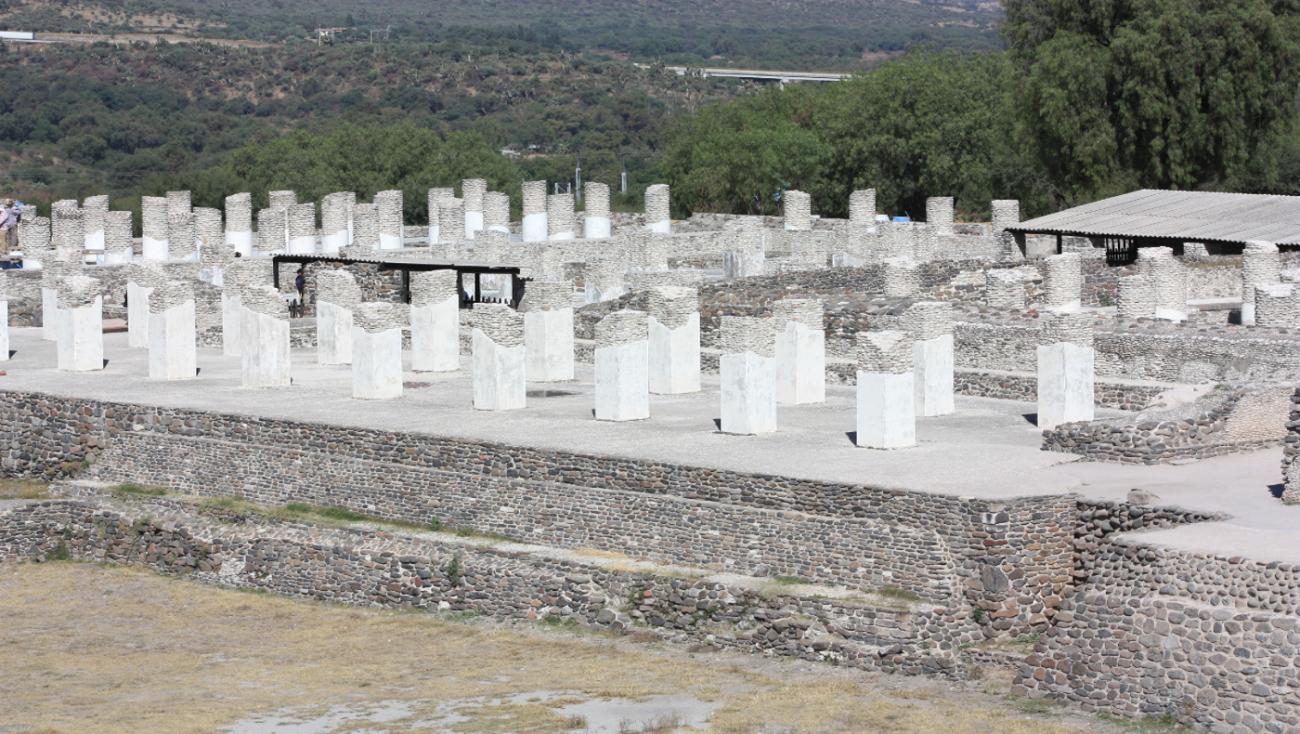
Palace of the Columns or Burnt Palace: It is known as Palacio Quemado because of the evidence of fire found. However, this building, more than for habitation, would function as a public-administrative structure or a kind of market. It is large and consists of three rooms, each with its own access and an internal courtyard, surrounded by columns to support the ceilings. In its interior there are remains of benches that were decorated with polychrome tombstones in which warriors with spears and shields are observed. The cornice of these benches is decorated with rows of serpents, some of them feathered, others represent Mixcoatl, “Serpent of clouds”, because of the symbol of clouds that they show.
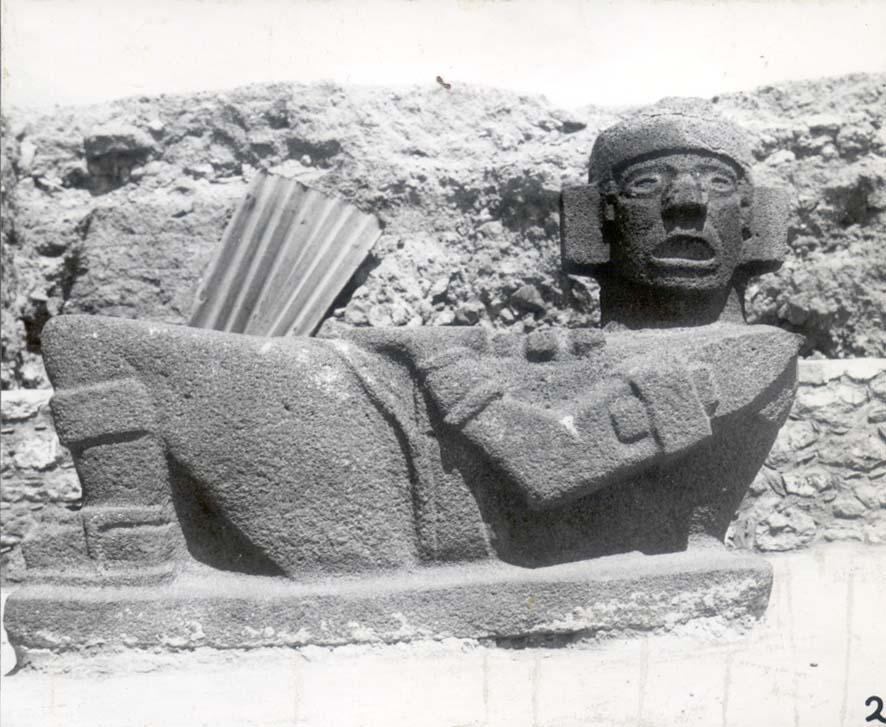
The benches described would have been seats for the priests or lords who congregated there. Likewise, there is still evidence of some altars and tlecuiles, used to make fire. In the center room there is a stone sculpture called Chac Mool, characteristic of Tula and other regions of Mesoamerica; the character is lying down and holds in his belly a container to place offerings, so it is considered a bearer of the same for the gods.
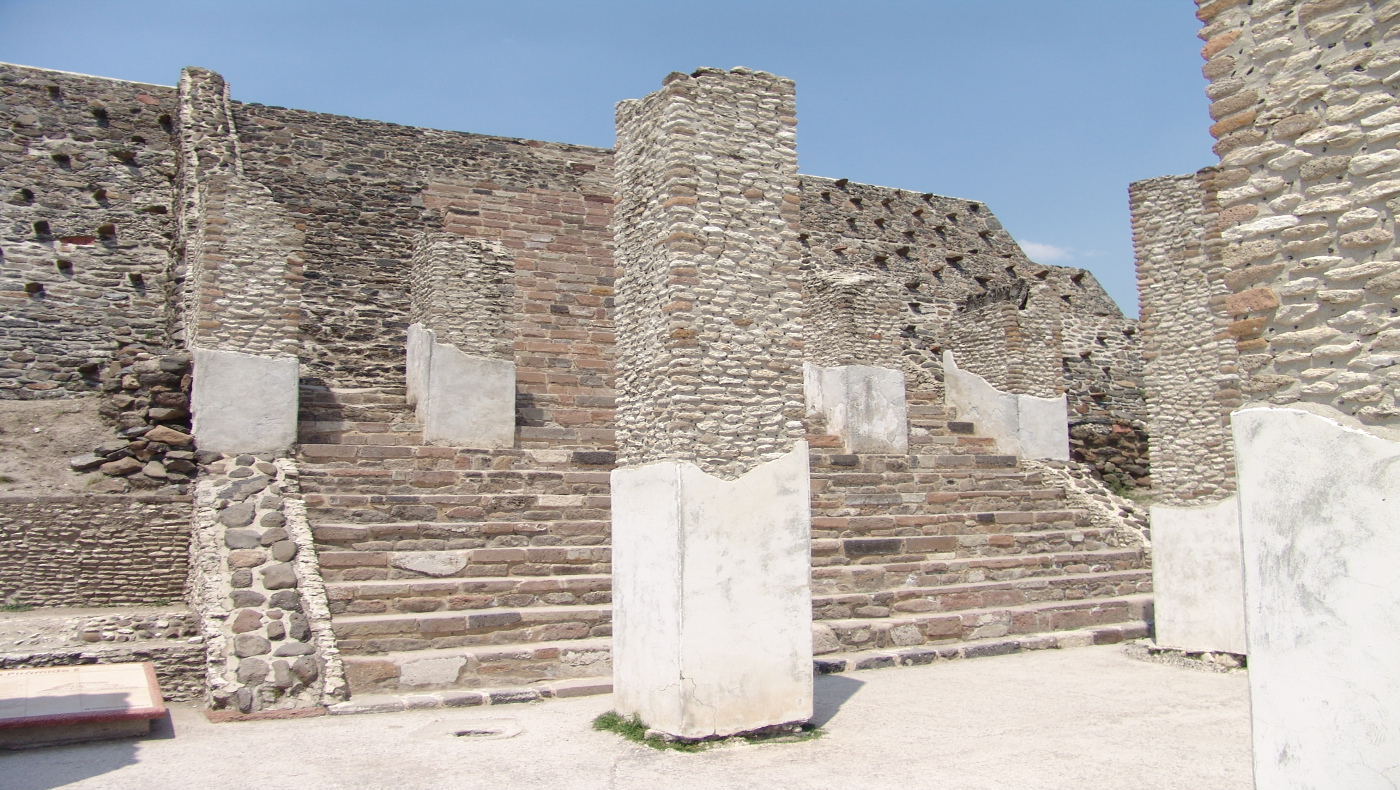
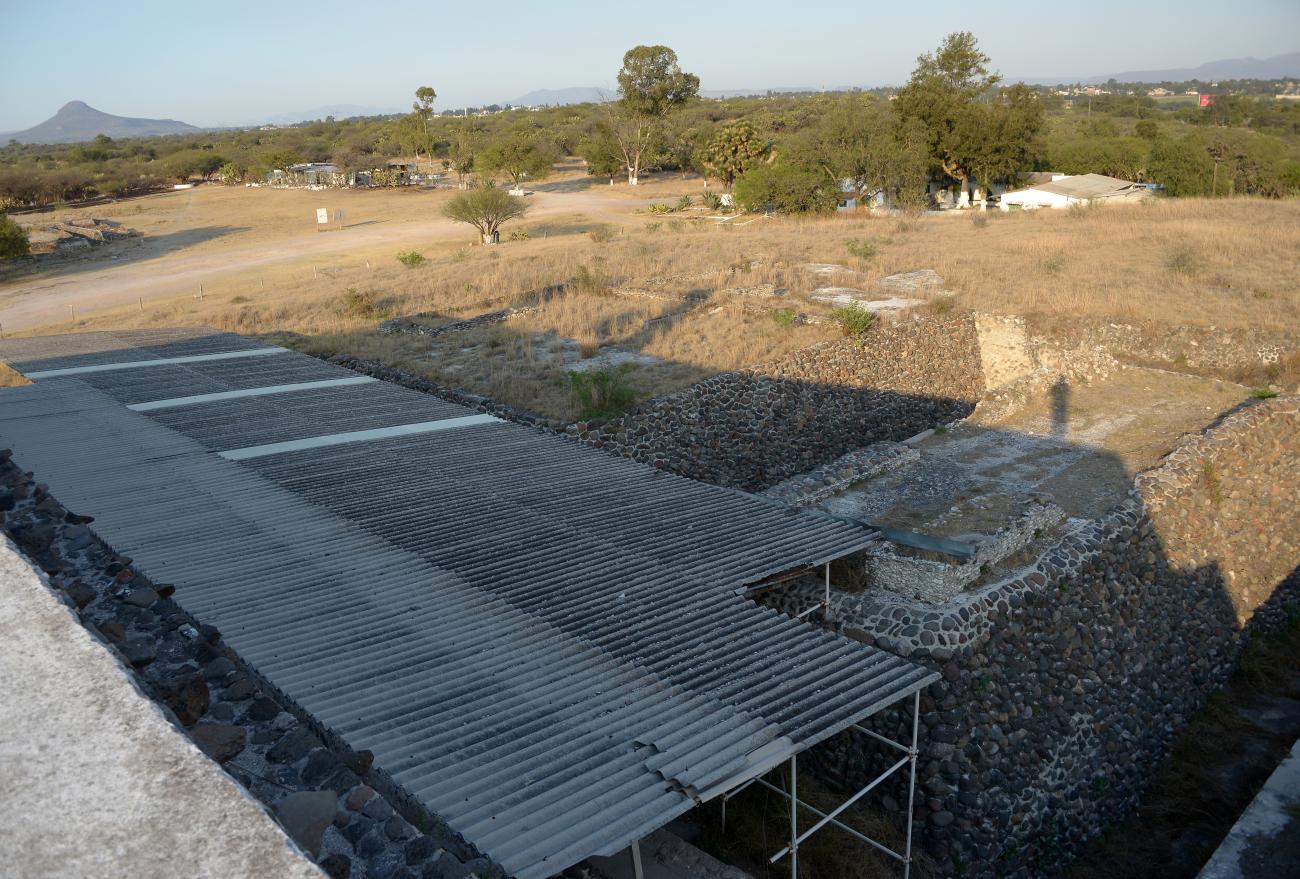
Palace of Quetzalcoatl: Although now only some remains are preserved, fragments of the floors and walls of this building attached to the Temple of Tlahuizcalpantecuhtli, which would be the room of his priests, are clearly observed. For its architectural distribution, with a courtyard in the center surrounded by columns, to some extent resembles the rooms of the Palace of the Columns. During its exploration, remains of rooms and corridors built with adobe walls were found. Of these elements, only one corridor is preserved on the outside, where the remains of an altar decorated with carved and polychrome slabs can still be seen.
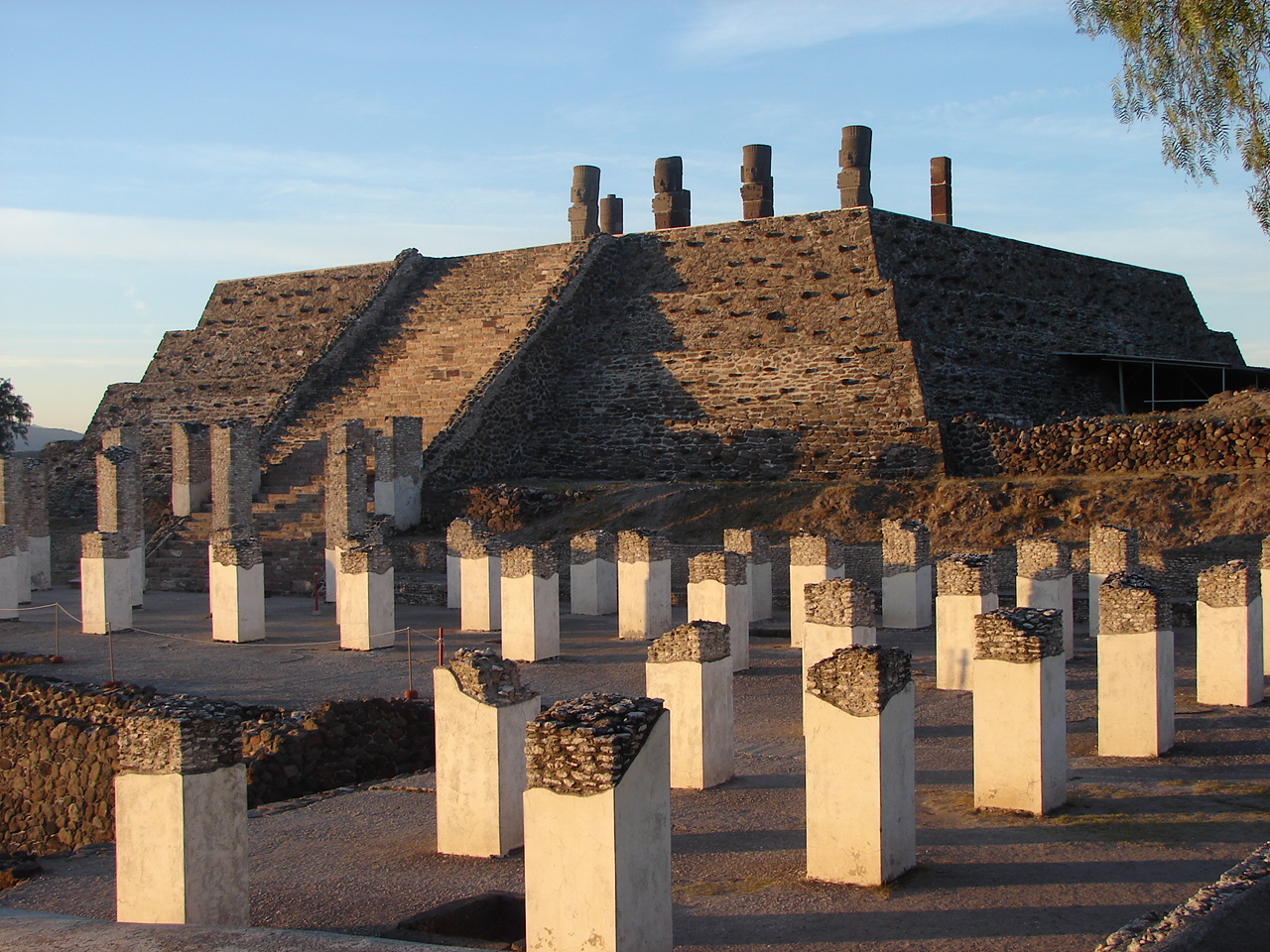
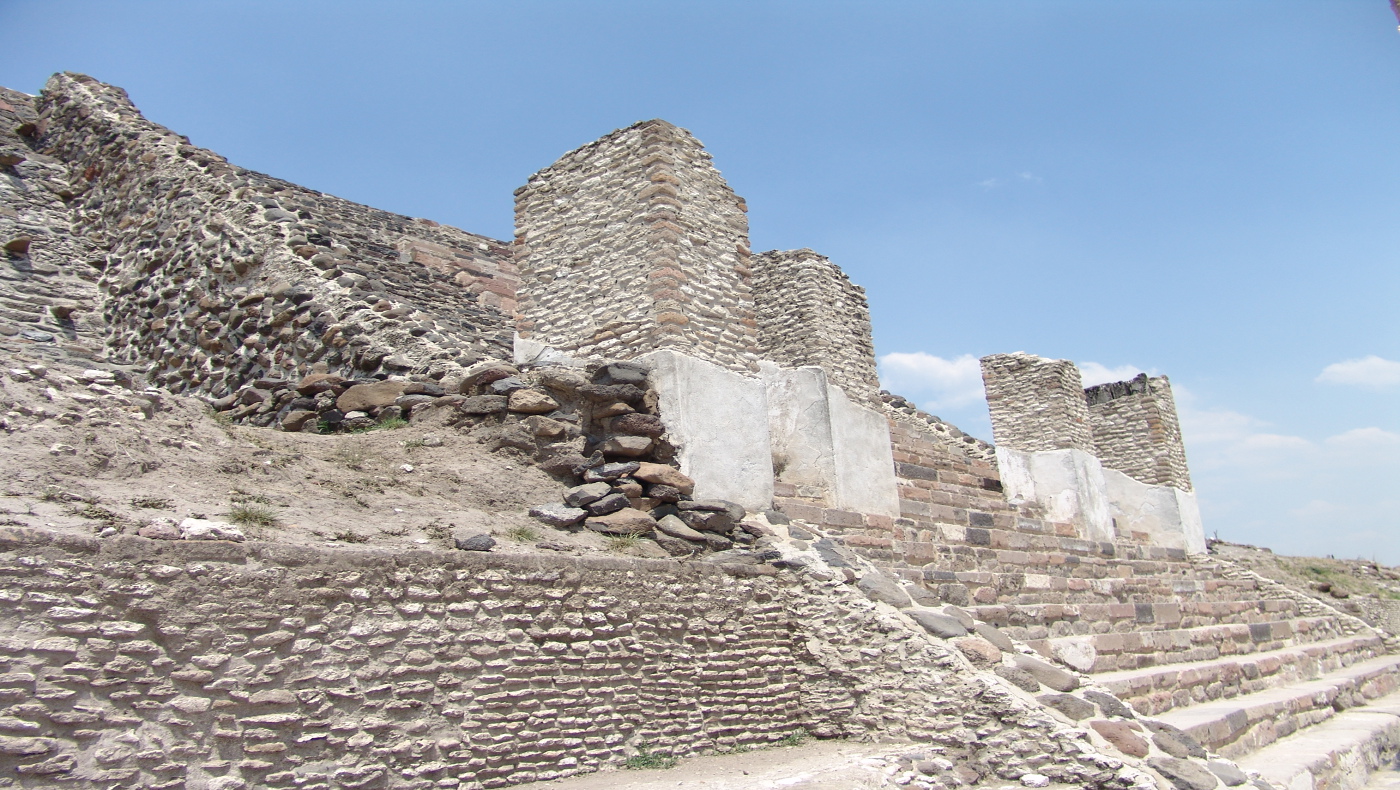
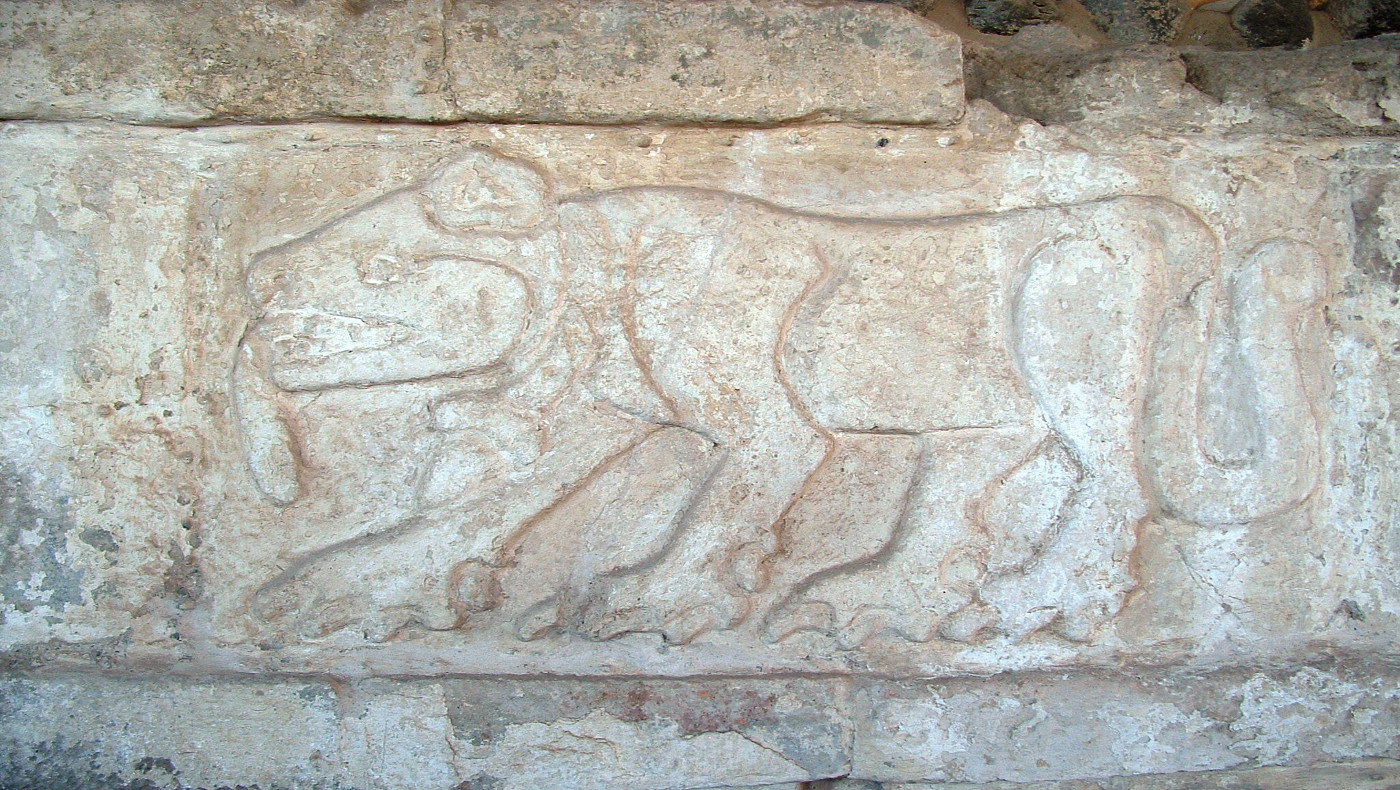
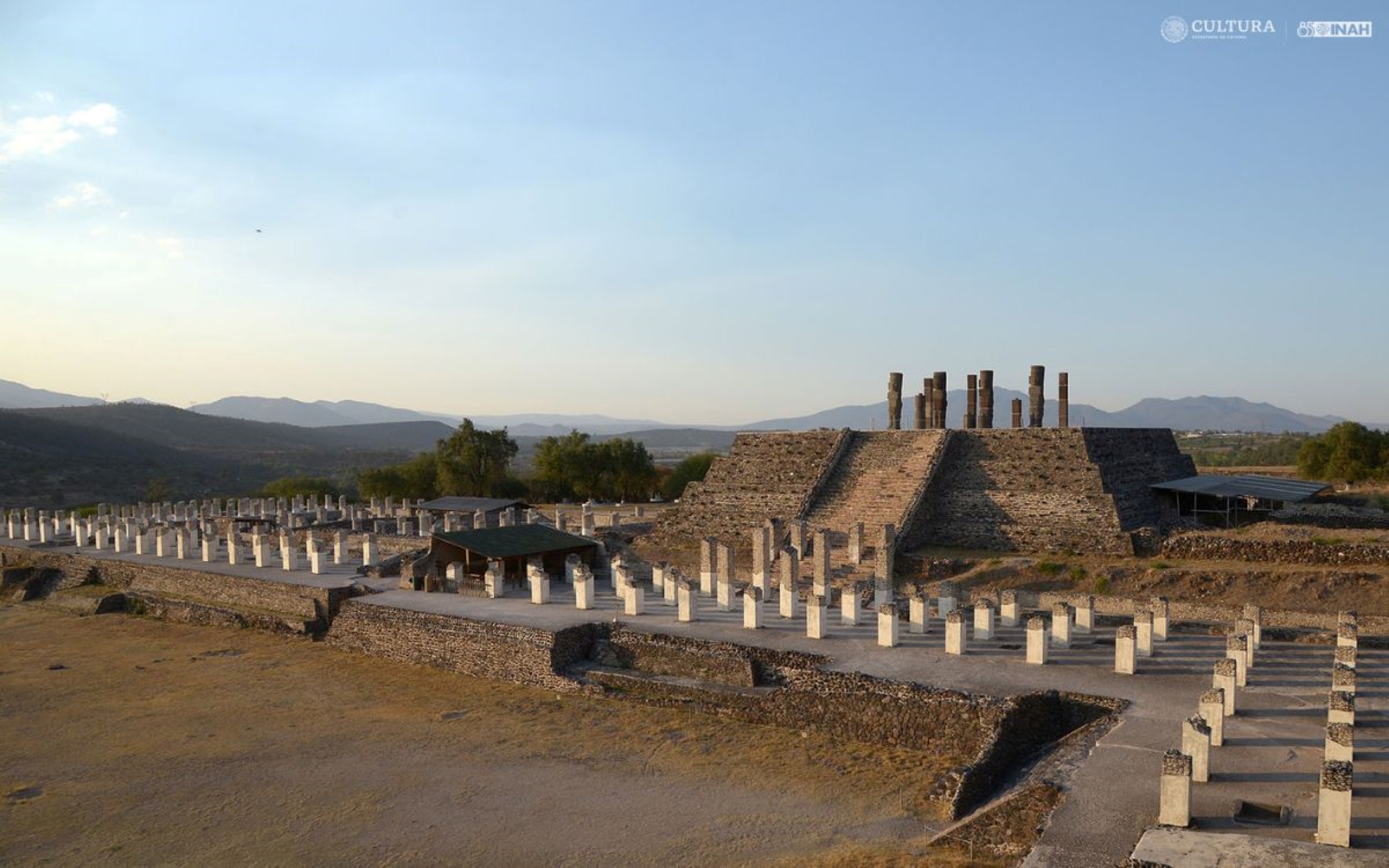
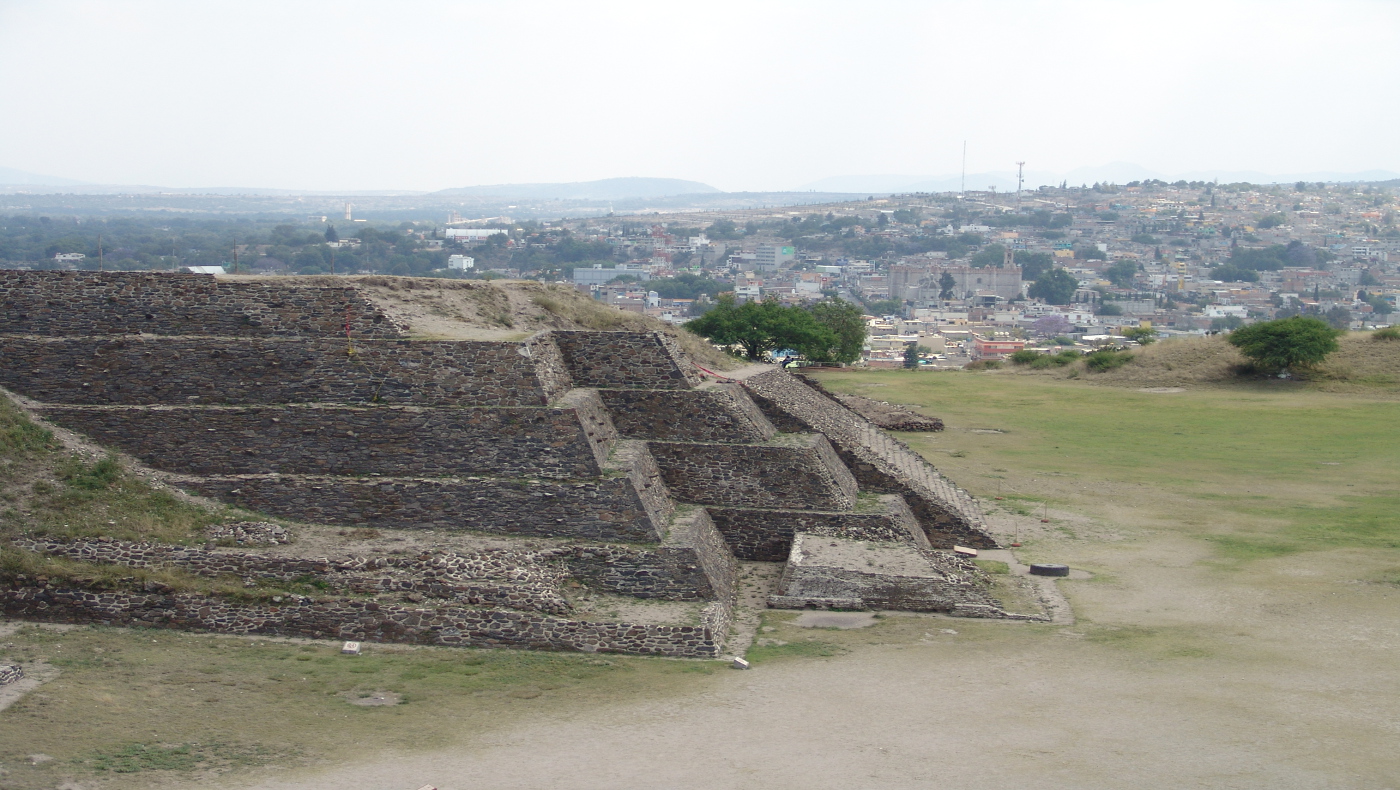
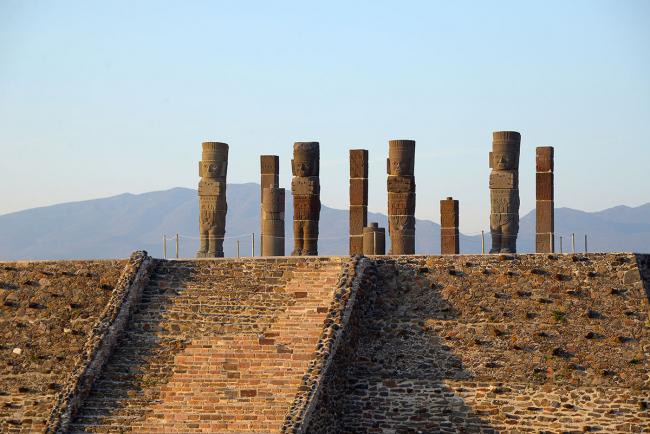
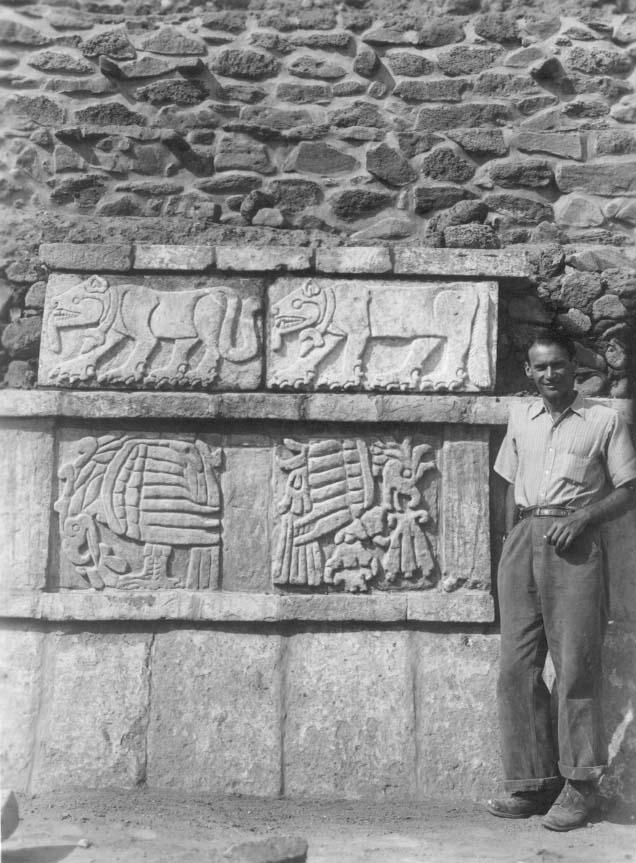
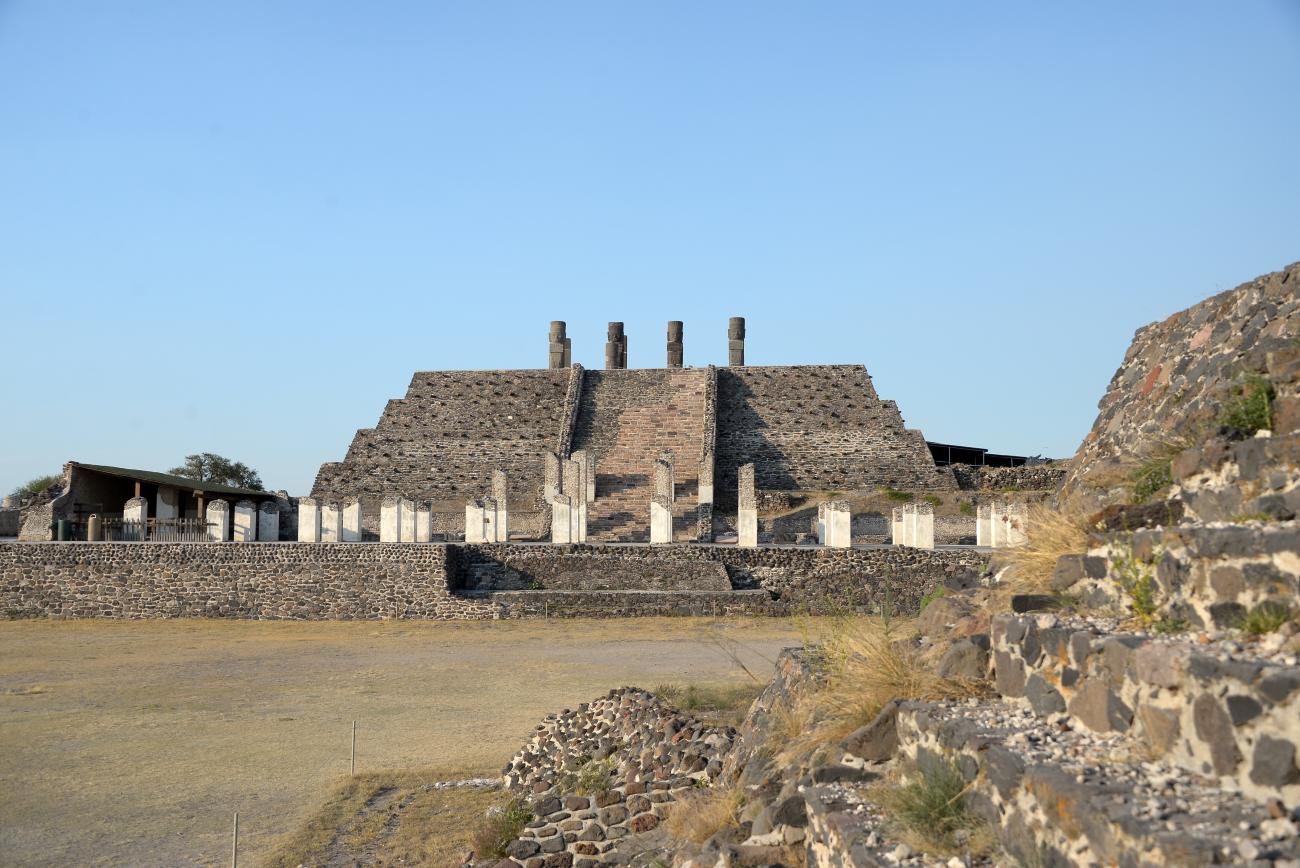
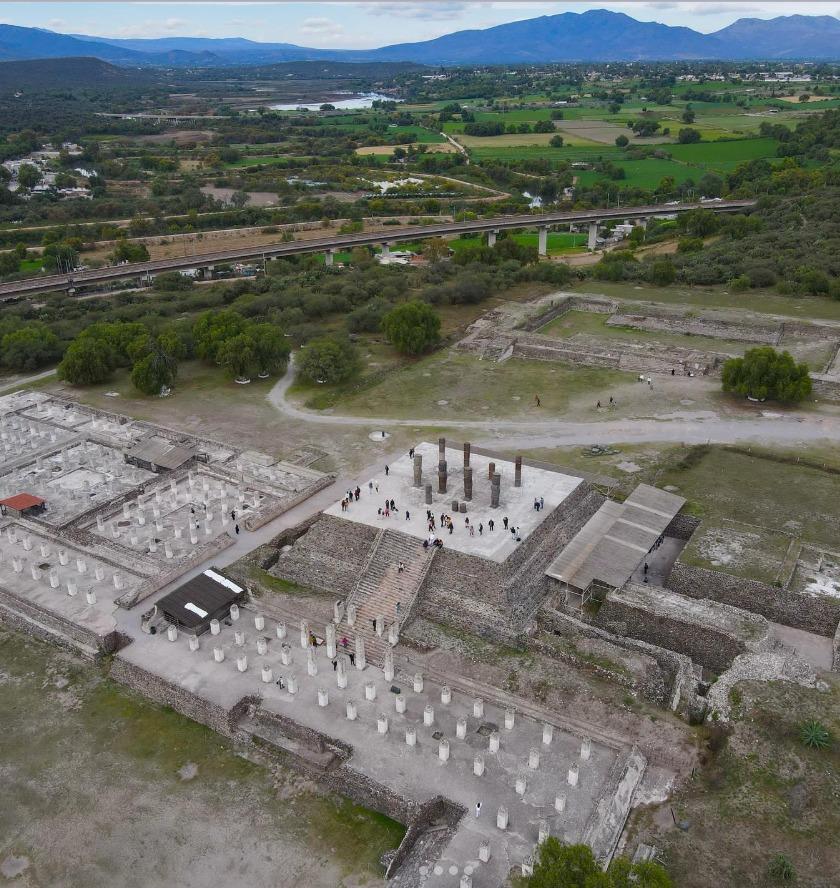
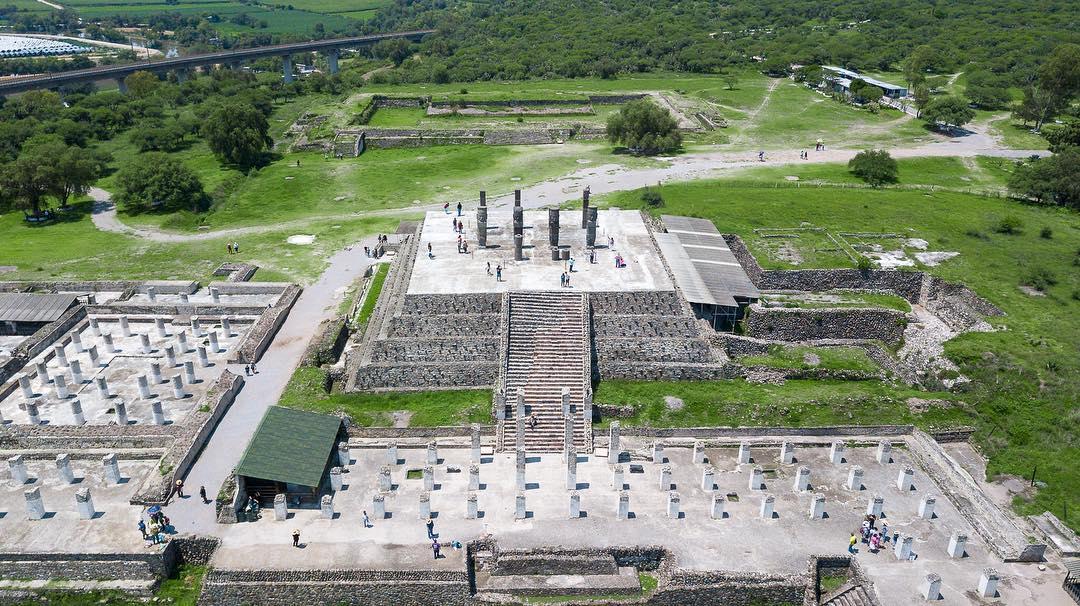
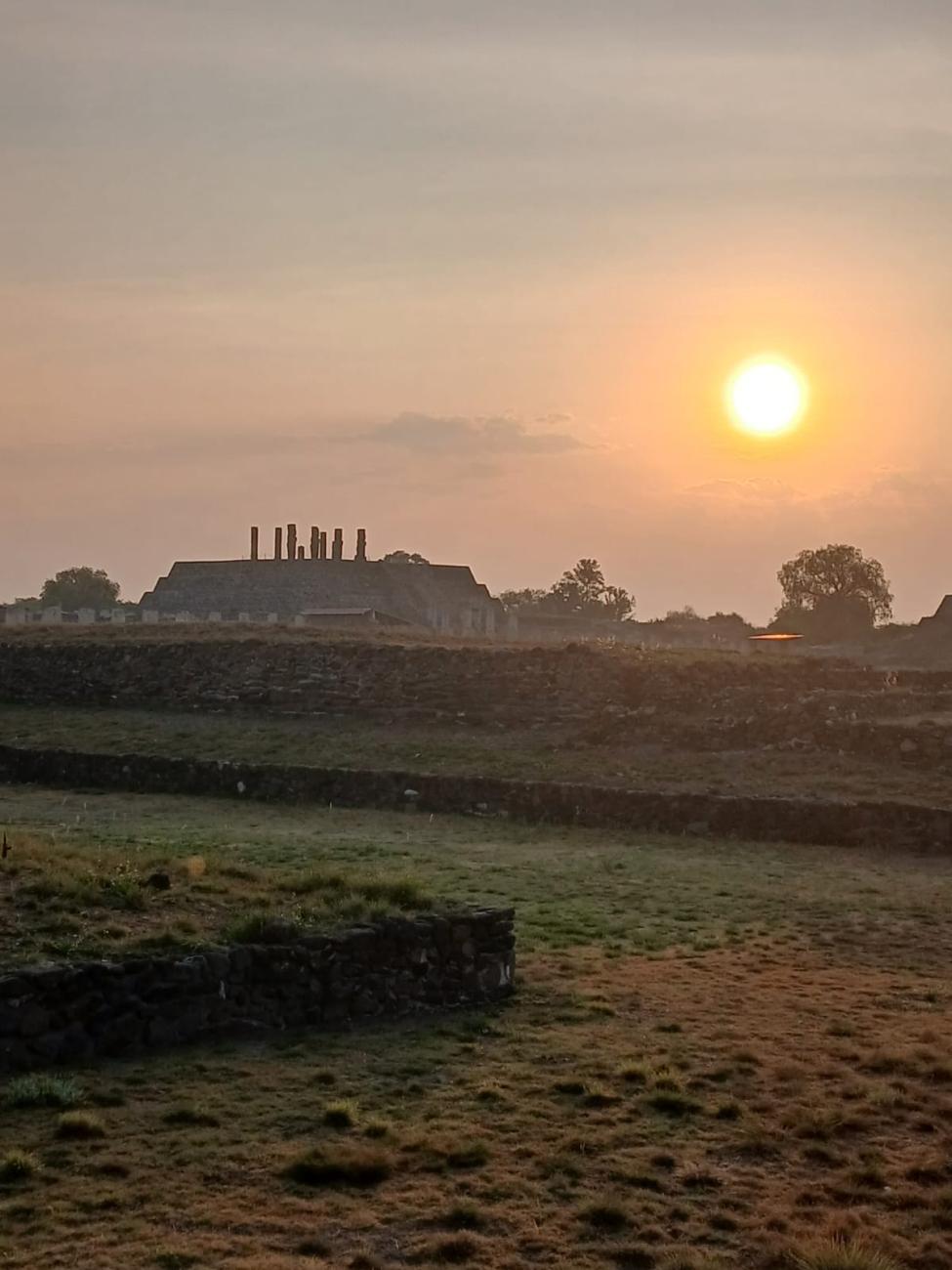
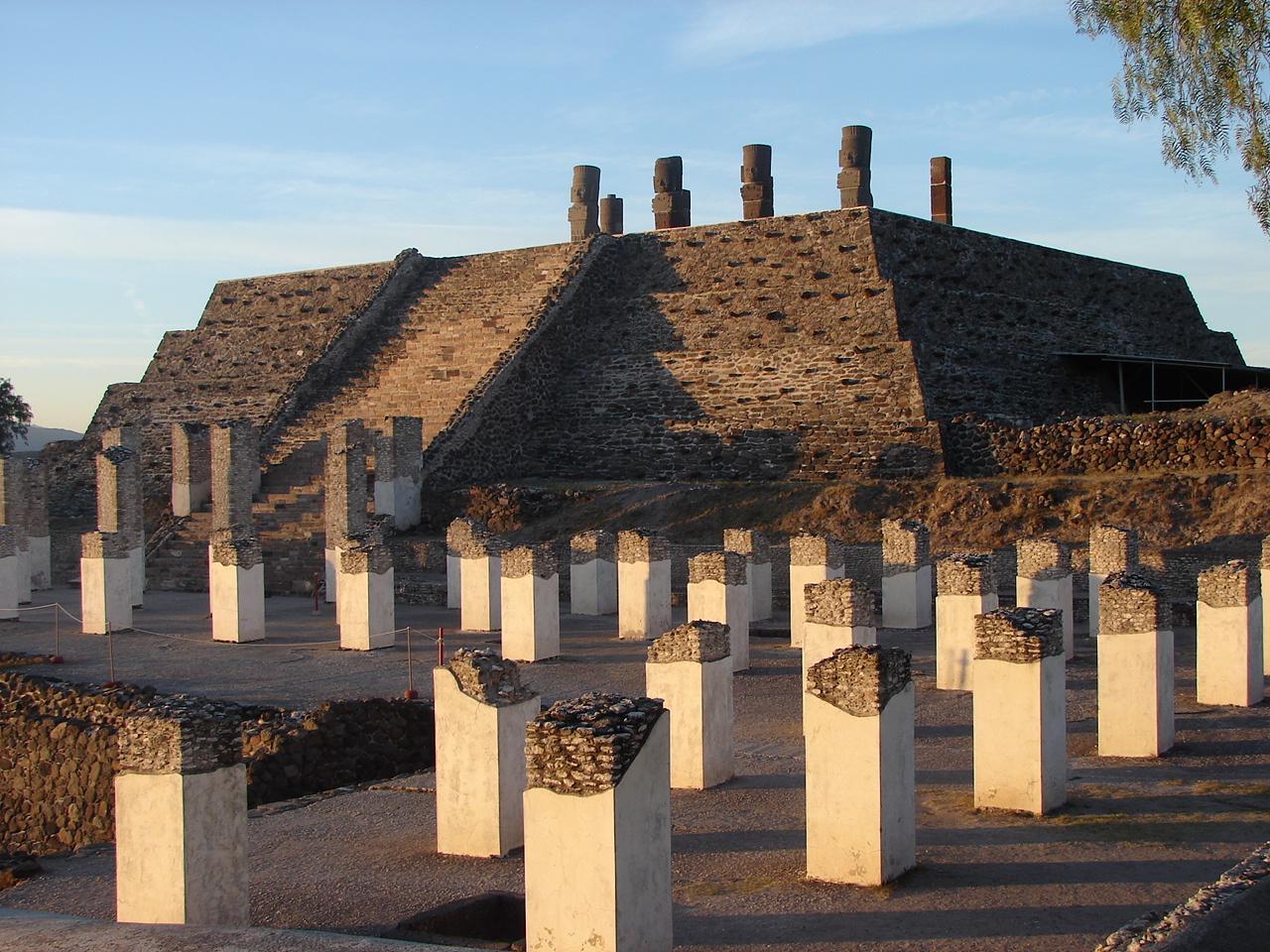
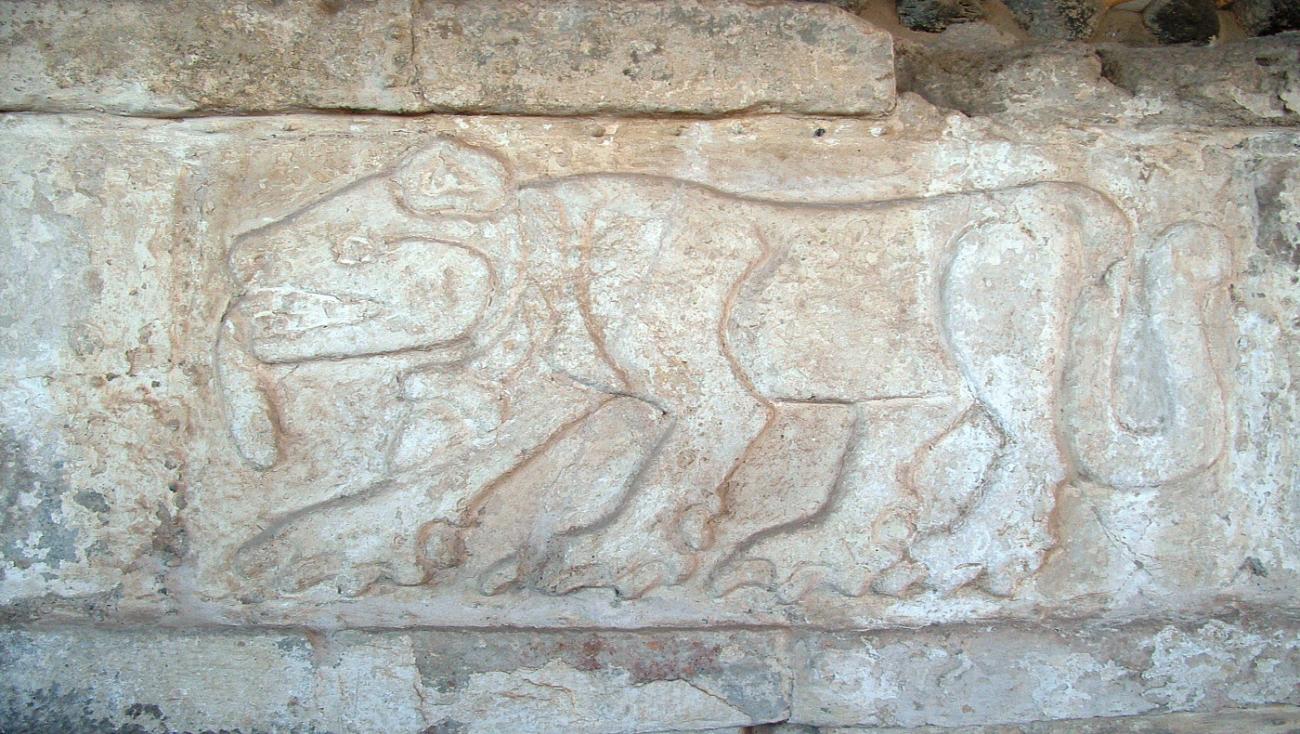
Pyramid B or Temple of Tlahuizcalpantecuhtli: It is a pyramidal base formed by several staggered bodies, originally covered with carved stones. Those still preserved have motifs of eagles and vultures devouring bloody hearts; these reliefs alternate with images of a human face emerging from the jaws of a snake, which is one of the invocations of Quetzalcoatl as “Lord of the Dawn” or Tlahuizcalpantecuhtli. On the cornice-boards there are also tombstones showing a procession of jaguars and coyotes, some with collars.
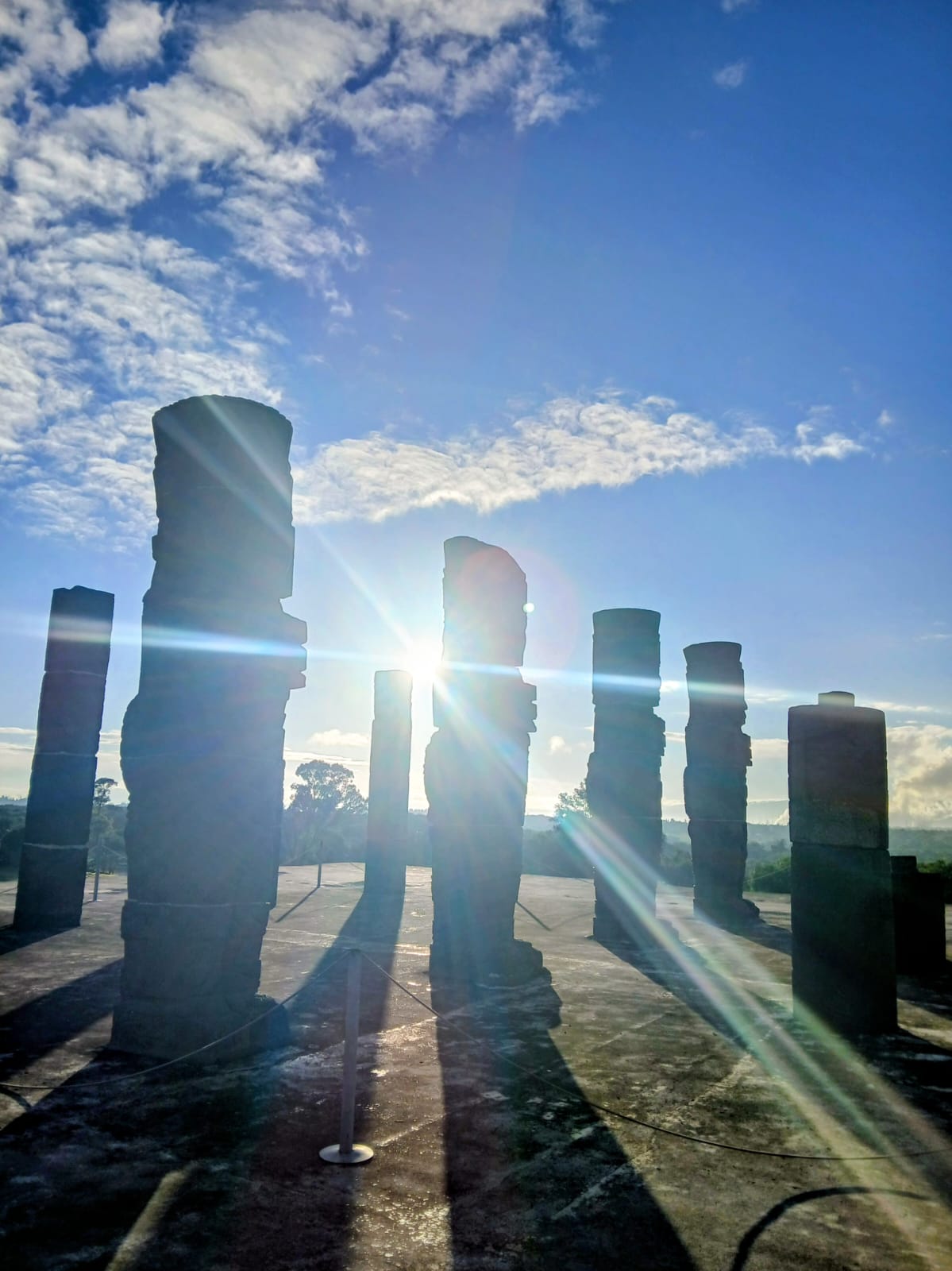
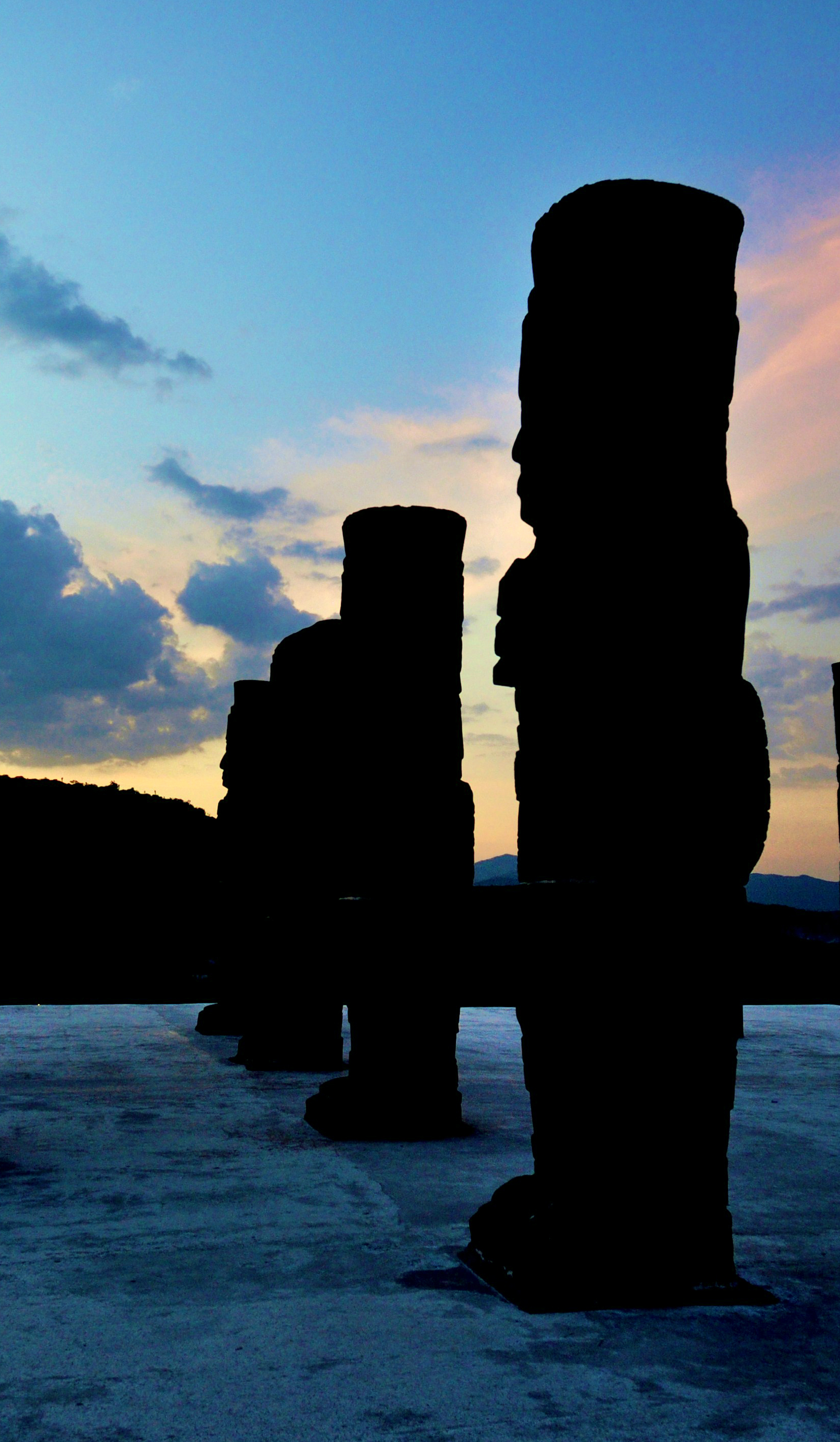
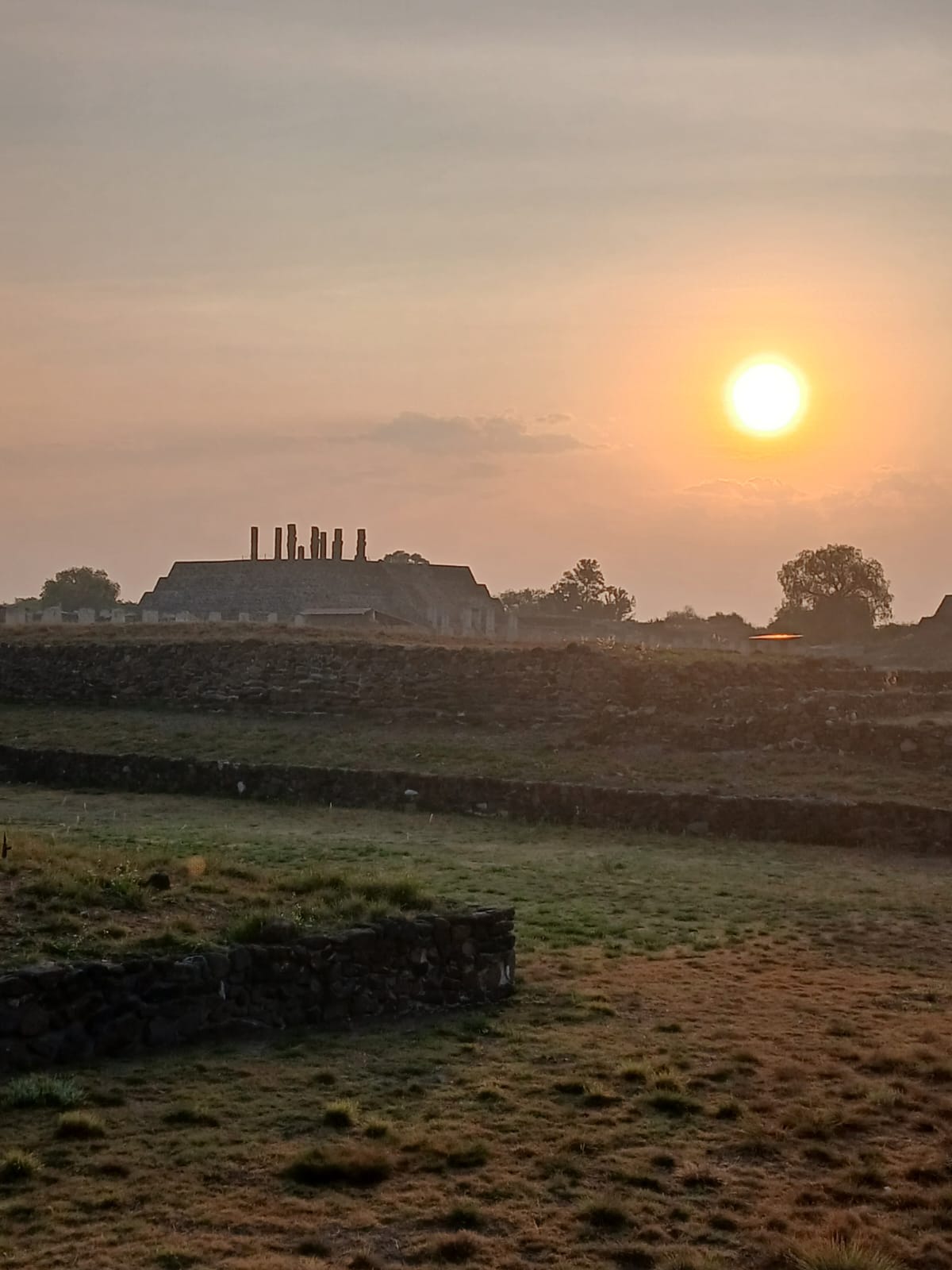
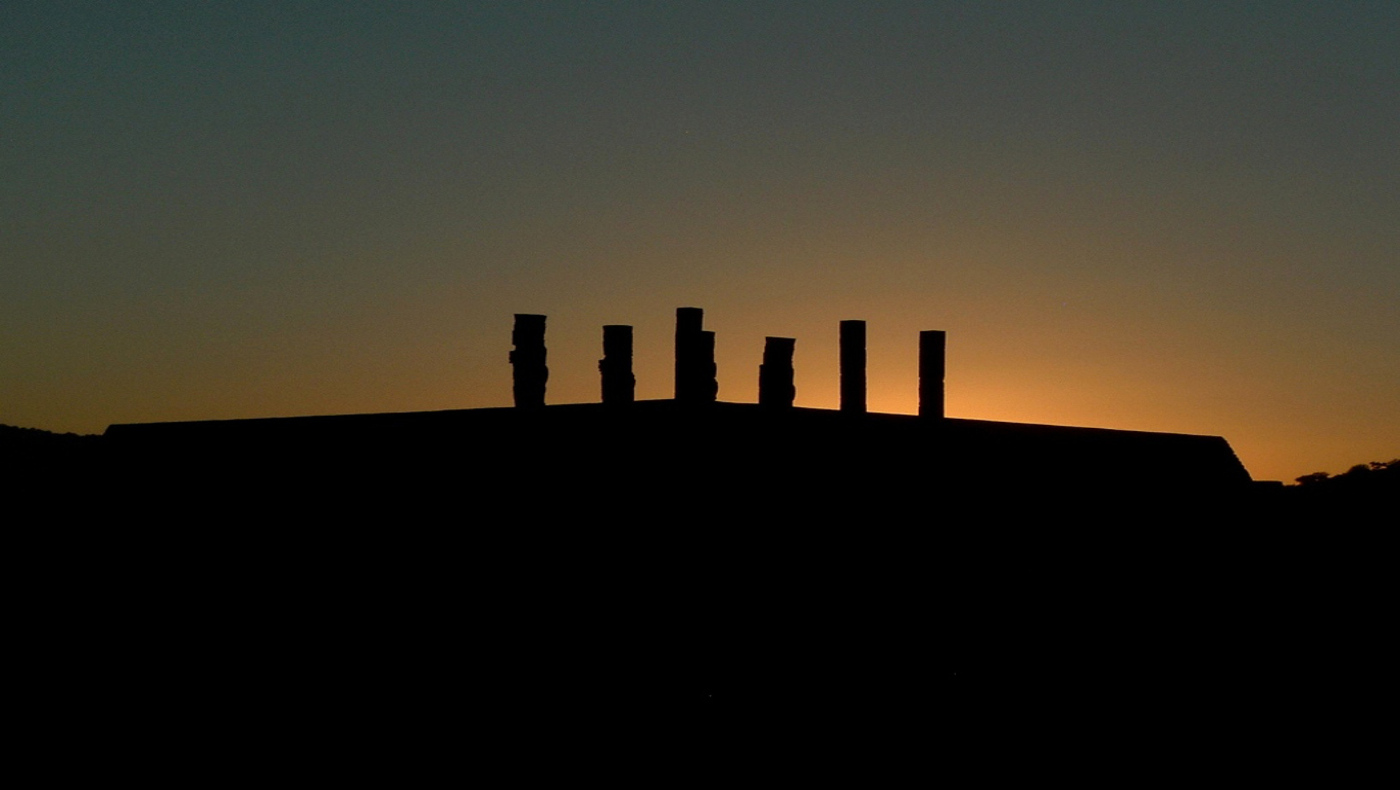
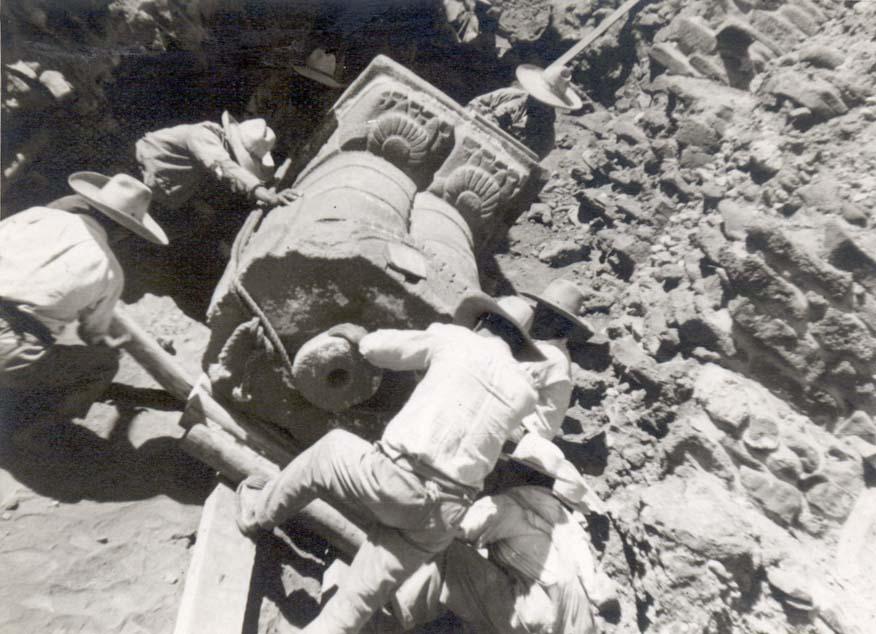
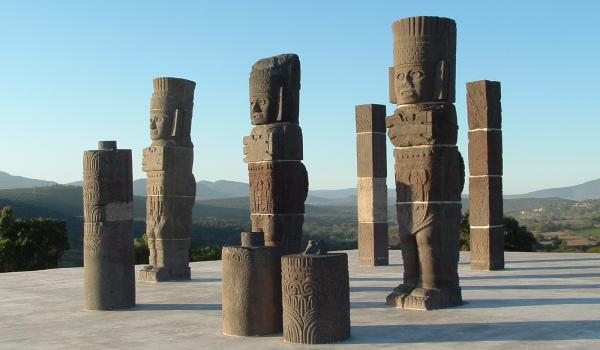
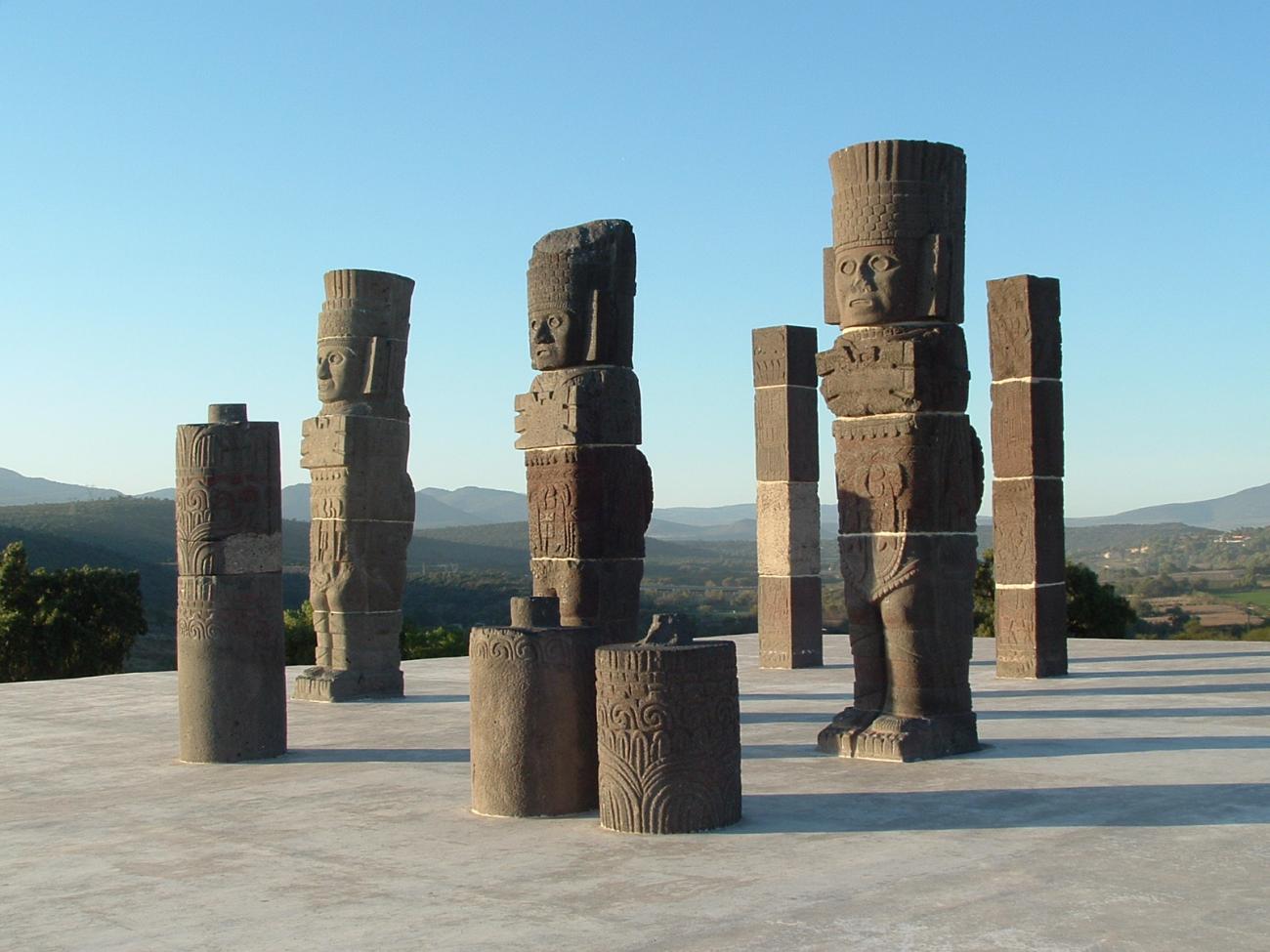
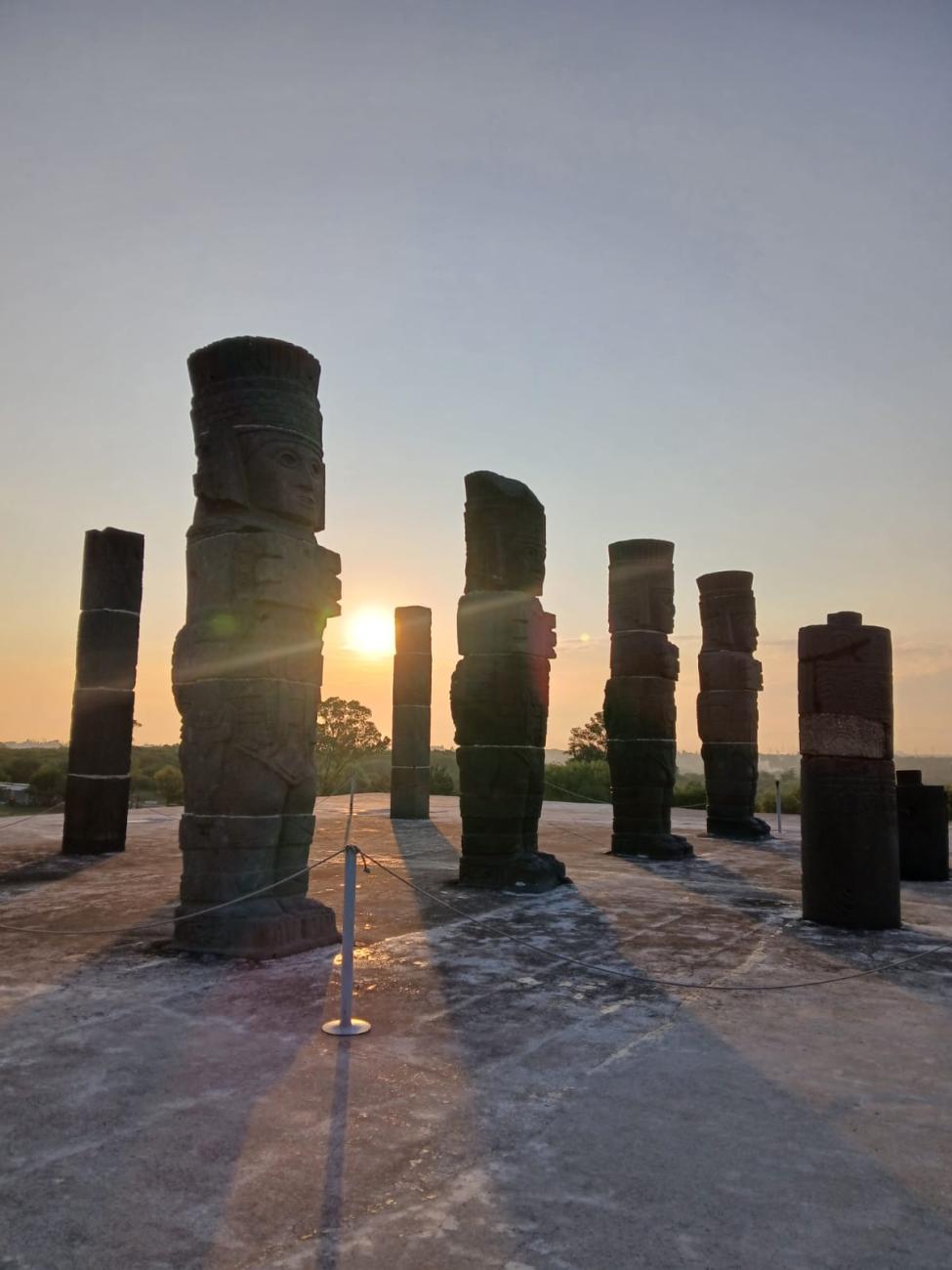
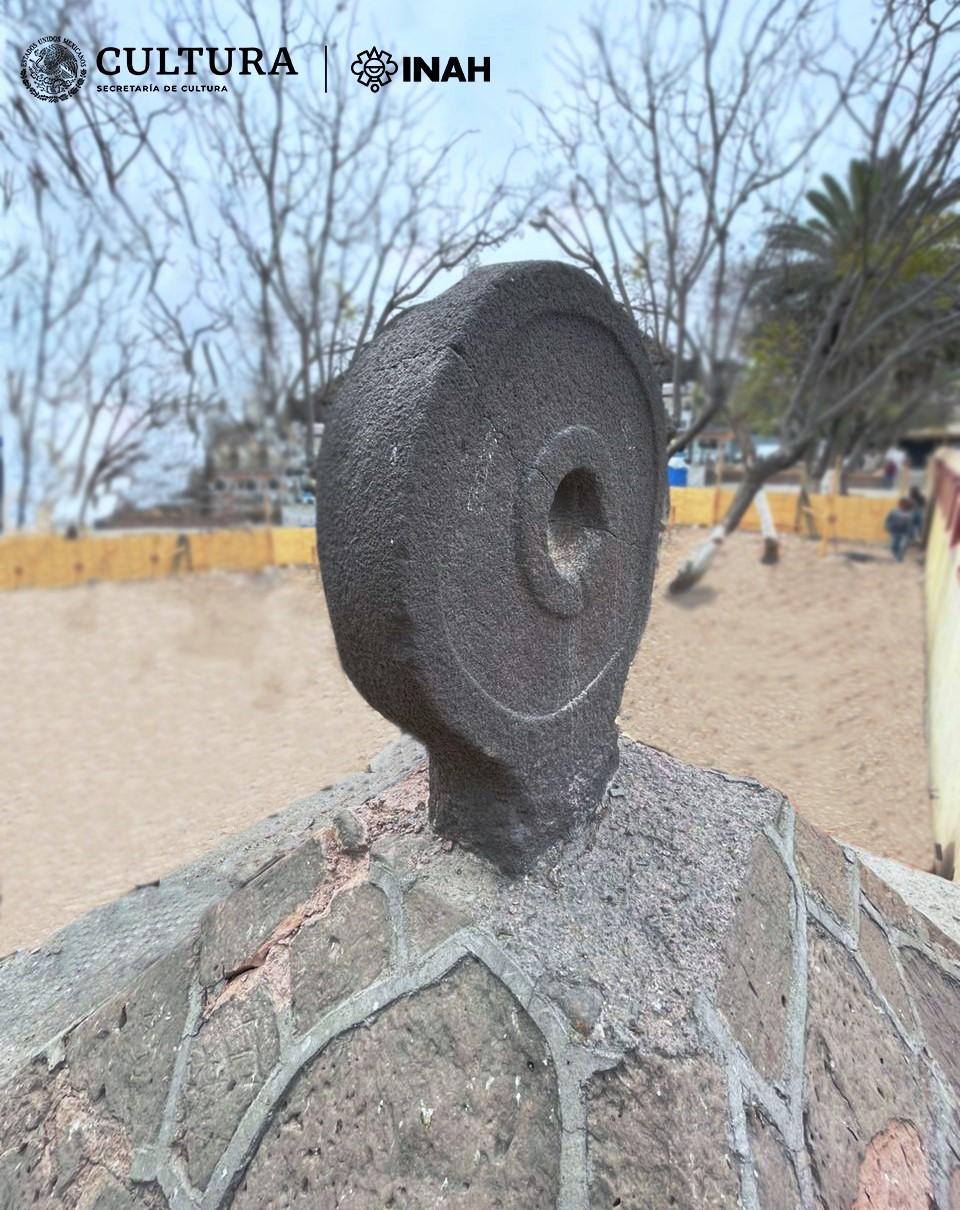
At the top of the structure are sculptures called Atlantes, originally found to the north of the building and placed in their present position by archaeologists, who considered that they must have supported the temple located there. The Atlantes represent Toltec warriors with their attire: the atlatl or spear-thrower, in their right hand; a bundle of arrows; a butterfly-shaped pectoral on their chest; a kilt with a large knotted belt in front; and, at the back, a solar disk. In addition to these sculptures, some pillars were located, also placed at the top of the building with the representation of a character with a bundle of arrows, identified as Quetzalcoatl, and the figure of a cipactli, that is to say, a crocodile or lizard. For the described decorative elements it is clear that this temple was built in honor of the main Toltec deity, Quetzalcoatl.
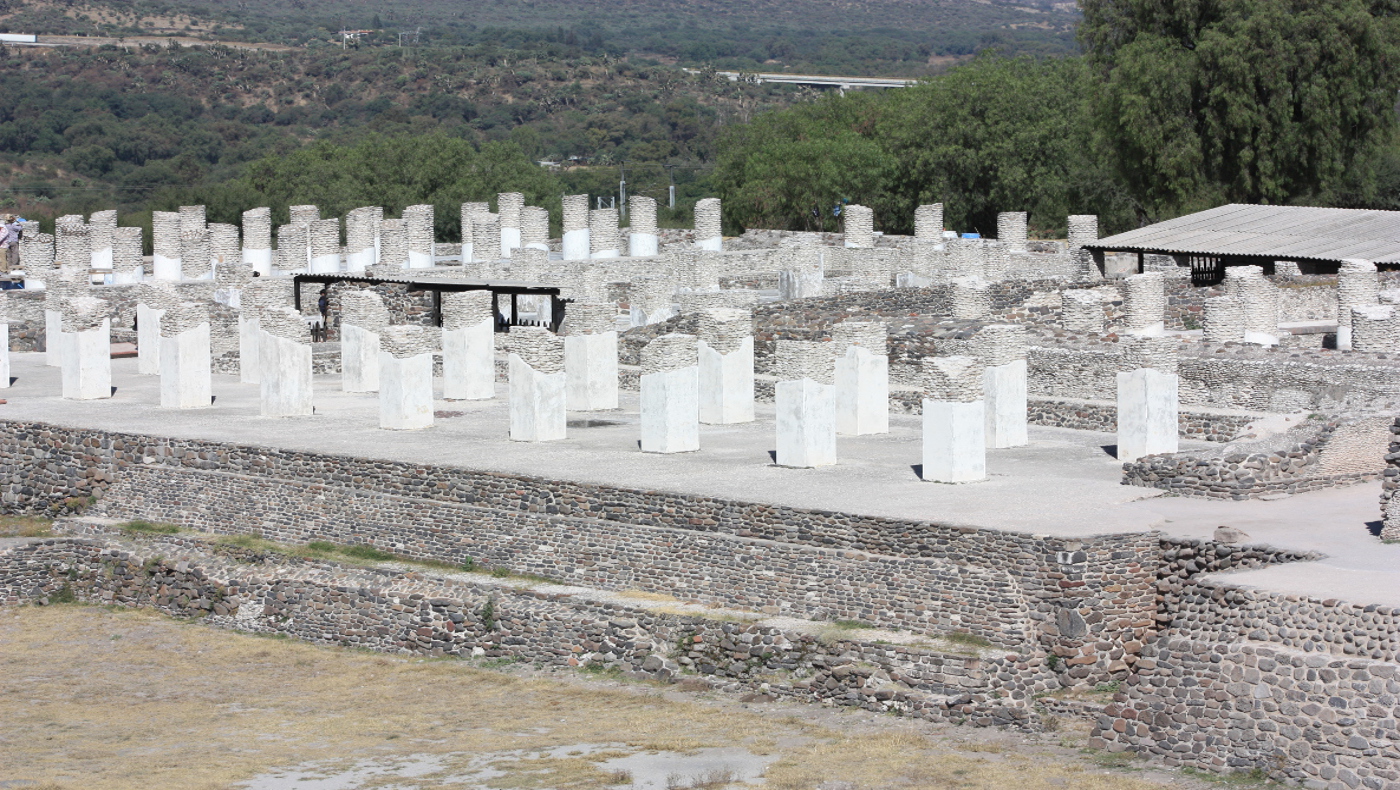
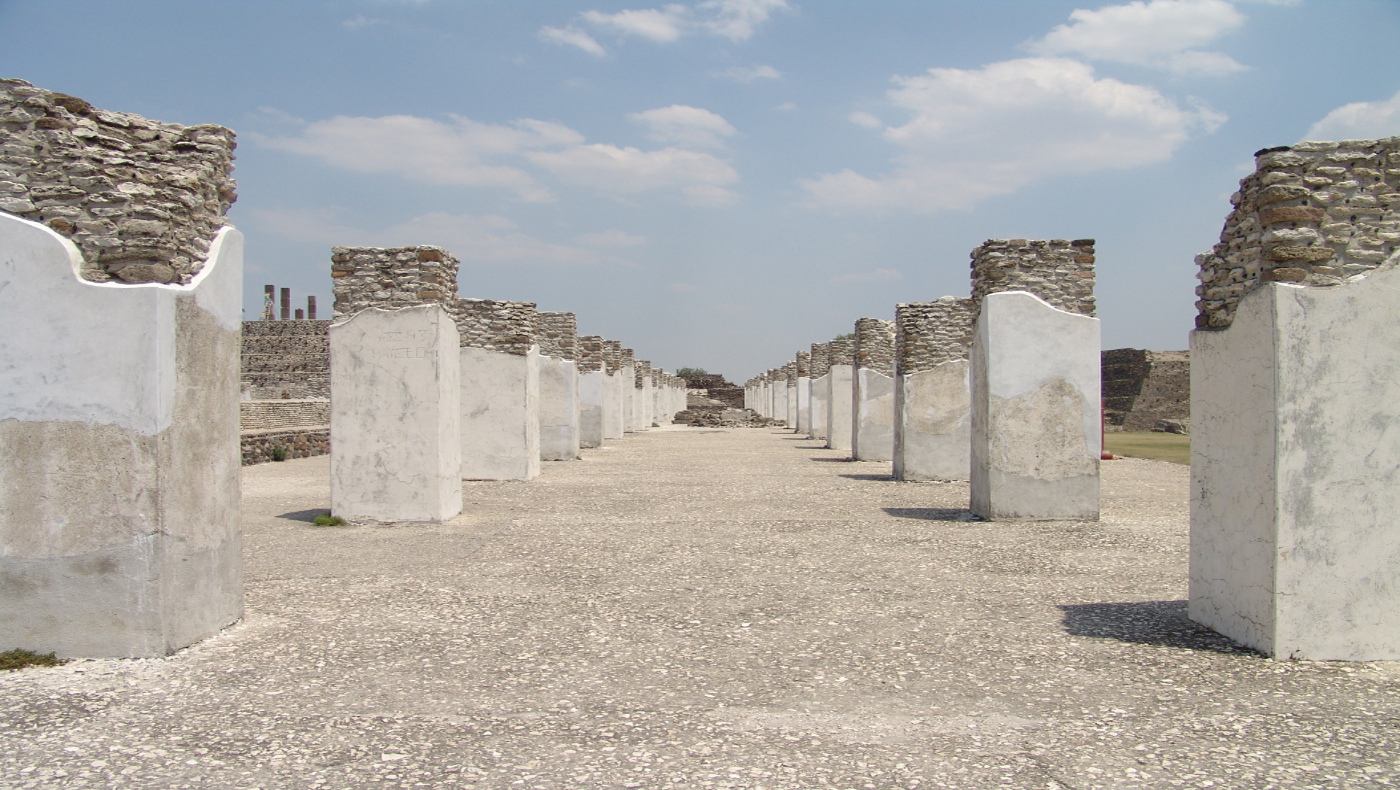
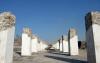
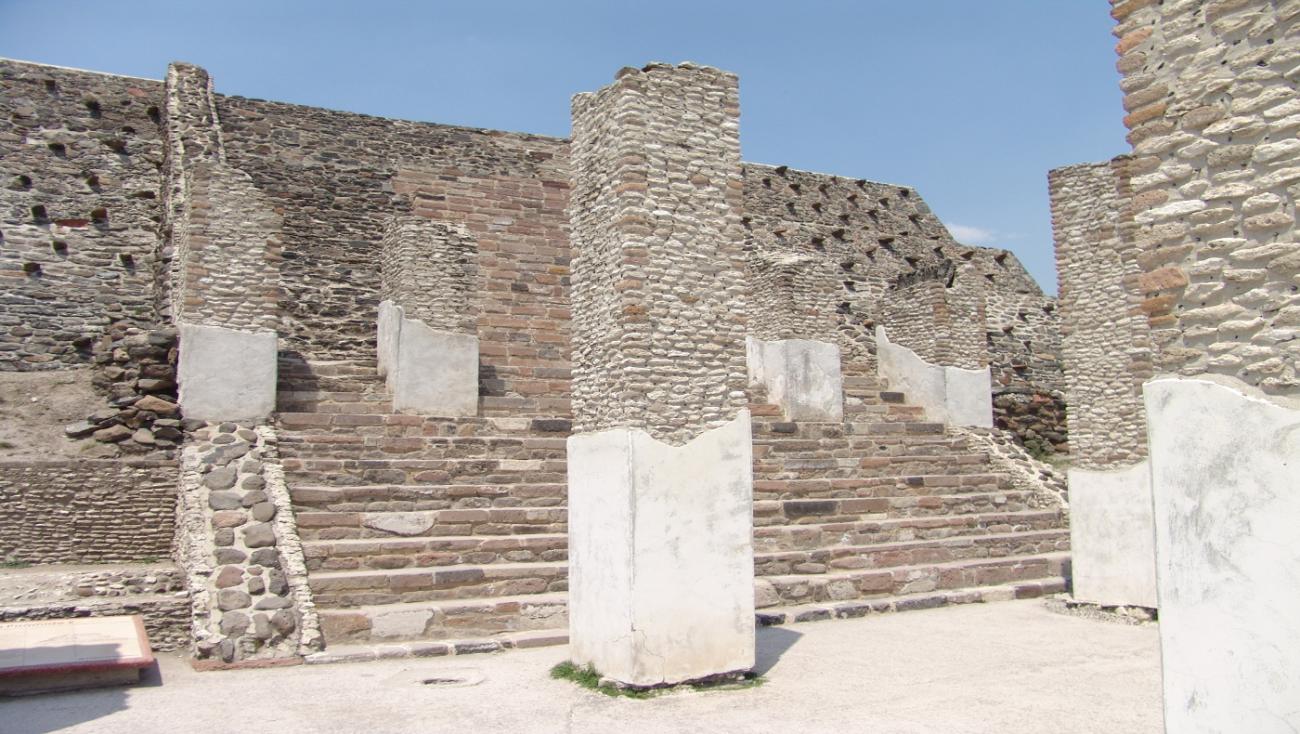
Vestibule: It extends along the south side of the described buildings. It is characterized by the abundant presence of columns or pillars that supported the roof, which is no longer preserved. The building is limited by adobe walls with attached sidewalks. These still retain engraved and polychrome slabs in several sections, where a procession of warriors or priests - armed with shields and darts - is represented, carrying a staff in their hands, while on the cornice there is a feathered rattlesnake.
Plaza Central
Adoratory: It is a small structure located in the center of the plaza that would have steps on each of its sides. A fragment of a stone sculpture called Chac Mool was found here.Ball Court Number 2: It is a large structure with the characteristic I shape that limits the plaza on the west side.…
Plaza Central
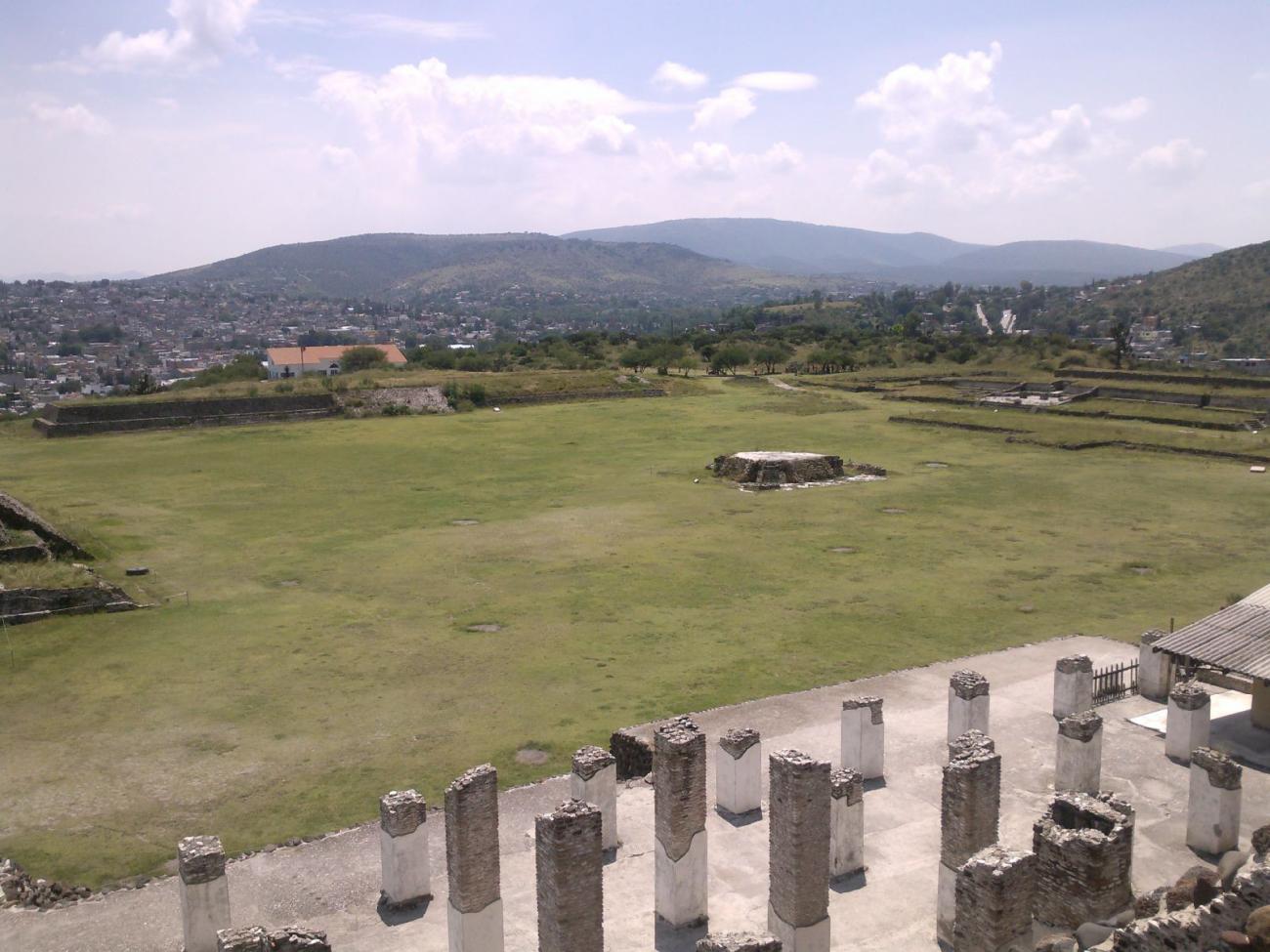
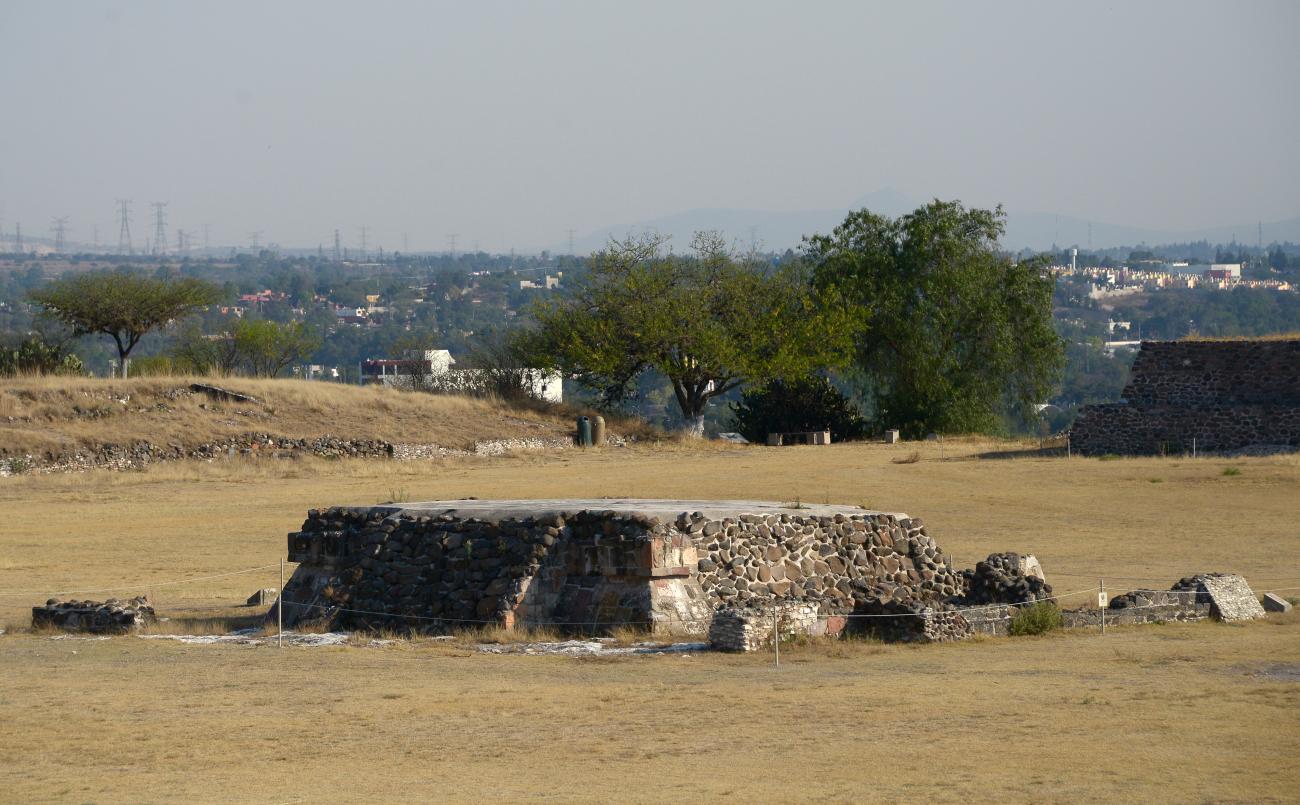
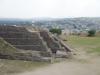
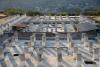
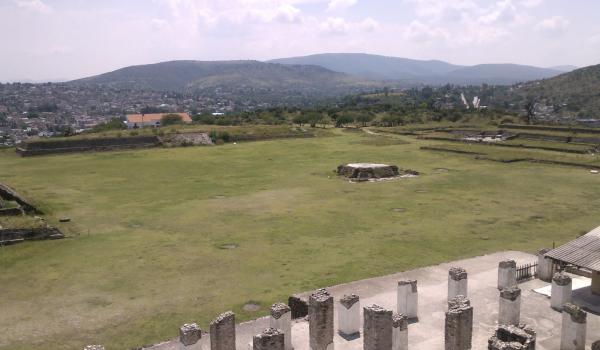
Adoratory: It is a small structure located in the center of the plaza that would have steps on each of its sides. A fragment of a stone sculpture called Chac Mool was found here.
Ball Court Number 2: It is a large structure with the characteristic I shape that limits the plaza on the west side. Unlike Ball Court 1, its patio is not sunken and its headers are low; supposedly its interior was decorated with stone blocks. It has an altar that would be destined to the ceremonies previous to the game. On its south side there are remains of rooms built by the Aztecs later.
Palace: It is a large platform attached to the south side of Building C. When it was explored, remains of stuccoed floors and the stone walls that limited it were found, as well as slabs sculpted with diverse motifs, especially of characters. Due to its location and elements that compose it, public and administrative activities would have been carried out in this building.
Tzompantli, Place of Skulls: It is located in the plaza in front of Ball Court Number 2. It was possibly built by the Mexica. During its exploration many teeth and skull bones were found, hence it is inferred that its function was to hold human heads.
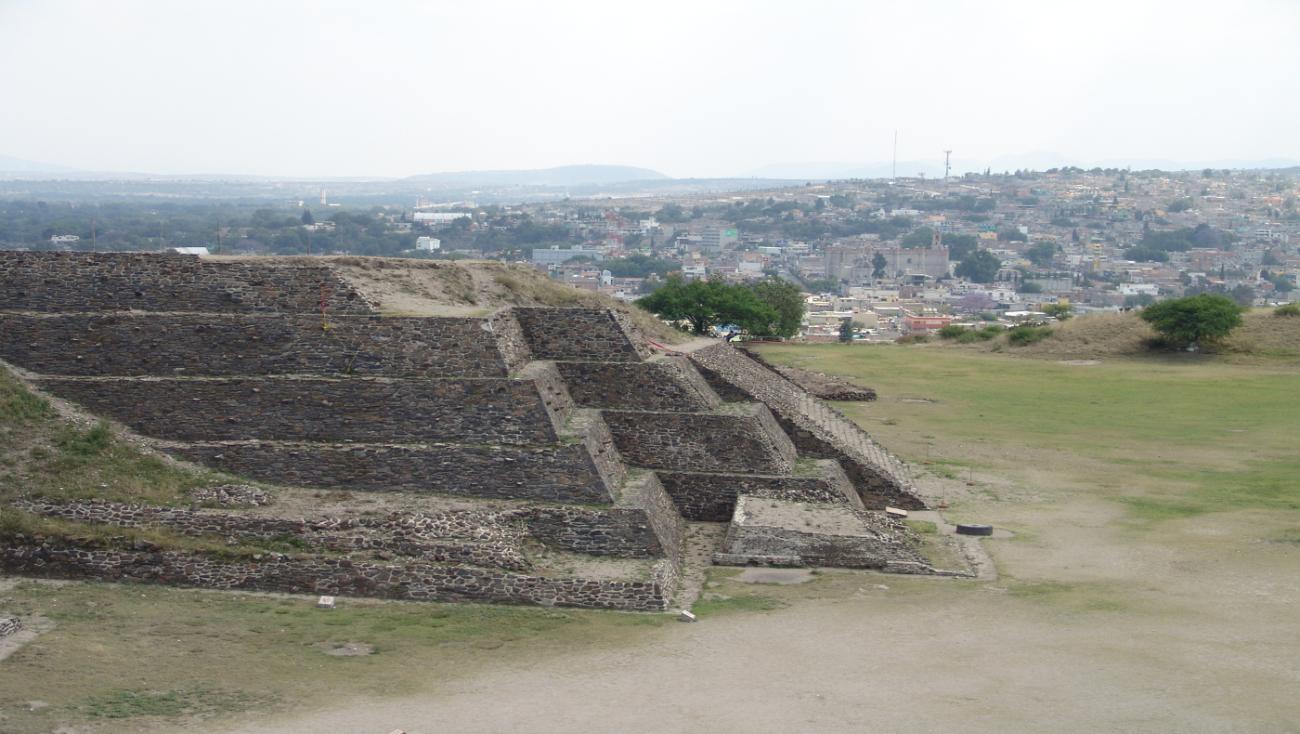
Pyramid C: It may have been the tallest building in the plaza, although it is currently very destroyed, and it would have been decorated with slabs like Building B. In fact, here a slab was found with the representation of the symbol of Venus, in allusion to Quetzalcoatl as “Star or morning star”. In the northwest corner of this structure there are remains of a Mexica templete.
Building K: This building, whose access was located towards the south side, has an occupation sequence of 1000 years. After the apogee of the ancient city of Tula, it was reoccupied in Mexica times and in the viceregal era.











Contact
- Dirección del Centro INAHManuel Villarruel Vázquezmanuel_villarruel@inah.gob.mx+52 (771) 714 3989